Mejores vasos de aprendizaje UK 2026: 5 opciones probadas por padres reales
Del Munchkin 360 a prueba de derrames al Doidy Cup recomendado por el NHS, comparamos cinco de los mejores vasos de aprendizaje para bebes.
COMPARISON · WEANING
The first sip from a cup is a milestone that comes with more options than any sleep-deprived parent needs. Spoutless rims, free-flow valves, open beakers, straw lids, glow-in-the-dark handles. Every brand insists theirs is the one that will turn your baby into a confident drinker overnight. Reality is messier than that, sometimes literally.
We looked at five of the most popular sippy and trainer cups available in the UK right now, gathering feedback from parents who have used them through the sticky, splashy early months of weaning. Rather than ranking by spec sheet alone, we focused on what parents consistently praise, what catches them off guard, and which cup suits which type of family. No single cup is right for everyone, but one of these five is almost certainly right for you.
Every cup here is in stock, from a joined programme, and available to add straight to your BubsNest registry. We have not been paid by any of these brands. Our scores reflect a blend of parent sentiment, expert opinion, and our own assessment of design, value and practicality.
Lil’ Bubba’s verdicts
- Best for Spill-Free Drinking: Munchkin Miracle 360 · 7.5/10
- Best for Open-Cup Skills: Doidy Cup · 8.0/10
- Best Value: Tommee Tippee First Cup · 7.5/10
- Best for Bottle-to-Cup Transition: MAM Starter Cup · 8.0/10
- Best for Growing With Baby: Mamas & Papas 3-in-1 · 7.5/10
| Cup | Rating | Spout Type | Capacity | Age | From |
|---|---|---|---|---|---|
| Munchkin Miracle 360 | 360° rim (spoutless) | 207ml | 6m+ | ~£5 | |
| Doidy Cup | Open (slanted rim) | 200ml | 3m+ | ~£6 | |
| Tommee Tippee First Cup | Free-flow flip-down | 190ml | 4m+ | ~£10 (3-pack) | |
| MAM Starter Cup | Soft silicone spout | 150ml | 4m+ | ~£10 | |
| Mamas & Papas 3-in-1 | Sippy / Straw / Open | ~150ml | 6m+ | ~£16 |
How we picked the 5
We started with every baby cup available from a joined programme in the UK, then filtered for products that real parents on our platform have added to their registries. From there we prioritised cups we had not featured recently, ensuring fresh coverage. We cross-referenced parent feedback from forums, review panels and retail sites, anonymising all quotes. Each cup was scored on ease of use, spill management, cleaning, value, and how well it supports healthy oral development.
What to look for in a first cup
Health visitors generally recommend introducing a cup from around six months, alongside weaning. Free-flow cups (where liquid comes out as soon as the cup tips) are preferred by most dental and speech professionals because they encourage the same sipping action as an open cup, rather than the sucking motion of a bottle.
Spout type matters more than you think. A 360-degree rim trains open-cup skills without the mess. A soft silicone spout feels familiar to bottle-fed babies. A free-flow spout builds proper sipping habits. An open cup is the gold standard for oral development but comes with more mopping. There is no single right answer; it depends on your baby and your tolerance for wet floors.
Capacity and age range. Most first cups hold 150 to 200ml. That is plenty for a six-month-old taking small sips of water with meals, but older toddlers may drain it quickly. Check the age recommendation: some cups suit babies from three or four months, others from six months upwards.
Cleaning simplicity. Fewer parts means less time at the sink at midnight. Cups with hidden valves or narrow straws can harbour mould if not disassembled fully. If you plan to use the dishwasher, check every component is dishwasher-safe before you buy.
1. Munchkin Miracle 360

The Munchkin Miracle 360 is the cup that started the spoutless revolution. Instead of a traditional spout or straw, babies drink from anywhere around the rim by pressing their lips against a silicone valve that opens on contact and seals shut the moment they stop. The result is genuinely spill-proof in normal use, even when tipped upside down in a changing bag.
The dentist-recommended design encourages the same drinking action as an open cup, supporting healthy mouth and jaw development without the mess. At under five pounds, it represents outstanding value. The three-part design (cup, valve, lid) makes cleaning simpler than most competitors, though the valve itself needs careful attention.
What parents love
- Genuinely spill-proof. Parents consistently confirm it handles being tipped, shaken and thrown with minimal leakage. One parent told us: "Not a drop on the carpet, even when she flung it off the highchair."
- Supports oral development. The spoutless 360-degree rim is recommended by dentists and endorsed by the NCT for encouraging natural drinking muscles.
- Simple to disassemble. Only three parts to wash, and all are dishwasher-safe (top rack).
- Exceptional value. At around five pounds, it is one of the cheapest branded trainer cups on the market.
What to know before you buy
- Valve mould risk. The silicone valve has hidden grooves that trap moisture. Without thorough disassembly and drying after every wash, black mould can develop unnoticed.
- Valve wears out. With regular dishwasher use, the seal degrades after a few months. Replacement valves can be tricky to source in the UK.
- Flow takes practice. Some babies need a few sessions to work out the suck-and-release mechanism.
Best for
- Families who want a genuinely spill-proof cup for the changing bag
- Parents prioritising dental-friendly design on a budget
- Babies transitioning from bottle to open cup
2. Doidy Cup
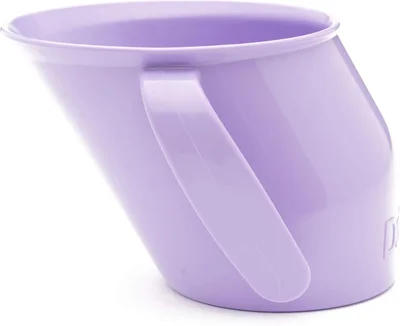
The Doidy Cup has been a quiet icon of British weaning for decades. Its unique slanted rim lets babies see the liquid as they drink, so they learn to control sipping without tilting the cup too far back. There are no valves, no spouts, no moving parts whatsoever. It is an open cup, pure and simple, with a clever angle that makes the learning curve gentler.
Recommended by NHS trusts, dentists, speech therapists and the NCT, the Doidy Cup promotes the same natural oral motor skills as breastfeeding. It is made from food-grade HDPE in the UK, free from BPA and PVC, and tough enough to survive years of daily use across multiple children. At around six pounds, it might be the best value cup on this list.
What parents love
- Teaches real drinking skills. The slanted design means babies learn to sip rather than suck, building skills they will use for life. Health professionals widely recommend it.
- Nothing to go wrong. No valves, no straws, no hidden parts to harbour mould. Cleaning takes seconds.
- Built to last. Parents report cups surviving multiple children and years of being lobbed at kitchen floors. "It's survived being thrown more times than I can count and still looks brand new."
- Brilliant value. Under six pounds for a cup backed by health professionals and built to outlast your child's entire weaning journey.
What to know before you buy
- Spills are inevitable. This is an open cup with no lid. The early learning phase involves wet clothes, wet floors and wet patience.
- Not portable. Without a lid, it is not one for the changing bag, the car or anywhere you cannot mop up.
- The slant works both ways. If your baby tips the cup the wrong direction, liquid pours out the opposite side faster than you can grab a muslin.
Best for
- Parents who want to teach open-cup drinking from the start
- Families following NHS or speech therapy guidance on cup introduction
- Anyone who values simplicity and durability over spill protection

3. Tommee Tippee First Cup

Tommee Tippee has reimagined its iconic first cup with sustainability at the centre. Made from 98% bio-based plastic derived from rapeseed oil, it is one of the most genuinely eco-friendly baby cups on the market. The free-flow flip-down spout is the type recommended by health professionals: liquid flows when the cup tips, encouraging proper sipping rather than sucking.
Sold as a three-pack for around ten pounds, the per-cup cost is hard to beat from a major brand. The chunky handles suit small hands, the transparent base lets you track how much your baby is drinking, and the bite-resistant one-piece spout is reassuringly durable. It is not leak-proof when upright with the spout open, but that is by design rather than a flaw.
What parents love
- Genuinely eco-friendly. 98% bio-based plastic with FSC-certified packaging. Parents appreciate a mainstream brand making a credible sustainability effort. "I feel genuinely chuffed buying something that's not just more plastic heading for landfill."
- Easy transition from bottle. The free-flow spout mimics natural drinking, helping babies learn to sip rather than suck.
- Excellent grip. Chunky curved handles are easy for small hands to hold independently, building confidence early.
- Outstanding value. Three cups for around ten pounds brings the per-cup cost to roughly three pounds each.
What to know before you buy
- Not leak-proof. Free-flow by design means it will drip if tipped or thrown. Expect wet highchair trays and changing bags.
- Small capacity. 190ml is fine for early weaning sips but older toddlers may drain it quickly.
- Spout mechanism loosens. Some parents report the flip-down spout becomes easier for babies to flick open after heavy use.
Best for
- Eco-conscious families who want to reduce plastic waste
- Parents on a budget who need multiple cups for home, nursery and grandparents
- Babies beginning the transition from bottle to free-flow cup
4. MAM Starter Cup
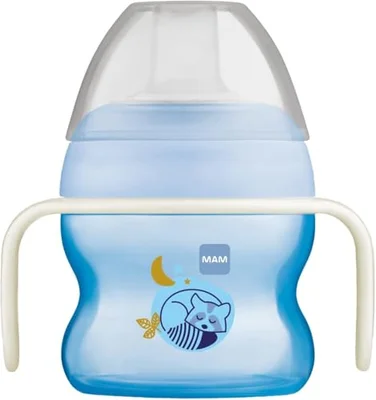
If your baby is stubbornly attached to their bottle, the MAM Starter Cup is designed to make the switch as painless as possible. The SkinSoft silicone spout feels familiar to bottle-fed babies, mimicking the texture and give of a bottle teat, so most accept it without a fight. The glow-in-the-dark handles are more than a gimmick: they genuinely help parents and babies locate the cup in a dark bedroom without switching on a light.
The cup is fully compatible with the wider MAM range, so the handles and spout can be swapped onto larger MAM cups as your baby grows. Designed in collaboration with medical experts, it meets European safety standard EN 14350:2020 and is free from BPA and BPS. At 150ml, the capacity is on the smaller side, but that suits the four-month-plus age group it targets.
What parents love
- Bottle-fed babies accept it. The SkinSoft spout feels familiar enough that most bottle-fed babies transition without protest. "She took to it straight away after refusing every other cup we tried."
- Glow handles are genuinely useful. They glow brightly enough to spot in a dark room, saving you from fumbling for the light during night feeds.
- Grows with your baby. Handles and spout are interchangeable with all MAM cups and Easy Start Anti-Colic bottles, so you can build a system as your child develops.
- Ergonomic design. Lightweight, anti-slip handles sit on the inside where babies naturally reach, making independent holding easier.
What to know before you buy
- Small capacity. 150ml means frequent refills, especially for older babies who drink more at each sitting.
- No replacement spouts. The soft silicone spout wears down with heavy chewing, and MAM does not sell spouts separately. You need to buy a whole new cup.
- Not fully leak-proof. Despite the "spill-free" label, some parents report minor dripping when the cup is shaken hard or thrown.
Best for
- Bottle-fed babies who refuse hard spouts
- Families who want a cup for night feeds (glow handles)
- Parents already in the MAM ecosystem who want interchangeable parts
5. Mamas & Papas 3-in-1 Sippy Cup
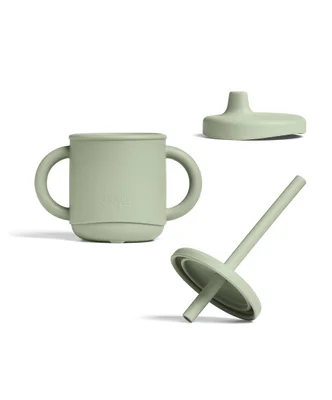
The Mamas & Papas 3-in-1 takes a different approach to the first-cup problem: instead of buying separate cups for each developmental stage, this one adapts. It comes with three interchangeable lids (sippy, straw and open), so it transitions from early weaning sips through to independent open-cup drinking without needing a replacement.
Made entirely from LFGB food-grade silicone, it is softer, more durable and less prone to odour than standard plastic cups. It bounces rather than shatters when thrown from a highchair, and the one-sided handle is shaped for small hands. A cleaning brush is included in the box. The muted colour palette (Truffle, Kiwi, Melba) coordinates with the wider Mamas & Papas weaning range.
What parents love
- Three stages in one cup. Sippy lid for beginners, straw lid for the next stage, then open cup when they are ready. Genuine long-term value. "We started with the sippy lid at six months and now at fourteen months she's using the straw. I love that we haven't had to buy three separate cups."
- Virtually indestructible. Silicone bounces off hard floors without cracking, chipping or scratching. It looks new after months of daily use.
- Easy to clean. Dishwasher-safe with included brush. No hidden valves or narrow channels to harbour mould.
- Premium feel. The silicone material and minimalist design feel noticeably more premium than standard plastic cups.
What to know before you buy
- Squeeze spillage. Silicone is flexible, so if your baby grips hard, liquid can squeeze out of the top. Expect the odd wet patch.
- Small and unstated capacity. The exact volume is not published; based on the dimensions, it holds roughly 150ml, which older toddlers will drain quickly.
- Higher price point. At around sixteen pounds, it costs more than most single-stage cups, though the 3-in-1 versatility offsets this over time.
Best for
- Families who want one cup that covers the entire weaning journey
- Parents who are tired of replacing cracked plastic cups
- Anyone who values a coordinated, minimalist weaning setup
The bottom line
There is no single best sippy cup, only the best cup for your baby and your household. If spill-free portability matters most, the Munchkin Miracle 360 is hard to beat for the price. If you want to follow NHS guidance and teach open-cup skills from the start, the Doidy Cup is the gold standard. For eco-conscious families on a budget, the Tommee Tippee First Cup three-pack offers exceptional value. Bottle-fed babies who refuse hard spouts tend to take to the MAM Starter Cup fastest. And if you want a single cup that adapts as your baby grows, the Mamas & Papas 3-in-1 saves you buying three separate cups down the line.
Whichever you choose, the most important thing is consistency. Offer the cup at every meal, keep sessions short and relaxed, and try not to stress about the mess. Every baby figures it out eventually, and the floor dries faster than you think.
¿Listo para crear tu lista de bebé?
Empieza tu lista de bebé gratis hoy y compártela con amigos y familia.
Empezar gratis