Baby-Led Weaning vs Purees: Which Approach Actually Suits Your Family?
BLW or spoon-feeding? We break down both approaches, bust the biggest myths, and help you figure out what works for your baby (spoiler: mixing the two is totally fine).
Picture this: your baby has just turned six months. They are sitting up, grabbing at your toast, and eyeing your dinner plate like a tiny food critic. The time has come to start solids, and suddenly the internet has a LOT of opinions about how you should do it.
On one side, the baby-led weaning crowd is handing their babies whole broccoli spears and strips of omelette from day one. On the other, the puree parents are batch-cooking sweet potato and freezing it into neat little ice cube trays. Both camps sound very sure of themselves. Both make the other approach sound slightly terrifying. And you are sitting there thinking: which one is actually right? 🥦
Here is the honest answer: neither approach is better. They are just different. And the best-kept secret in weaning? Most families end up doing a bit of both.
What Is Baby-Led Weaning, Really?
Baby-led weaning (BLW) skips purees entirely. Instead of spooning food into your baby's mouth, you offer soft, graspable pieces of real food and let them feed themselves from the very beginning. Think steamed carrot batons, strips of ripe avocado, pieces of banana, or toast fingers with a thin spread of nut butter.
The idea is simple: your baby explores textures, tastes, and shapes at their own pace. They decide what goes in their mouth, how much they eat, and when they have had enough. It is messy, it is slow, and yes, quite a lot of it ends up on the floor. But it teaches babies to chew before they swallow, and it lets them develop hand-eye coordination and independence around food from the start.
BLW was popularised by Gill Rapley, a former health visitor and midwife, who argued that babies are perfectly capable of feeding themselves if we let them. The approach has grown hugely popular over the last decade, and for good reason: it takes the pressure off mealtimes and makes the whole family eat together.
And Spoon-Fed Purees?
Traditional weaning starts with smooth purees, usually single-veg or single-fruit blends, offered on a soft spoon. Over the weeks and months, you gradually thicken the texture, introduce lumps, and eventually move on to mashed and chopped family foods.
This approach gives you more control over what goes in (and roughly how much). It can feel reassuring, especially if you are anxious about choking, and it is easier to track which foods your baby has tried. Many parents find it less chaotic at mealtimes, and it works well if your baby is in nursery during the day, where staff may prefer to spoon-feed for practical reasons.
There is nothing outdated about purees. Plenty of babies thrive on them, and they have been the standard weaning approach recommended by health professionals for decades.
The Myths That Need Busting
"BLW babies are less fussy eaters." There is some early research suggesting BLW babies may be slightly less picky, but fussiness is influenced by temperament, genetics, exposure, and about a hundred other things. Offering a breadstick at six months does not guarantee a teenager who eats sushi.
"Purees make babies lazy chewers." Not true. Babies who start on purees and progress through textures at a normal pace learn to chew just fine. The key is not staying on completely smooth purees for months on end. By around eight months, most babies should be experiencing some lumps and soft finger foods regardless of which approach you started with.
"BLW babies choke more." Research does not support this. Gagging, yes, that happens more with BLW (and it looks alarming, but it is a normal protective reflex). Actual choking rates appear to be similar across both methods, provided you follow the safety basics: sitting upright, never left unattended, food cut into safe shapes, no whole grapes or nuts.
"You have to pick one and stick with it." Absolutely not. This is perhaps the biggest myth of all. Combination weaning, offering purees on a spoon alongside finger foods on the tray, is what most families actually do. It is not cheating. It is just practical.
What You Will Need for BLW
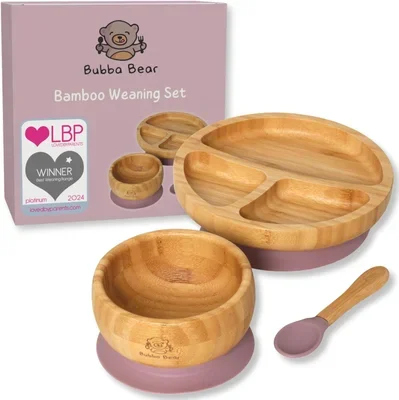
Baby-led weaning is gloriously minimal on kit, but there are a few things that make the mess manageable. A sturdy highchair that your baby can sit upright in is non-negotiable. A full-coverage bib is genuinely life-changing, because food gets everywhere: sleeves, chest, behind the ears, somehow in the nappy. And a suction plate or divided tray helps keep food on the table rather than on the dog.
Beyond that, you just need food. Soft-cooked vegetables in finger-sized pieces, ripe fruit, strips of toast, well-cooked pasta. No gadgets, no special baby food, no subscription boxes. Just your regular family meals, adapted slightly for tiny hands.
What You Will Need for Purees
Spoon-feeding needs a bit more prep work up front. You will want a way to blitz food (a hand blender does the job perfectly), some small pots or ice cube trays for freezing portions, and a set of soft weaning spoons that are gentle on sore gums.
Batch cooking is your friend here. Cook up a big pan of butternut squash, carrot, or sweet potato, blitz it, portion it out, and freeze. You will have weeks of meals ready to defrost in minutes. As your baby progresses, you simply blitz for less time, leaving more texture in the mix.
The Combination Approach (What Most People Actually Do)
Here is a secret the parenting books do not always mention: the vast majority of families end up somewhere in the middle. You might offer porridge on a spoon for breakfast and soft broccoli florets for them to grab at lunch. You might start with purees because it feels safer, then introduce finger foods a few weeks later when your confidence grows. Or you might go full BLW at home but send puree pouches to nursery because it is simpler for the staff.
This is not a failure. It is not "doing it wrong." It is responsive parenting, adapting to your baby, your schedule, and your sanity. The goal of weaning is not to follow a method perfectly. It is to help your baby learn to eat, enjoy food, and eventually sit at the table and share a meal with the people they love.

Safety Basics for Both Approaches
Whichever route you take, the safety rules are the same:
- Wait until your baby is around six months and showing all three signs of readiness: sitting up with minimal support, good head control, and reaching for food and bringing it to their mouth.
- Always supervise mealtimes. Always.
- Cut round foods (grapes, cherry tomatoes, blueberries) lengthways, never into coin shapes.
- Avoid whole nuts, large chunks of raw apple, and anything coin-shaped or marble-sized.
- Learn the difference between gagging and choking. Gagging is loud, coughing, retching, eyes watering. It is your baby's body doing its job. Choking is silent. Take a baby first aid course before you start weaning if you can, it will make you feel a hundred times calmer.
How to Decide What Is Right for You
There is no blood test, no quiz, and no health visitor assessment that will tell you the "correct" weaning method. But here are some honest questions to ask yourself:
How do you feel about mess? BLW is properly messy, especially in the early weeks. If food on the walls makes you tense, starting with purees might feel more comfortable, and you can introduce finger foods gradually as your tolerance (and your floor-wiping reflex) improves.
Is your baby in childcare? Check with your nursery or childminder. Some are happy to offer finger foods, others prefer purees for safety and staffing reasons. There is no point battling a nursery's mealtime policy when you could simply do BLW at home and purees during the day.
Does your baby have any medical considerations? Premature babies, babies with developmental delays, or babies with specific medical conditions may benefit from a more guided approach. Your health visitor or paediatrician can help you work out what is appropriate.
What does your gut say? Seriously. You know your baby. If they are grabbing food off your plate with the enthusiasm of someone who has never eaten, maybe just hand them a steamed carrot and see what happens. If they seem overwhelmed by textures, a smooth puree on a spoon might be a gentler first step. You can always adjust.
The Only Thing That Matters
Weaning is not a competition. It is not a parenting philosophy. It is just teaching a small human to eat food, and that is a process that takes months (honestly, years) regardless of how you start. Your baby will not remember whether their first food was a broccoli floret or a spoon of butternut squash. They will remember mealtimes that felt safe, relaxed, and shared with people who love them. 💛
However you choose to do it, you have got this. And if you want to build a Nest with all the weaning gear you will need, start your wishlist here and let the people who love you chip in.
Ready to Create Your Baby Registry?
Start your free baby registry today and share it with friends and family.
Get Started Free