Baby-Proofing Your Home: What Actually Matters (and What You Can Probably Skip)
Your baby just started moving and suddenly your home looks like a hazard zone. Here is what genuinely keeps them safe, what is worth buying, and what the internet is overcomplicating.
When did your living room become an obstacle course? One day your baby is lying on a play mat, staring at a crinkly toy. The next, they are commando crawling towards the TV stand at a speed that genuinely startles you. And just like that, every table corner, every trailing cable, every cupboard full of cleaning spray becomes a thing you notice for the first time.
Welcome to the baby-proofing phase. It feels overwhelming, but here is the truth: you do not need to turn your home into a padded cell. Most of what keeps your baby safe is common sense, a few well-placed products, and getting down on your hands and knees to see your house from their height. Literally. Crawl around your living room. You will spot hazards you never knew existed.
This guide breaks it down into what genuinely matters, what is probably worth doing, and what the internet has convinced you is essential when it really is not.
When Should You Start?
The short answer: before your baby starts moving. Most babies begin crawling between six and ten months, but some skip crawling entirely and go straight to pulling up on furniture. The sweet spot for baby-proofing is around five to six months, before they surprise you with a sudden lunge towards something they absolutely should not have.
That said, do not panic if your baby is already on the move and you have not done a thing. Start with the non-negotiables below and work through the rest over a weekend. You do not need it all done in one day.
The Non-Negotiables
These are the things that prevent serious injuries. Not nice-to-haves, not Instagram aesthetics. These are the ones that actually matter.
Stair gates
If you have stairs, a stair gate is not optional. Falls down stairs are one of the most common causes of injury in under-fives in the UK. You need one at the top and one at the bottom. Pressure-fit gates work brilliantly for doorways and the bottom of stairs. For the top of stairs, a wall-mounted gate is safer because it cannot be pushed out of position by a determined toddler.
Look for a gate you can open with one hand while holding a baby in the other. If it takes two hands and a degree in engineering, you will leave it open. And an open gate is the same as no gate at all.
Socket covers
UK sockets have built-in shutters that prevent a child poking something into the holes. But socket covers still provide an extra layer of reassurance, especially once your baby discovers that things go into holes. A pack of ten costs a few pounds and takes five minutes to fit across the house.
Furniture anchoring
This one does not get talked about enough. Freestanding bookshelves, chests of drawers, and TV units can topple when a toddler pulls themselves up on them. It happens more often than you think, and the injuries can be devastating. Most furniture comes with wall-anchoring straps in the box. Use them. Every single bookshelf, every tall unit, anything that could tip forward under the weight of a climbing child.
If your furniture did not come with straps, you can buy anti-tip kits for a few pounds online. This is the single most important thing on this list.
Blind cord safety
Looped blind cords are a strangulation risk. This is not an exaggeration or a worst-case scenario. If your blinds have looped cords, either replace them with cordless blinds or fit a cleat hook high up on the wall to wrap the cord around, well out of reach. Most councils will provide free cord cleats if you ask.
The "Probably Worth It" Tier
These will not prevent a catastrophe, but they will save you a lot of tears (yours and theirs) and trips to the kitchen for frozen peas.
Corner protectors
Coffee tables are the perfect height for a newly-walking toddler to smack their forehead on. Hard. Corner protectors stick on with adhesive and cushion the blow when the inevitable happens. They are cheap, easy to apply, and surprisingly effective at preventing those forehead goose eggs. 🦆
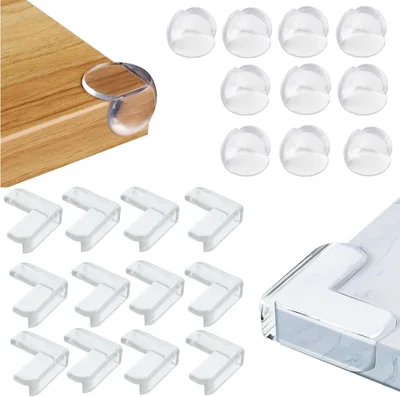

Go for clear ones if you want them to be less visible. They will not win any design awards, but your toddler's forehead will thank you.
Cupboard and drawer locks
You do not need to lock every single cupboard. Focus on the ones that contain cleaning products, medicines, sharp objects, or anything small enough to be a choking hazard. The kitchen is the main offender here. Magnetic locks are the neatest option because they are invisible from the outside, but simple plastic latches do the job too.
A nice trick: leave one low cupboard unlocked and fill it with safe, interesting things (plastic containers, wooden spoons, a few pans). Your baby gets the thrill of opening a cupboard and exploring, you get five minutes of peace. Everyone wins.
Toilet lock
Toddlers are fascinated by toilets. They will put their hands in, drop things in, and, in truly memorable cases, try to climb in. A simple toilet lid lock prevents all of the above. Worth it for peace of mind alone.
Creating a Safe Base
Sometimes the simplest approach is not to proof the entire house at once, but to create one fully safe area where your baby can explore freely. A playpen or a room gated off at the doorway gives you a space where you know everything is safe, so you can actually go to the loo or make a cup of tea without hovering.
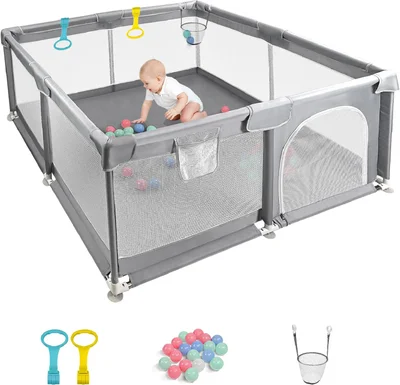
This is not about caging your child. It is about giving yourself a safe zone for the moments when you cannot have eyes on them every second. Because you cannot, and pretending otherwise is a fast track to burnout.
What You Can Probably Skip
The baby-proofing industry would love you to believe that every surface in your home is a death trap. It is not. Here are some things the internet insists you need that most parents end up not using:
- Door knob covers - Most babies and young toddlers cannot turn a round door knob anyway. By the time they can, they are old enough to understand "do not open that door." Save your money.
- Foam edge bumpers for every surface - Covering your entire fireplace surround in foam looks dreadful and teaches your child nothing about being careful around hard surfaces. Supervise instead, and save the bumpers for the sharpest edges only.
- Oven door guards - Modern ovens have cool-touch doors. If yours does not, keep your child out of the kitchen while it is on, which you should be doing anyway.
- Full-room foam floor tiles - Babies and toddlers fall. It is part of learning to walk. A normal carpet or rug is perfectly fine. You do not need to turn your living room into a soft play centre.
The Room-by-Room Quick List
Print this, stick it on the fridge, and work through it at your own pace. ✅
Kitchen
- Lock cupboards with cleaning products and sharp items
- Turn pan handles inward on the hob
- Keep hot drinks away from table edges
- Tuck away dangling kettle and appliance cords
Living room
- Anchor bookshelves and TV units to the wall
- Fit corner protectors on coffee tables
- Tidy trailing cables behind furniture
- Move breakable items up high
Bathroom
- Fit a toilet lock
- Store medicines and razors in a high, locked cabinet
- Use a non-slip bath mat
- Never leave water standing in the bath
Bedrooms
- Anchor chests of drawers
- Remove blind cords or fit cleats
- Check cot meets current safety standards
- Keep small items (coins, batteries, jewellery) out of reach
Hallways and stairs
- Fit stair gates top and bottom
- Keep shoes and bags off the floor (trip hazards for you carrying baby)
- Cover any radiators that get very hot
The Honest Bottom Line
Baby-proofing is not about making your home risk-free. That is impossible, and trying to achieve it will drive you slightly mad. It is about removing the serious hazards, reducing the everyday bumps, and giving yourself enough peace of mind to let your baby explore without hovering over them every second.
Start with the non-negotiables, work through the probably-worth-it list, and ignore the stuff that does not apply to your home. Your baby needs to learn how the world works, and that includes the occasional gentle bump. Your job is just to make sure the bumps stay gentle.
Want to keep track of all the safety bits and gear you still need? Pop them on your BubsNest wishlist and tick them off as you go.
Ready to Create Your Baby Registry?
Start your free baby registry today and share it with friends and family.
Get Started Free