Babywearing: How to Choose a Carrier That Actually Works for You
Wraps, structured carriers, lightweight summer picks, and hiking frames - here is how to find the right baby carrier for every stage and season.
Summer is here, and you have got visions of park picnics, farmers' market strolls, and maybe a cheeky trip to the coast. Now picture trying to wrestle a pushchair across a pebble beach. Or through one of those impossibly narrow cafe doors. Or up two flights of stairs to your friend's flat while also carrying a changing bag and somehow holding a coffee.
This is where babywearing changes everything. 🌿
A good baby carrier gives you your hands back, your freedom back, and keeps your baby blissfully happy against your chest. Research consistently shows that carried babies cry less, sleep better during the day, and feel more secure. You get to move through the world like a human being instead of a pushchair logistics coordinator. Everyone wins.
But choosing a carrier? That is where it gets overwhelming. Wraps, structured carriers, ring slings, hiking frames, the options are endless, the price range is enormous, and every parent you ask has a completely different opinion. So here is the honest breakdown of what actually works, when, and for whom.
Stretchy Wraps: The Newborn Snuggle Machine
If your baby is brand new and you want that heart-on-heart closeness, a stretchy wrap is hard to beat. It is essentially a long piece of jersey fabric that you tie around yourself, creating a snug pouch for your baby to curl up in. Think of it as a portable cuddle.
Stretchy wraps are brilliant for the first few months. They mould to your baby's shape, distribute weight across your shoulders and back, and most babies fall asleep in them within about four minutes flat. The learning curve is real, though. The first few times you try tying one, you will feel like you are wrestling with an extremely long scarf while someone films you for a comedy sketch. Watch a couple of videos, practise with a teddy bear if it helps, and give yourself three or four goes. It clicks.
They work best from birth to around six or seven months, or roughly 8kg. After that, the stretch means your baby starts to sag a bit, and you will want something more structured.



Structured Carriers: The Everyday Workhorse
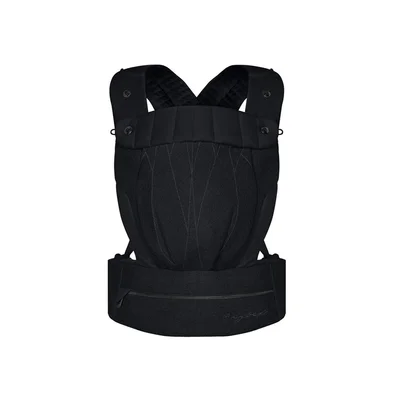
This is what most people picture when they think of a baby carrier. Padded shoulder straps, a waist belt, buckles, and a panel that your baby sits in. No tying, no wrapping, just clip and go.
Structured carriers are the Swiss army knife of babywearing. Most can be used from newborn (with an insert or built-in newborn setting) right through to toddlerhood. They are quick to put on, easy for partners to share, and sturdy enough for longer outings. The waist belt takes the weight off your shoulders and puts it on your hips, which makes a massive difference on a long walk.
The best ones offer both front-facing and parent-facing positions, plus a back carry for when your baby is older and wants to see the world from above your shoulder. Look for wide, padded straps and an adjustable seat width. Your baby's knees should sit higher than their bottom in a natural M-shape. This is the position recommended for healthy hip development, and any decent carrier will support it.

Lightweight Carriers: Your Summer Best Friend
Here is the thing about babywearing in warm weather: you are essentially strapping a hot water bottle to your chest. Babies run warm. You run warm. Add sunshine and a padded carrier, and things get sweaty fast. ☀️
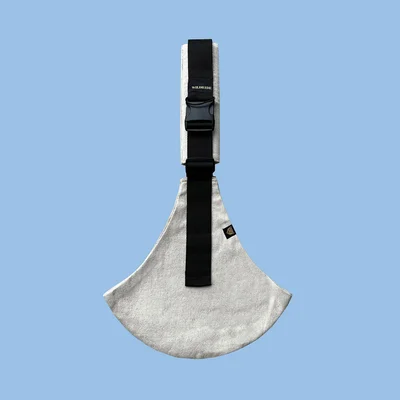
Lightweight carriers made from linen or breathable mesh are a game changer for summer. They weigh next to nothing in your bag, dry quickly if they get splashed at the beach, and keep air circulating between you and your baby. Some are so compact they fold down to the size of a paperback.
They are also brilliant as a backup carrier. Keep one in the bottom of the pushchair for those moments when your baby decides they are absolutely not sitting in the pram for one more second, thank you very much. It happens approximately every outing.
Hiking Carriers: For the Adventurous Types
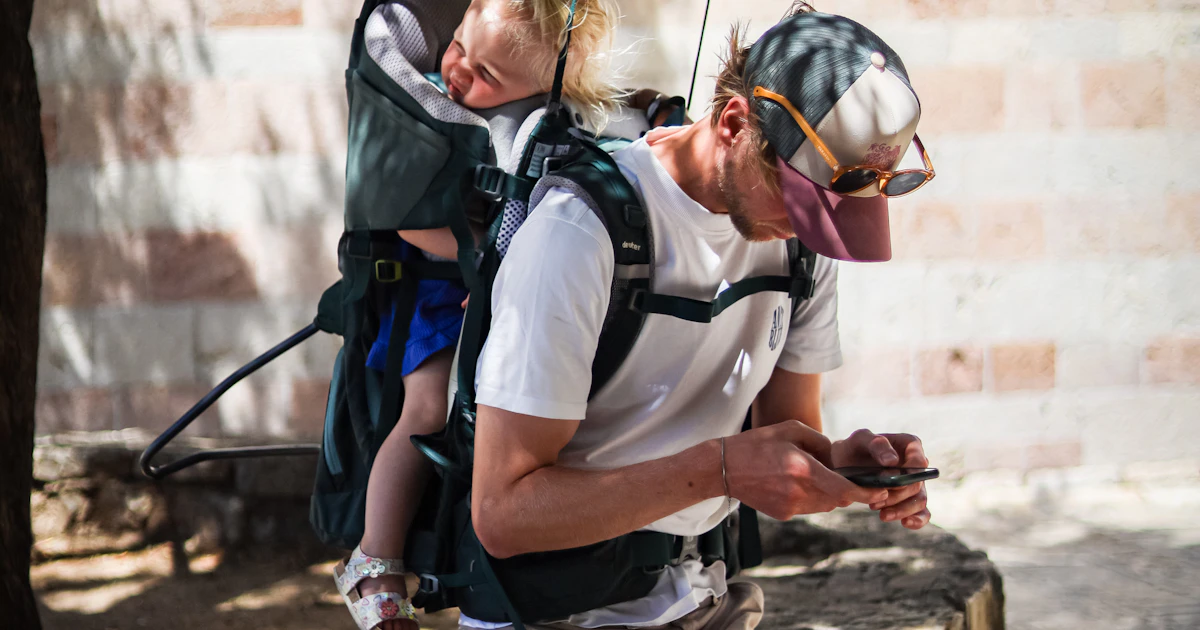
Once your baby can sit up independently (usually around six months), a framed hiking carrier opens up a whole new world. These are the backpack-style carriers with a metal frame, a kickstand, and often a sun shade and storage compartments. They are designed for trails, hills, and longer walks where a soft carrier would leave your back in pieces.
They are not exactly compact. You will not be slipping one into your changing bag. But for families who love the outdoors, they are transformative. Your little one sits up high, gets an incredible view, and you can actually cover serious distance without your shoulders staging a protest. Most are suitable from about six months to three years.
Getting the Fit Right
Whatever carrier you choose, fit is everything. A poorly adjusted carrier is uncomfortable for you and unsafe for your baby. Here are the non-negotiables:
- Close enough to kiss. Your baby's head should be high enough on your chest that you can easily kiss the top of their head. If they are down by your belly button, the carrier is too loose.
- Visible airway. You should always be able to see your baby's face. Their chin should be off their chest, with at least a finger's width of space.
- M-position for hips. Knees higher than bottom, thighs supported to the knee. This supports proper hip development.
- Snug but not tight. The fabric should be firm enough that your baby does not slump or shift when you lean forward slightly. But you should still be able to slide a hand between you and baby.
If something feels off, it probably is. Loosen, readjust, try again. Most carrier frustrations are actually fit frustrations in disguise.
The Worries (Squashed)
Will I spoil my baby by carrying them too much? No. Babies are designed to be carried. Holding your baby close is not creating a bad habit, it is meeting a biological need. Carried babies tend to be calmer, which actually makes them more independent later on, not less. 💛
What about my back? A well-fitted carrier should not hurt your back. If it does, the fit is wrong, not the concept. Adjust the waist belt so it sits on your hip bones, tighten the shoulder straps, and check the panel height. The difference between agony and comfort is often one small adjustment.
Is it safe from birth? Stretchy wraps and many structured carriers are safe from birth, provided your baby weighs at least 3.5kg and you follow the positioning guidelines above. Always check the manufacturer's age and weight recommendations for your specific carrier.
One Last Thing
You do not need to choose just one. Plenty of parents have a stretchy wrap for the newborn weeks, a structured carrier for everyday use, and a lightweight one stuffed in the pushchair for emergencies. They are not expensive compared to pushchairs, and they earn their keep many times over.
If you are building your baby wishlist, a carrier is one of the most-used items you will register for. Add one (or two) to your BubsNest list and let the people who love you help get you sorted. Your back, your hands, and your pebble-beach ambitions will all thank you.
Ready to Create Your Baby Registry?
Start your free baby registry today and share it with friends and family.
Get Started Free