Colic, Wind, and Reflux: What Actually Helps When Your Baby Won’t Stop Crying
Every baby gets wind. Not every baby gets colic. Here’s how to tell the difference, what genuinely soothes each one, and when to call your GP.
Every single baby gets wind. It is a universal truth of newborn life, right up there with "you will never eat a hot meal again" and "one sock will always go missing." But here is the thing that catches so many new parents off guard: wind, colic, and reflux are three different beasts, and what works for one might do absolutely nothing for another.
If you are reading this at some unholy hour while your little one screams with what sounds like genuine fury, take a breath. You are not doing anything wrong. And there are things that genuinely help. \U0001F49B
So What IS Colic, Anyway?
Colic is one of those words that gets thrown around a lot, usually by well-meaning relatives who declare "oh, that baby's got colic" every time there is a cry louder than a whimper. The medical definition is actually quite specific: intense, inconsolable crying for three or more hours a day, three or more days a week, for three or more weeks. Doctors sometimes call it the "rule of threes."
The frustrating truth? Nobody knows exactly what causes it. It is not your diet if you are breastfeeding (despite what your mother-in-law says). It is not something you ate. It is not because you held your baby "wrong." Roughly one in five babies will experience it, and it almost always resolves on its own by three to four months.
That does not make living through it any easier. But knowing it is temporary, and knowing it is not your fault, matters more than you might think right now.
Wind: The Tiny Problem That Sounds Enormous
Wind is simpler to understand and, mercifully, simpler to fix. Babies swallow air when they feed, when they cry, and sometimes just because they exist. That trapped air needs to come out, and until it does, your baby will squirm, grunt, pull their knees up, and quite possibly scream like they are auditioning for a horror film.
The good news is that winding techniques are genuinely effective for most babies. The classic over-the-shoulder burp works well, but if it is not shifting things, try sitting your baby upright on your lap with one hand supporting their chin and gently rubbing their back in circles. Some parents swear by the "tiger in the tree" hold, where baby lies face-down along your forearm with your hand supporting their chest. The gentle pressure on the tummy can work wonders.
A few other tricks worth trying:
- Bicycle legs: lay baby on their back and gently cycle their legs as though they are pedalling. This helps move trapped gas through the digestive system.
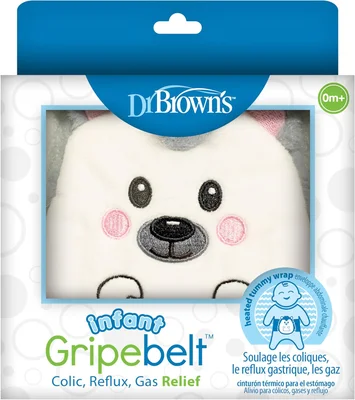
- Warm tummy pressure: a warm (not hot) cloth on baby's tummy, or a gentle heated wrap designed for newborns, can relax the muscles and help gas pass.
- Paced bottle feeding: if you are bottle feeding, slow down the feed and keep the bottle at a shallower angle to reduce air swallowed.

Reflux: When the Milk Makes a Comeback
Reflux is different again. It happens because the valve at the top of your baby's stomach is still immature, so milk comes back up after feeds. Some babies bring up quite a lot of milk (possetting), while others have what is called "silent reflux," where the milk comes partway up and goes back down again, causing discomfort without visible spit-up.
Most reflux is what doctors call "happy spitting," meaning baby brings up milk but is otherwise content, gaining weight, and feeding well. This is messy and annoying but not medically concerning. It usually improves as baby grows and that valve strengthens, typically around six months.
Signs that reflux might need medical attention include: baby is not gaining weight, feeds are becoming distressed or refused, there is green or yellow vomit, or baby seems to be in genuine pain during or after every feed. If any of these ring true, chat to your GP or health visitor.
For everyday reflux, keeping baby upright for 20 to 30 minutes after a feed helps enormously. Some parents find that slightly elevating the head end of the cot (a rolled towel under the mattress, not a pillow) can reduce overnight discomfort too.
What Actually Helps (The Honest List)
Right then. You have identified which camp your baby falls into, or maybe they are doing a greatest-hits tour of all three. Here is what parents and professionals consistently say works, no miracle cures or Instagram pseudoscience.
Movement and closeness
There is real science behind why your baby calms down when you hold them close and move. The combination of warmth, heartbeat, and gentle motion mimics being in the womb. Baby carriers and wraps are brilliant for this, because they free up your hands while keeping your little one snug against your chest.


White noise
The inside of a womb is loud. Really loud, about the volume of a vacuum cleaner. So the silence of a nursery can actually be unsettling for a newborn. White noise, whether from a dedicated machine, an app, or even a running shower, can be genuinely transformative for a colicky baby. Keep it at a steady volume (no louder than a shower) and position it at least a metre from baby's head.
Gripe water and tummy remedies
Gripe water has been a go-to for windy babies for generations, and many parents find it genuinely helpful. Modern formulations are alcohol-free and sugar-free, using dill seed oil and sodium bicarbonate to ease trapped gas. It is not a magic fix, but for straightforward wind it can take the edge off within minutes.
Anti-colic bottles
If your baby is bottle-fed (or combination-fed), switching to an anti-colic bottle can make a noticeable difference. These bottles use venting systems to reduce the amount of air baby swallows during feeds. Dr Brown's, MAM, and Tommee Tippee all make well-reviewed options. It might take trying a couple of different ones to find the bottle your baby gets on with, which is annoying but normal.
Tummy time (yes, really)
Gentle tummy time between feeds can help move trapped gas through baby's system. Even a few minutes on their tummy on your chest counts. Just avoid tummy time straight after a feed if reflux is an issue.
When to Talk to Your GP
Most wind, colic, and reflux are completely normal parts of newborn life and resolve on their own. But trust your instincts. If something feels wrong, it is always worth checking. Book an appointment if:
- Your baby is not gaining weight or is losing weight
- There is blood in their nappy or vomit
- Vomit is green, yellow, or forceful (projectile)
- Your baby has a fever alongside the crying
- Feeds are being consistently refused
- You feel overwhelmed or unable to cope (this is a completely valid reason to seek help)
Your GP can check for things like cow's milk protein allergy (CMPA), which affects around two to three percent of babies and can cause symptoms that look a lot like colic or reflux. If CMPA is suspected, they will guide you through the next steps, which usually involve a dietary change for breastfeeding mums or a switch to a specialist formula.
The Bit Nobody Says Out Loud
Listening to your baby cry inconsolably is one of the hardest things about early parenthood. It is designed to be hard. Your brain is literally wired to find that sound distressing. So if you are feeling frustrated, exhausted, or tearful yourself, that is not weakness. That is biology.
It is always, always okay to put your baby down somewhere safe (their cot, their Moses basket) and step out of the room for two minutes to breathe. Nobody has ever been a worse parent for taking a moment to collect themselves. And if the crying is getting to you night after night, please talk to someone. Your GP, your health visitor, the Cry-sis helpline (0800 228 9120), a friend, anyone.
This phase ends. It really, truly does. And when it does, you will look back and be quietly amazed at what you got through. You are doing brilliantly. \U0001F49B
Building your newborn kit? Add the essentials to your BubsNest wishlist so family and friends can help with the things that actually make a difference.
Ready to Create Your Baby Registry?
Start your free baby registry today and share it with friends and family.
Get Started Free