Expecting a Winter Baby? The Cold-Weather Essentials Nobody Thinks to Buy
Due between November and February? Here is what to add to your list beyond the obvious snowsuit, from tog ratings to layering rules and getting outside safely.
Here is a number that catches most expecting parents off guard: the safest room temperature for a sleeping baby is between 16 and 20°C. That is genuinely chilly. If you are due between November and February, keeping your little one warm enough to be comfortable but cool enough to sleep safely becomes one of the trickiest balancing acts of early parenthood. ❄️
The good news? It is mostly about having the right kit rather than cranking the heating up to tropical. And a surprising amount of it is stuff you will not find on the standard "newborn essentials" lists, which tend to be written for a mythical baby born in perpetual spring.
This is everything we wish someone had told us about preparing for a winter baby, from the tog ratings that actually matter to the outdoor gear that earns its keep on dark January walks.
The Sleep Setup: Getting the Temperature Right
Winter babies and sleep can feel like a puzzle. The room needs to stay cool (16-20°C is the sweet spot) but your baby needs to feel warm enough to settle. The temptation to pile on blankets is real, but loose bedding is a no-no for safe sleep, so the solution comes down to two things: knowing the room temperature and choosing the right sleeping bag.
A decent room thermometer takes the guesswork out entirely. You are not aiming for precise control, just a quick glance before bed to know whether you need a 1 tog or 2.5 tog sleeping bag tonight. Some baby monitors include a temperature sensor, but a standalone thermometer in the room is more reliable and much cheaper.
Tog ratings, simplified. A tog number tells you how warm a sleeping bag is. For winter, you want a 2.5 tog sleeping bag for rooms between 16 and 20°C. If your home runs warmer (above 20°C), drop to a 1 tog. Below 16°C? Add a layer underneath rather than reaching for blankets. A long-sleeved vest and babygrow underneath a 2.5 tog bag is the classic winter combo.
One thing to know: newborns under about 3.5 kg sometimes swim in standard sleeping bags. If your baby arrives early or small, a swaddle is your friend for the first few weeks until they are big enough for a proper bag.
Layering Without Losing Your Mind
There is a golden rule for dressing a winter baby, and once you learn it, everything clicks: dress them in one more layer than you are wearing. That is it. If you are comfortable in a long-sleeved top, your baby wants a long-sleeved vest plus a babygrow. If you are adding a jumper, they get a cardigan on top. 🧶
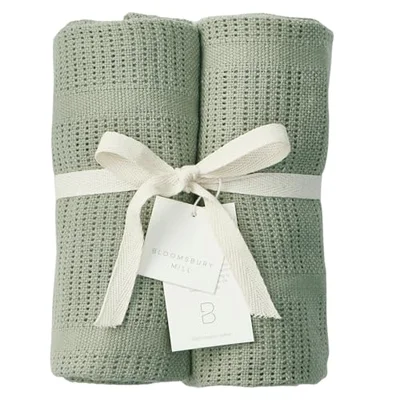
For sleep, the layers-plus-sleeping-bag approach means you never need a duvet, quilt, or loose blanket in the cot. But for daytime naps in the pushchair or a car seat, a lightweight cellular blanket is genuinely useful. The little holes in the weave allow air to circulate (important for safe sleep) while still trapping warmth. Tuck it in firmly around your baby rather than draping it loosely.

A word on hats indoors: babies lose heat through their heads, so a hat is brilliant outside, but take it off once you are inside. Your baby cannot regulate their temperature as well as you can, and overheating is a bigger risk than being slightly cool.
Getting Outside: Yes, Even in January
Fresh air is good for you and good for the baby, even when it is freezing. Most winter babies are absolutely fine going outside from day one, as long as they are dressed for it. The trick is a warm all-in-one over their indoor clothes rather than trying to layer twenty individual items onto a wriggling newborn. 🌨️
A pramsuit (sometimes called a snowsuit) is the easiest option. Look for one with a full-length zip rather than poppers, because at 7am with cold fingers, every popper is a small battle. Fleece-lined is ideal for most winters. You do not usually need one rated for arctic expeditions, just something that cuts the wind and keeps the warmth in.
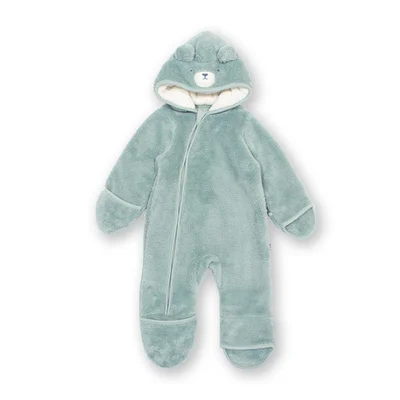

One important safety note: thick pramsuits and car seats do not mix. The padding can compress in a crash, leaving the harness too loose. Pop your baby in their indoor layers for car journeys, strap them in snugly, and drape a blanket over the harness. Save the pramsuit for the pushchair.
What You Can Probably Skip
It would not be a winter baby guide without a quick myth-bust. Here is the stuff that sounds essential but usually is not worth the money:
- Heated mattress pads. These sound lovely but go against safe sleep guidance. A warm sleeping bag does the job without the risk.
- Baby gloves that never stay on. Seriously. Scratch mitts are already impossible. In the pushchair, tuck their hands inside the pramsuit or blanket instead.
- A full wardrobe of winter outfits in newborn size. Your baby will live in babygrows for weeks. Two decent pramsuits and a pile of vests will get you through. They grow out of newborn sizes horrifyingly fast.
What IS worth the money: a good pair of thermal socks for you. Night feeds in a cold house are no joke, and nobody talks about the parent's comfort enough.
Your Winter Baby Checklist
Here is the short version for your BubsNest registry:
- Room thermometer (the one thing that replaces guesswork)
- 2.5 tog sleeping bag in the right size
- 2-3 cellular blankets for daytime naps and the pushchair
- A pramsuit with a full-length zip
- Cotton vests and long-sleeved babygrows for layering
- A warm hat that actually stays on (bonnets with ties are your best bet)
That really is the core of it. A winter baby does not need a dramatically different kit list to a summer one, just a few smart swaps and a thermometer you trust. You have got this. 💛
Ready to Create Your Baby Registry?
Start your free baby registry today and share it with friends and family.
Get Started Free