Growth Spurts and Developmental Leaps: What’s Actually Happening When Your Baby Won’t Settle
Your baby is suddenly fussy, feeding constantly, and refusing to sleep. Here’s what growth spurts and developmental leaps actually are, how to spot them, and what genuinely helps.
Your baby's brain doubles in size during the first year of life. Doubles. That is an astonishing amount of rewiring happening inside a skull the size of a grapefruit. So when your previously settled, perfectly content baby suddenly transforms into a fussy, clingy, sleep-refusing gremlin, there is almost certainly a biological reason behind it. And it has a name. Several, actually.
Growth spurts and developmental leaps are two of the most common explanations for those baffling phases where everything seems to go sideways. They overlap, they sometimes happen at the same time, and they are responsible for approximately 90% of the panicked late-night Google searches that start with "why won't my baby..."
Here is what is actually going on, and what you can do about it.
Growth Spurts: The Body Catching Up
A growth spurt is exactly what it sounds like. Your baby's body is physically growing, sometimes noticeably overnight. You put them down in a sleepsuit that fitted perfectly and wake up to ankles poking out the bottom. Bones are lengthening, muscles are building, and all of that requires fuel.
The telltale signs are hard to miss:
- Feeding constantly, sometimes cluster feeding for hours at a stretch
- Shorter, more disrupted sleep (or occasionally sleeping more than usual)
- General fussiness and irritability
- Suddenly outgrowing clothes that fitted last week
Growth spurts tend to be short and sharp. Most last two to three days, occasionally stretching to a week. They commonly hit around two weeks, three weeks, six weeks, three months, and six months, though every baby has their own schedule and yours may not have read the textbook.
The most important thing to know? Your milk supply will catch up. If you are breastfeeding and it feels like your baby is suddenly draining you dry, that constant feeding is your baby placing an order for more. Supply responds to demand, and within a day or two your body adjusts. It is not a sign that you are not producing enough. It is the system working exactly as it should.
Developmental Leaps: The Brain Catching Up
Developmental leaps are a different beast entirely. Where growth spurts are about the body, leaps are about the brain. Your baby is suddenly able to perceive the world in a new way, and that shift can be genuinely overwhelming for them.
Imagine waking up one morning and suddenly being able to see colours you have never seen before. Exciting, yes, but also deeply unsettling. That is roughly what a developmental leap feels like for your baby. The world just got bigger and more complicated, and they are not sure how to handle it yet.
During a leap, you might notice:
- Extreme clinginess, wanting to be held constantly
- Crying more than usual, sometimes for no obvious reason
- Sleep going completely haywire
- Changes in appetite (more or less than normal)
- Seeming unsettled or anxious in situations they were fine with before
The payoff comes at the end. Once the stormy phase passes, your baby emerges with a new skill. Reaching for objects. Rolling over. Recognising faces from across the room. Understanding that when you leave, you still exist. Every leap is building something, even when it feels like everything is falling apart.
How to Tell Which One You Are Dealing With
Honestly? It does not always matter. The practical response is similar either way: more comfort, more patience, more feeds if they want them. But if you are the sort of person who feels calmer knowing what is happening (and most of us are), here is the shortcut.
If your baby is feeding like a bottomless pit but otherwise fairly cheerful between feeds, it is probably a growth spurt. If they are clingy, unsettled, fussy, and seem generally overwhelmed by existence, it is more likely a leap. And if both are happening at once? Welcome to the fun house. It passes. 🌱
What Actually Helps
There is no fast-forward button for growth spurts or leaps. They take as long as they take, and no amount of white-knuckling will speed them up. But there are things that genuinely make the ride smoother for everyone involved.
Feed on demand
If your baby wants to feed, let them feed. This is not the moment for schedules or clock-watching. Their body or brain is telling them they need more, and fighting that creates stress for both of you. Offer the breast or bottle whenever they cue, even if it feels like you only just finished the last feed. You did. That is normal right now.
Wear them close
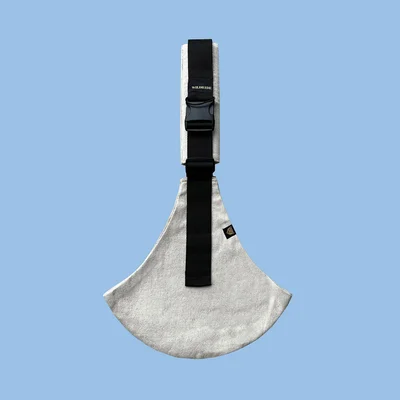
Clingy babies during leaps are not being difficult. They are scared. The world just changed and you are their safe place. A baby carrier lets you be that safe place while still having your hands free to make a cup of tea, put a wash on, or simply exist as a person who does things other than sitting on the sofa.

Lean on white noise
When sleep goes sideways during a spurt or leap, white noise can be a genuine lifesaver. The constant, gentle sound mimics what your baby heard in the womb, which is deeply soothing when everything else feels unfamiliar and overwhelming. Pop it on before sleep, keep the room dark, and let the sound do some of the heavy lifting.
Swaddle younger babies
For newborns going through those early growth spurts (and there are a lot of them in the first six weeks), swaddling recreates that snug, contained feeling of the womb. It reduces the startle reflex that wakes them up and provides the kind of firm, gentle pressure that says "you are safe, everything is fine." Once they start showing signs of rolling, it is time to transition out, but in those early weeks a good swaddle is worth its weight in gold.

Try a sleep soother
For the nights when nothing else is working and you have been rocking them for forty-five minutes and your arms have gone numb, a gentle vibrating soother or night light can sometimes bridge the gap between "nearly asleep" and "actually asleep." It is not magic, but on a hard night, even a small advantage counts.
Lower your expectations
This is the most important one and the hardest to follow. During a spurt or leap, the bar for a successful day drops to: everyone survived. The laundry can wait. Dinner can be toast. The developmental activities you saw on social media can happen next week. Right now, your only job is to be there, and you are already doing it.
When Should You Actually Worry?
Most fussy phases are completely normal and self-limiting. But trust your instincts. If your baby has a fever, is refusing feeds entirely (not just eating less), seems lethargic rather than just tired, or you have a gut feeling that something is wrong, call your GP or health visitor. You are not overreacting. You are never overreacting. A quick check for peace of mind is always worth it.
The fussy phases pass. The new skills stick. And one morning, usually about two days after you have convinced yourself that your baby will never sleep again, they will wake up grinning, reach for something they could not reach before, and you will think: oh, that is what all that was about. 💛
Want to build a wishlist of the products that will get you through each phase? Start your BubsNest registry and add the things that actually help.
Ready to Create Your Baby Registry?
Start your free baby registry today and share it with friends and family.
Get Started Free