How to Build Your Baby Wishlist When You Have No Idea Where to Start
Feeling overwhelmed by baby registries? Here is a calm, practical guide to building a wishlist that actually makes sense, from the stuff you will use every day to the things nobody tells you to add.
You have just found out you are having a baby, and somewhere between the happy tears and the mild panic, someone says: "Have you started your wishlist yet?"
So you sit down, open a tab, and immediately face roughly four thousand products you have never heard of. What on earth is a Sleepyhead? Do you need a steriliser or can you just boil things? And why are there seventeen different types of muslin?
Deep breath. Building a baby wishlist does not have to feel like revising for an exam you never signed up for. The trick is to start with what you will actually use, ignore the Instagram noise, and trust that you will figure out the rest as you go. This guide walks you through it, category by category, so you can close that tab with thirty browser windows and feel like you have got a plan. 🌈
Start With What You Will Reach for Every Single Day
Before you even think about pushchairs and nursery furniture, think about the mundane stuff. The items you will grab ten times a day without thinking. These are the backbone of your wishlist, and they are the things most people forget to add because they are not glamorous enough for a flat lay.
Nappies and wipes, obviously. But also: a nappy cream that actually works, a portable changing mat for the changing bag, and a nappy caddy so you are not wandering around the house at midnight looking for cotton wool.
A nappy caddy might sound like a luxury, but once you have one you will wonder how you ever managed without it. Pop it next to wherever you do most of your nappy changes, fill it with nappies, wipes, cream, and a spare vest, and you have got everything within arm's reach. Trust the parents who have gone before you on this one.
Nappy cream is another one that earns its spot immediately. Newborn skin is ridiculously delicate, and nappy rash can appear overnight. Having a good barrier cream ready from day one saves a lot of stress later.
Sleep: Less Is More (Seriously)
Sleep products are where wishlists tend to spiral. There are bassinets, bedside cribs, full-size cots, Moses baskets, travel cots, and about fourteen accessories for each of them. You do not need all of them.
For the first few months, most families use either a bedside crib or a Moses basket in their bedroom. That is it. Your baby does not need a fully decorated nursery on day one. They need a safe, flat sleeping surface, a firm mattress, and something warm to wear.
Speaking of something warm to wear: add a couple of sleep bags to your wishlist. They replace loose blankets (which are not recommended for safe sleep), and they come in different TOG ratings for different seasons. If your baby is due in autumn or winter, start with a 2.5 TOG. Summer babies need something lighter, around 0.5 or 1.0 TOG.
Two or three sleep bags in the right TOG rating will see you through the newborn months. Add a couple of fitted sheets for whatever sleeping surface you choose, and you are done. Resist the urge to add seven decorative cot bumpers and a musical mobile that plays Brahms. Your baby genuinely does not care about the aesthetic. Not yet, anyway.
Feeding: Figure Out the Basics, Worry About the Rest Later
Here is a secret that most registry guides will not tell you: you do not actually know how you will feed your baby until your baby arrives. You might plan to breastfeed exclusively and end up combination feeding. You might plan to bottle-feed from the start and find breastfeeding clicks. Bodies are unpredictable, babies are unpredictable, and that is completely fine.
So what do you add to a wishlist when you do not know the answer yet? Start with the universal stuff. A few bottles (even if you plan to breastfeed, you might want to express at some point), a bottle brush, and a way to sterilise. Muslin squares, because those get used for everything from burping to mopping up milk to emergency sun shade.
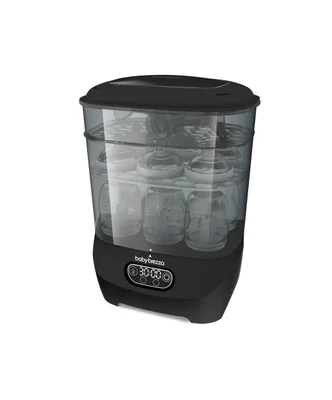


A steriliser that also dries is one of those things that sounds unnecessary until you are hand-drying six bottles at 2 AM and reconsidering all your life choices. It is also a brilliant group gift, the kind of thing three or four people can chip in on, which makes it perfect for a wishlist.
If you are planning to breastfeed, consider adding a breast pump, nursing pads, and nipple cream to your list. If you know you will be bottle-feeding, add a formula dispenser for nights out and a bottle warmer if your budget stretches to it. But do not overthink the feeding section. You will find what works for your baby within the first few weeks, and you can always add things later.
Getting Out and About
The big-ticket items on most wishlists are the pushchair and the car seat, and for good reason. These are the things you will use almost every day for years, and they are also the most expensive.
A few things worth knowing before you add one:
- You do not need a travel system (pushchair + car seat + carrycot) if your budget is tight. A decent pushchair and a separate infant car seat do the same job.
- Think about where you live. Narrow hallway? You need a compact fold. Lots of rough pavements? Bigger wheels grip better. Mostly driving? A lightweight, easy-fold pushchair matters more than suspension.
- Try before you buy if you can. Or at least watch real-parent reviews, not just the brand videos. A pushchair that looks gorgeous on a website might have a fold mechanism that requires three hands and an engineering degree.
Beyond the pushchair, think about a changing bag (backpack style is the most practical, your hands stay free), a pram liner for comfort, and a rain cover. British weather does not care about your plans.
The Bits Nobody Tells You to Add
Every parent has a moment, usually around week two, where they think: "Why did nobody tell me I would need this?" Here are a few things that do not make the typical registry list but absolutely should.
- A decent water bottle for you. Breastfeeding makes you outrageously thirsty, and bottle-feeding means you are up at odd hours. Hydration is not optional.
- Snacks. Not for the baby. For you. One-handed snacks, specifically. Cereal bars, dried fruit, anything you can eat while holding a sleeping baby you do not dare put down.
- Spare cot sheets. You will change them more often than you think. Two is not enough. Four is the sweet spot.
- A room thermometer. Safe sleep guidelines recommend keeping the room between 16 and 20 degrees. A simple thermometer takes the guessing out of it.
- Postpartum recovery bits for the birthing parent. Maternity pads, comfortable pants, a peri bottle. These are not glamorous, but they are essential, and putting them on your wishlist means someone else can quietly sort them for you.
How to Use Group Gifting Without Making It Weird
The pushchair, the cot, the car seat. These are the items that cost real money, and they are also the items your friends and family actually want to help with. Group gifting is how you make that happen without anyone feeling awkward.
On BubsNest, you can add any item to your wishlist and let people contribute towards it. So instead of Auntie Sue buying you a fifth pack of babygrows, she can put twenty quid towards the pushchair you actually want. Everyone feels good, you get what you need, and nobody ends up with a cupboard full of things they cannot use.
The key is to add a mix of price points. Some small things people can buy outright (a pack of muslins, a bath thermometer) and some bigger things people can chip in on together. That way there is something for every budget.
A Quick Word on Timing
There is no perfect time to start your wishlist, but somewhere around 20 weeks tends to work well. You have had your anatomy scan, you know a bit more about what is coming, and you have enough time to think about it without rushing.
Do not try to finish it in one sitting. Add things as you think of them, ask friends with babies what they wish they had registered for, and remember that most wishlists change shape about four times before the baby arrives. That is normal. That is the process working.
The One Thing to Remember
Your wishlist is not a test, and there is no mark at the end. It is a tool to help the people who love you give you things you will actually use. Start simple, add as you learn, and do not let anyone make you feel like you need a specific brand or a certain number of items to be "ready." 💛
You are already doing brilliantly. The fact that you are reading this means you care, and caring is genuinely the only thing your baby needs from you on day one.
Ready to start? Create your BubsNest wishlist here and add things at your own pace. No pressure, no deadlines, just a gentle way to get sorted.
Ready to Create Your Baby Registry?
Start your free baby registry today and share it with friends and family.
Get Started Free