Mixed Feeding: Your Honest, No-Guilt Guide to Combining Breast and Bottle
Around 80% of UK mums start breastfeeding. By six weeks, half are combo feeding. Here is everything you need to know about making it work.
Around 80% of mums in the UK start breastfeeding after birth. By six weeks, roughly half are combination feeding, mixing breast and bottle in whatever ratio works for their family. It is, statistically, the most common way parents actually feed their babies. And yet it barely gets a mention in antenatal classes, feeding guides, or well-meaning advice from relatives who seem to have very firm opinions about everything.
If you are here because you are thinking about mixed feeding, already doing it, or accidentally fell into it at 2am when someone else offered to take a feed, welcome. You are in very good company. 🍼
What Is Mixed Feeding, Actually?
Mixed feeding (also called combination feeding or combo feeding) simply means your baby gets both breast milk and formula. That is it. There is no minimum ratio, no correct split, no rule that says you must do three breast and two bottle or it does not count.
Some parents breastfeed during the day and give a formula bottle at bedtime. Some express breast milk so a partner or grandparent can do a feed. Some alternate completely at random depending on the day, the mood, and whether they have slept more than four hours. All of it counts as feeding your baby, which is the only bit that actually matters.
Why Parents Choose Mixed Feeding
The reasons are as varied as the families who do it.
- Partner involvement. Giving someone else a bottle feed means they get that bonding time too, and you get to sleep. Or eat. Or sit in the bath with the door locked. All valid.
- Returning to work. If you are heading back before you planned to fully wean, combo feeding bridges the gap without the pressure of exclusive pumping.
- Supply struggles. Sometimes your body does not produce enough for every single feed. Topping up with formula keeps your baby full and you sane.
- Medical reasons. Certain medications, surgeries, or health conditions mean breastfeeding is not always possible for every feed.
- Freedom. Sometimes you just want to be able to leave the house for more than two hours without a military-grade pumping schedule. That is a perfectly good reason.
None of these need defending. Not to your midwife, not to the mums at baby group, not to anyone.
When to Introduce the Bottle
Most healthcare professionals suggest waiting until breastfeeding is well established before introducing a bottle, usually around four to six weeks. This gives your supply time to regulate and your baby time to get confident at the breast.
That said, life does not always follow the textbook. If you need to introduce a bottle earlier, that is absolutely fine. Plenty of babies switch between breast and bottle from day one with no problems whatsoever. If your baby seems confused or fussy, take it slowly and try different feeding positions.
The key thing? Let someone else give the first few bottles if you can. Babies are clever little things. They can smell you, and they know what usually happens when they are in your arms. Having a partner or grandparent do the early bottle feeds can make the transition much smoother.
Picking a Bottle Your Breastfed Baby Will Accept
This is the bit that sends parents into a spiral of online reviews and late-night forum threads. The truth is that some breastfed babies will happily take any bottle you hand them, and others will reject seventeen different brands before grudgingly accepting number eighteen.
A few things that help: look for a wide, breast-shaped teat with a slow flow. Breastfed babies are used to working for their milk, so a fast-flow teat can overwhelm them. The Avent Natural Response range is specifically designed to mimic the natural breast, releasing milk only when baby actively drinks.
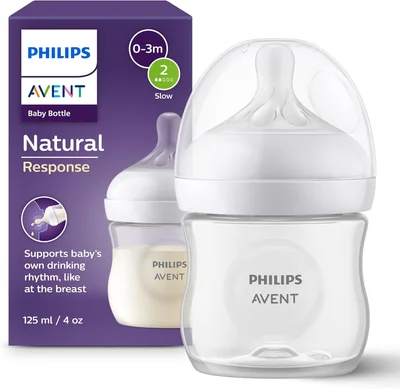

If the first bottle does not work, do not panic. Give it a few days, try a different time (not when they are starving), and stay calm. They will get there.
The Expressing Bit
If you want your bottle feeds to contain breast milk rather than formula (or a mix of both, because that is also completely fine), you will need a breast pump. You do not need the most expensive double electric pump on the market, especially if you are only expressing once or twice a day.
A good manual pump is quiet, portable, and often all you need for occasional expressing. The Lansinoh Manual Breast Pump has a comfortable cushion that adjusts to your shape and two different pumping modes, so you can switch between let-down and expression without fiddling with buttons.
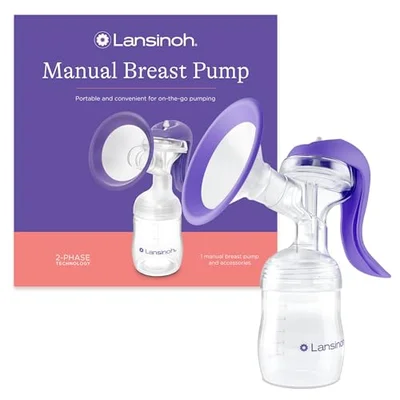
Express after a morning feed when your supply is highest. You will often get more than you expect, especially once your body gets into the routine.
Storing Your Milk
Expressed breast milk keeps for up to six hours at room temperature, five days in the fridge, and six months in the freezer. Pre-sterilised storage bags make this incredibly simple. Fill, seal, label with the date, and stash.
When you are ready to use frozen milk, defrost it in the fridge overnight or under warm running water. Never microwave breast milk, it creates hot spots and destroys some of the good stuff. A bowl of warm water works perfectly for bringing it to temperature.
Keeping Everything Clean
Combination feeding means more washing up. There is no getting around it. Bottles, teats, pump parts, storage containers: everything that touches breast milk or formula needs sterilising until your baby is at least twelve months old.
A cold water steriliser is the lowest-effort option. Drop everything in, add a tablet, leave for fifteen minutes, done. No electricity, no waiting for things to cool down, and the solution stays effective for 24 hours so you can keep dipping things in throughout the day.

The Emotional Stuff
Here is the thing nobody warns you about with mixed feeding: the guilt can come from both directions. Breastfeeding advocates might make you feel like you are not doing enough. Formula-feeding friends might wonder why you are still bothering with the breast. You cannot win, so you might as well just do whatever works for your family and let the opinions slide.
Mixed feeding is not a compromise. It is not failing at breastfeeding or cheating at formula feeding. It is its own perfectly valid, evidence-backed, sanity-preserving approach to feeding your baby. Your baby is getting the benefits of breast milk AND the flexibility of formula. That is not settling. That is having the best of both.
If you are struggling with how you feel about it, talk to someone. Your midwife, your doctor, a breastfeeding counsellor, a friend who has been there. The feelings are normal. They do not mean you are doing anything wrong.
Your Daily Combo Feeding Rhythm
There is no perfect schedule. But if you want a starting point, many combo-feeding parents find something like this works:
- Morning: breastfeed (supply is highest)
- Late morning: expressed bottle (partner or carer)
- Afternoon: breastfeed
- Evening: formula bottle (gives you a break and lets partner do bedtime)
- Night: breastfeed (easier, no prep required, back to sleep faster)
Adjust this to fit your life, your supply, and your baby's temperament. The beauty of mixed feeding is the flexibility. Use it.
Ready to build your combo feeding kit? Add everything to your BubsNest wishlist and let the people who love you help out. That is literally what registries are for. 🤍
Ready to Create Your Baby Registry?
Start your free baby registry today and share it with friends and family.
Get Started Free