Night Feeds: How to Make the Sleepless Hours a Little Less Brutal
Practical tips, clever shortcuts, and a few products that genuinely help when you are feeding your baby at ridiculous hours.
You have memorised the exact number of steps from your bed to the cot. You know which floorboards creak and which ones are safe. You can unscrew a bottle lid, measure powder, and reassemble the whole thing without opening your eyes. These are not skills you expected to develop. And yet here you are, a highly efficient 2am operative. 🌙
Night feeds are one of those things that everybody warns you about in the vaguest possible way. "You'll be tired," they say, with a knowing smile. What they don't say is that the tiredness isn't the worst part. It's the loneliness. The weird time-stands-still feeling of being the only awake person in a dark, quiet house while the rest of the world sleeps.
The good news? There are ways to make the whole thing significantly less miserable. Not perfect, never perfect, but genuinely less painful.
Why Night Feeds Hit So Hard
It helps to understand why this particular flavour of tiredness feels different from, say, staying up late for a box set. When you are woken mid-sleep cycle, your body hasn't completed its repair work. Fragmented sleep is harder on your brain than simply getting fewer total hours. That's why you can sleep from midnight to 6am and still feel like you've been hit by a bus if you were woken three times in between.
Add the hormonal changes of the postpartum weeks, and it makes complete sense that everything feels heightened. You are not weak. Your body is doing something genuinely hard.
Build a Nighttime Station (This Changes Everything)
The single biggest upgrade you can make to your night feed experience is eliminating reasons to leave the room. Every trip to the kitchen, every hunt for a clean muslin, every "where did I put the nappy cream?" pulls you further out of that half-asleep state that lets you function the next morning.
Set up a dedicated feeding station next to wherever you feed. A small caddy with nappies, wipes, a spare babygrow, nappy cream, and a muslin or two means everything is within arm's reach.
Add a soft, dimmable light that you can switch on without fumbling. Overhead lights are the enemy here. You want just enough glow to see what you are doing without signalling to your baby's brain (or yours) that it's daytime. A nightlight with built-in white noise is even better, because that gentle background hum helps settle your little one back down once the feed is done.


If You Are Bottle Feeding at Night
Bottle feeds in the small hours have one big advantage: someone else can do them. If you have a partner, the dream scenario is taking shifts. One of you does the pre-midnight wake-up, the other takes the early hours. You each get one unbroken stretch of sleep, and that makes all the difference.
The practical challenge is warming milk without a full trip downstairs. A portable bottle warmer that sits on your bedside table is a genuine game-changer. Three minutes, no kitchen trip, done.
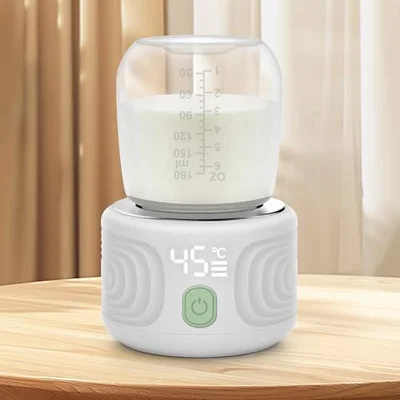
A few tips that bottle-feeding parents swear by:
- Pre-measure formula powder into a dispenser before bed, so all you do is add water
- Keep a thermos of boiled water and a bottle of cooled boiled water next to the bed for quick mixing
- Have two clean bottles ready to go each night, because washing up at 4am is nobody's idea of fun
If You Are Breastfeeding at Night
Breastfeeding at night has its own advantages: no prep, no warming, no washing. The milk is right there, at the right temperature, every time. The downside? It is always, always you.
Positioning matters more at night than during the day, because you are fighting gravity and tiredness at the same time. If you are feeding in bed, lying on your side with your baby facing you is often the most comfortable option. Tuck a pillow behind your back and one between your knees. You don't need to sit bolt upright every single time.
Keep a large water bottle on your nightstand. Breastfeeding makes you thirsty, and dehydration makes the tiredness worse. Sip while you feed. It becomes automatic after a few nights.
And always, always have a muslin within reach. Night feeds produce an astonishing amount of milk dribble, posseting, and general dampness. Having a good-quality muslin draped over your shoulder or tucked under your baby's chin saves the 3am sheet change that nobody wants.
Tag-Teaming With Your Partner
If there are two of you in the house, splitting nights is the closest thing to a cheat code. It doesn't have to be complicated. The simplest version: one person goes to bed early (say 8:30pm) and sleeps until the first wake-up after midnight. The other stays up later but gets to sleep through until morning. You each get at least four or five unbroken hours, which feels absolutely luxurious compared to the alternative.
If you are breastfeeding and your partner can't do the actual feed, they can still do everything around it. Bring the baby to you, do the nappy change, settle the baby back down, refill your water. That help is not nothing. It is actually a lot.
For single parents doing this alone, be extra kind to yourself. Batch-prep everything in the evening, accept every offer of help during the day so you can nap, and remember that surviving is the bar right now, not thriving.
When Do Night Feeds Actually Stop?
This is the question you are typing into your phone at an unreasonable hour, so here is an honest answer. Most babies drop from two or three night feeds to one somewhere between three and six months. Many (not all) are capable of sleeping through without a feed by around six months, especially once solids are established.
But "capable of" and "actually doing it" are different things. Some perfectly healthy babies continue waking for a feed well past six months because they are hungry, or because the comfort of a feed helps them resettle. That is normal. It doesn't mean you have done something wrong.
The feeds do get faster as your baby gets bigger and more efficient. That 45-minute marathon feed of the newborn days eventually becomes a quick 10-minute top-up. It still means you are awake, but you are awake for a lot less time.
The Thing Nobody Says Out Loud
Night feeds are hard. They are not "a bit tiring." They are a sustained period of sleep deprivation that can affect your mood, your relationship, your ability to function, and your mental health. If you are struggling, that is not a personality flaw. It is a completely rational response to a genuinely difficult situation.
It does get better. Not in a hand-wavy, unhelpful way, but concretely and measurably better. The gaps between feeds stretch. The feeds themselves get shorter. Your baby learns to self-settle. And one morning you will wake up, look at the clock, and realise nobody called for you all night. That morning is coming. 💛
In the meantime, set up your station, accept help, hydrate, and know that every parent who has ever done this has had the same blurry, half-awake thoughts in the small hours. You are not doing this alone, even when it feels like it.
If you are building your registry and want to make sure you have everything for those first few weeks, add the essentials to your BubsNest wishlist while you are thinking about it. Future-you, the one standing in the dark at 2am, will thank present-you.
Ready to Create Your Baby Registry?
Start your free baby registry today and share it with friends and family.
Get Started Free