Philips Avent Natural Response vs Dr Brown’s Options+: Anti-Colic Bottles Compared
Two of the UK’s most popular anti-colic baby bottles go head to head. We compare the Philips Avent Natural Response and Dr Brown’s Options+ on colic relief, cleaning, price, and real parent feedback.
COMPARISON · FEEDING
Choosing a baby bottle sounds simple until you realise every brand claims to be the closest thing to breastfeeding. Two names come up again and again in parent conversations and "which bottle should I buy?" threads: the Philips Avent Natural Response and the Dr Brown's Options+. Both promise anti-colic performance, both offer breast-shaped teats, and both sit within easy reach at most UK retailers. So which one actually delivers?
We dug into the specs, sifted through hundreds of parent comments, and tested the practical stuff that matters at 3am: assembly in the dark, cleaning after a feed, and whether the teat genuinely helps a reluctant baby latch. Here is what we found.
Lil' Bubba's verdicts
- Best Overall: Philips Avent Natural Response · 8.5/10 - fewer parts, natural-feel teat, and brilliant breast-to-bottle transition
- Best for Colicky Babies: Dr Brown's Options+ · 8.0/10 - clinically proven vent system that genuinely reduces wind and spit-up
| Philips Avent Natural Response | Dr Brown's Options+ | |
|---|---|---|
| Rating | ||
| Price (from) | ~£7.95 | ~£16.69 |
| Sizes | 125 ml, 260 ml | 150 ml, 270 ml |
| Anti-colic | Valve in teat | Internal vent system |
| Parts to clean | 3-4 | 5-6 (removable later) |
| Material | BPA-free PP / glass | BPA-free PP / glass |
| Best for | Breast-to-bottle transition | Severe colic and wind |
How we picked these two
We started with every anti-colic baby bottle available through our joined-programme retailers, then narrowed the field by cross-referencing parent mentions, product specifications, and in-stock availability across UK shops. The Avent Natural Response and the Dr Brown's Options+ consistently surfaced as the two bottles parents compare most directly, sitting at similar price points but taking fundamentally different approaches to the same problem: keeping air out of baby's tummy.
What to look for in a baby bottle
Before you compare specific models, it helps to know what actually matters. Here are the key factors worth weighing up.
Anti-colic design. All anti-colic bottles aim to stop baby swallowing air during feeds. Some use a simple valve in the teat; others rely on a more complex internal vent system. The more elaborate the system, the better the air separation, but the more parts you end up washing.
Teat shape and flow rate. If you are combining breast and bottle feeding, you want a teat that encourages a wide, natural latch rather than a narrow suck. Flow rate matters too: a teat that is too fast will overwhelm a newborn, while one that is too slow can frustrate a hungrier baby. Most brands offer multiple flow levels, so check the age guidance.
Cleaning and assembly. At 2am, the fewer parts between you and a ready bottle, the better. Wide-neck bottles are generally easier to fill and scrub. If a bottle has an internal vent system, find out whether you can remove it as baby grows.
Material. Both plastic and glass have their place. Glass is heavier but scratch-resistant and longer-lasting; BPA-free plastic is lighter and less likely to shatter when a six-month-old discovers gravity.
1. Philips Avent Natural Response
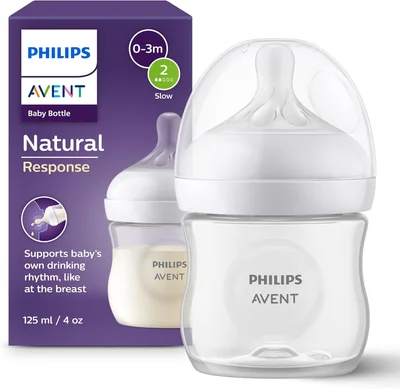
The Natural Response teat is the headline feature here. Unlike conventional bottle teats that drip milk regardless of what baby is doing, this one only releases milk when your baby actively sucks. It means your little one controls the pace of the feed, much like they would at the breast, which makes switching between breast and bottle far smoother.
With just three or four parts to assemble, the Avent Natural Response is about as fuss-free as an anti-colic bottle gets. The wide neck makes filling straightforward and cleaning quick, and the anti-colic valve sits neatly inside the teat rather than requiring a separate internal system. Available in 125 ml and 260 ml sizes, in both plastic and glass, it covers the newborn stage right through to weaning.
What parents love
- Natural feeding rhythm. Parents we hear from regularly say their baby latched easily without fuss. One parent told us: "She took to it straight away, even after weeks of exclusively breastfeeding."
- Easy to clean. With fewer parts than most anti-colic bottles, sterilising and drying is noticeably faster. No tiny vent pieces to lose at the bottom of the washing-up bowl.
- Reduces tummy discomfort. The built-in valve helps air stay in the bottle rather than ending up in baby's stomach. Parents report less post-feed fussiness and fewer windy episodes.
- Wide range of teat flows. Six flow levels in the UK range mean you are unlikely to outgrow the bottle before baby moves to a cup.
What to know before you buy
- Finding the right teat takes trial and error. With six flow options, some parents report going through two or three before landing on the one their baby prefers.
- Anti-colic performance is good, not exceptional. For babies with severe reflux or persistent colic, the single-valve approach may not be enough, and a fully vented system could be worth the extra cleaning.
Best for
- Parents combining breast and bottle feeding
- Families who value quick assembly and easy cleaning
- Babies with mild to moderate wind or colic
- First-time parents wanting a reliable all-rounder

2. Dr Brown's Options+
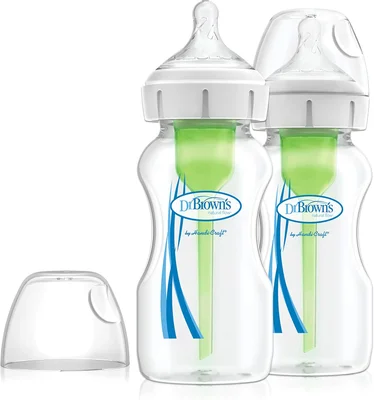
Where the Avent relies on a valve, the Dr Brown's Options+ goes all in with a two-piece internal vent system: a vent insert plus a reservoir tube that channels air through the bottle and completely away from the milk. The result is vacuum-free feeding that is clinically proven to reduce colic, and it genuinely works. If your baby struggles with trapped wind, excessive spit-up, or painful gas after feeds, this is the bottle most parents reach for.
The "Options+" part of the name means you can remove the vent system once your baby outgrows the colicky stage. Take out the internal parts and you are left with a simpler bottle with fewer components to clean. Available in both narrow and wide-neck styles, in plastic and glass, the range covers 150 ml to 270 ml.
What parents love
- Genuinely reduces colic. A parent shared: "Our little one went from screaming after every feed to barely needing a burp. The difference was night and day."
- Consistent flow rate. The vacuum-free design means milk flows at a steady rate throughout the feed, so baby is not gulping air between sips.
- Grows with baby. Remove the vent when it is no longer needed and you have a standard bottle with fewer parts to wash. We hear repeatedly from parents that this flexibility makes it worth the upfront effort.
- Compatible with breast pumps. The wide-neck version fits most major breast pump flanges, so you can express directly into the bottle.
What to know before you buy
- More parts to clean. The internal vent system adds two extra components per bottle. That means more washing, more sterilising, and the occasional hunt for a tiny silicone piece that has rolled behind the dish rack.
- Some parents report leaking. If the vent system is not assembled correctly, milk can seep through the collar. It is usually a technique issue rather than a design flaw, but it catches new users out.
- Pricier per bottle. At around £16.69 for the wide-neck model, it costs roughly double the entry-level Avent.
Best for
- Babies with diagnosed colic or persistent trapped wind
- Parents who want clinically proven anti-colic performance
- Families already using a compatible breast pump
- Parents who do not mind a few extra cleaning steps for a calmer baby
How to choose
Pick the Philips Avent Natural Response if you are looking for a straightforward, easy-to-clean bottle that handles breast-to-bottle transition well and offers solid anti-colic protection. It is the better everyday bottle for most families, and the lower price point means kitting out your bottle collection costs less.
Pick the Dr Brown's Options+ if colic is your primary concern and you are willing to trade cleaning convenience for the best air-separation technology on the market. The removable vent system means the extra cleaning is temporary, and parents of colicky babies overwhelmingly say the difference is worth it.
Still undecided? Start with the Avent. If your baby shows signs of colic or excessive wind, try the Dr Brown's. You may well end up keeping both in rotation: one for quick daytime feeds and one for the evening wind-down when colic tends to flare.
Add it to your Nest
Whichever bottle you choose, add it to your free BubsNest registry so friends and family know exactly which one to buy. No more duplicate gifts, no more returns.
Ready to Create Your Baby Registry?
Start your free baby registry today and share it with friends and family.
Get Started Free