
Preparing for Labour: What to Have Ready, What to Know, and What to Stop Panicking About
You cannot predict exactly how labour will go, but you can walk in feeling informed, equipped, and a lot less terrified. Here is everything worth knowing and having ready.
Somewhere around week 36, someone will say it. "You can't really prepare for labour, you just have to go with it." They mean well. They are also completely, wonderfully wrong.
You cannot predict exactly how your labour will unfold. That part is true. But you can walk into it feeling informed, equipped, and a lot less terrified than you would if you just crossed your fingers and hoped for the best. Think of it less like revising for an exam with a definitive answer sheet and more like packing for unpredictable weather. You cannot control the forecast, but you can absolutely make sure you have layers. 🤰
What Your Body Is Actually Doing
Labour sounds like one big event, but it is really three distinct stages. Understanding them takes away a huge chunk of the fear, because most of the scary part is not knowing what is happening or whether it is normal.
Stage one is the longest. Your cervix is dilating from closed to 10 centimetres, which happens in three phases. Early labour feels like strong period cramps, often irregular, and can last hours or even days. Active labour is when contractions get closer together, longer, and more intense. Transition is the shortest but fiercest phase, right before you are ready to push. This is the bit where you might say things you do not mean. Everyone does.
Stage two is pushing and delivery. For first babies, this typically takes one to three hours. Your body will give you an almost irresistible urge to bear down, and your midwife will guide you through it.
Stage three is the placenta. It takes five to thirty minutes, and honestly, you will barely notice because you will be staring at your baby. ✨
Your Pain Relief Menu (It Is Bigger Than You Think)
One of the best things you can do before labour is understand what is available, so you are not making decisions for the first time while mid-contraction. Here is the full menu.
TENS machine. A small device that sends gentle electrical pulses through pads on your lower back. It works by interrupting pain signals and encouraging your body to release endorphins. Most effective in early labour, and you control the intensity yourself. Plenty of parents say it made the first few hours genuinely manageable.
Breathing techniques. Sounds too simple to work, but slow, focused breathing during contractions genuinely reduces tension and keeps oxygen flowing. You do not need a course for this. In through your nose for four counts, out through your mouth for six. That is it.
Water. Whether it is a warm bath at home during early labour or a birthing pool at the hospital, water is one of the most underrated pain relief options. It relaxes muscles, supports your weight, and can make contractions feel less intense.
Gas and air (Entonox). Available at hospital. You breathe it through a mouthpiece during contractions. It does not take the pain away entirely, but it takes the edge off and makes you feel a bit floaty. No lasting effects on you or baby.
Epidural. The strongest pain relief option. An anaesthetist places a thin tube in your lower back, and it numbs you from the waist down. It is not a failure to have one, it is not cheating, and it is there for a reason. Some labours are long, some are intense, and an epidural can be the thing that helps you rest and gather strength for pushing.
Birthing comb. This one surprises people. Gripping a wooden comb in your palm during contractions activates acupressure points and gives your brain a competing sensation to focus on. It sounds odd, but the number of parents who swear by it is genuinely impressive.
Your At-Home Labour Kit
Early labour often happens at home, and it can last a while. Having a few things ready means you spend those hours feeling calm rather than rummaging through drawers.
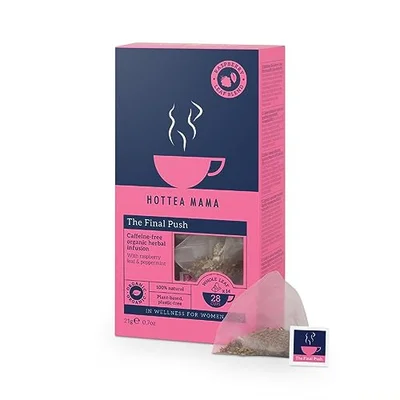
- Raspberry leaf tea. This is not a pain reliever during labour itself, but many midwives suggest drinking it from around 36 weeks to help tone the uterus. Whether or not you buy the science, it is a comforting ritual in those final restless weeks.
- Snacks and isotonic drinks. Labour is physically demanding. Cereal bars, bananas, and sports drinks will keep your energy up when you need it most.
- A hot water bottle or heat pack. Incredible for lower back pain during early contractions.
- Comfortable old clothes. A big T-shirt or a nightie you do not mind ruining. This is not the moment for your nice pyjamas.
- Your phone charger, a playlist, and something to watch. Early labour can be boring. Genuinely boring. Having a film or a podcast ready is not frivolous, it is smart.
When to Actually Go to Hospital
The classic guideline is contractions coming every three to four minutes, lasting about a minute each, for at least an hour. At that point, ring your maternity unit and they will talk you through whether to come in.
But call straight away if your waters break and the fluid is green or brown, if you are bleeding, if your baby is moving less than normal, or if something just feels wrong. Trust your instincts on that last one. Midwives would always rather see you and send you home than have you sit at home worrying.
If you are planning a home birth, your midwife will come to you once things are progressing. Have a chat with your community midwife team in the weeks before so everyone knows the plan.
Your Birth Partner's Cheat Sheet
If someone is supporting you during labour, a few practical things make a huge difference.
- Know the birth preferences. Read them, understand them, and be ready to communicate them to the team if mum cannot.
- Keep the snacks and drinks coming. Small sips of water between contractions, a bite of something when there is a lull.
- Counter-pressure on the lower back. Firm pressure with the heel of the hand during contractions can be a game-changer. Ask where it helps, because it shifts.
- Be an advocate, not a director. If something does not feel right or a preference is being overlooked, speak up calmly. That is the job.
- Pack your own bag. Change of clothes, toothbrush, snacks, phone charger. You cannot support anyone if you are hungry, tired, and still in yesterday's shirt.
The Stuff You Can Stop Worrying About
Pooping during labour. It happens to almost everyone. Midwives do not bat an eyelid. They quietly sort it and carry on. You probably will not even notice.
Making noise. Moaning, groaning, shouting - it is all normal and actually helpful. Low, deep sounds can help you breathe through contractions more effectively than holding your breath and staying quiet.
Not sticking to the plan. A birth plan is a set of preferences, not a contract. If you planned a water birth and end up wanting an epidural, that is not a failure. That is you making the right call for your body in that moment.
Being a bother. You are not bothering anyone. Midwives chose this job because they love it. Call the unit, ask the questions, press the buzzer. That is literally what they are there for.
You Have Got This
Labour is intense, unpredictable, and one of the most extraordinary things your body will ever do. You do not need to have every detail figured out. You just need to feel prepared enough that when the first real contraction hits, your response is "right, let's do this" rather than "wait, what's happening?"
The fact that you are reading this means you are already doing the work. Add the things that feel useful to your Nest, have a chat with your midwife about your options, and then go put your feet up. You have earned it. 💛
Ready to Create Your Baby Registry?
Start your free baby registry today and share it with friends and family.
Get Started Free