Preparing Your Pet for a New Baby: What to Do Before the Tiny Human Arrives
Your dog already knows something is different. Here is how to get your four-legged family member ready for the biggest change of their life, too.
Your dog has started following you to the bathroom. More than usual, that is. Your cat has claimed the Moses basket as their personal bed and looks personally offended when you shoo them out. And you are lying awake at 2am wondering whether your beloved pet and your soon-to-arrive baby are going to get along, or whether you have massively underestimated how complicated this is about to get.
Deep breath. You have not. Millions of families bring babies home to houses full of furry residents every single year, and the vast majority of them work it out beautifully. But a little preparation goes a long way, and the time to start is now, while you are still pregnant and your pet still has your undivided attention.
They Already Know Something Is Up
Before you even start "preparing" your pet, it is worth knowing that they have probably already noticed something has changed. Dogs can detect hormonal shifts through scent, and many become noticeably more clingy, protective, or glued-to-your-side during pregnancy. Cats tend to be subtler about it, but do not be surprised if yours has suddenly decided your bump is the world's best pillow. 🐾
This is not a problem. It is actually a good sign that your pet is tuned in to you. The goal is not to shut that bond down, but to gently reshape routines so nobody gets a nasty shock when a small, loud, unpredictable human suddenly appears in the house.
Start Shifting Routines Now
The biggest mistake pet parents make is changing everything the day baby arrives. Your dog's walk time, feeding schedule, and sleeping spot all shift overnight, and they have no idea why. From their perspective, a screaming stranger moved in and ruined their life.
Instead, start making changes gradually during pregnancy. If the dog currently sleeps in your bedroom but will not once baby arrives, transition them out now, weeks or even months before your due date. If morning walks are going to shift from 7am to 8am because, well, newborn chaos, start shifting them bit by bit. The key is that by the time baby arrives, your pet's new routine already feels normal to them.
For cats, think about litter tray placement and feeding stations. If these need to move away from the nursery, do it early so they have time to adjust without associating the disruption with the baby.
Creating Safe Zones (For Everyone)
This is not about punishing your pet or locking them away. It is about giving both your baby and your animal their own spaces where they can relax without being on top of each other.
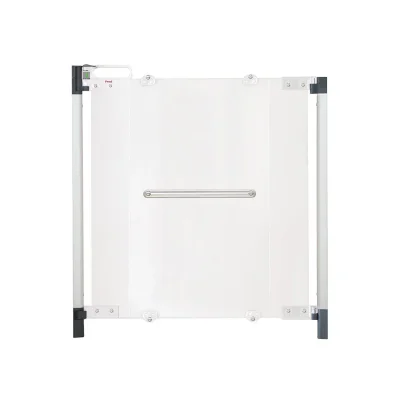
A baby gate at the nursery door is genuinely one of the most useful things you can buy. It lets your pet see and hear what is going on (which reduces anxiety) without being able to wander in unsupervised. For dogs especially, being able to watch from a distance is far less stressful than being shut out completely behind a closed door.

Equally important: make sure your pet has a retreat. Somewhere they can go when the crying gets too much or visitors are overwhelming. For dogs, this might be their crate or bed in a quiet room. For cats, a high shelf or cat tree in a room that stays calm. Do not underestimate how overwhelming a newborn can be for an animal that thrives on predictability.
The Sound and Smell Strategy
Babies are loud. Ridiculously, startlingly loud. And if your dog has never heard a newborn cry at full volume, their first experience of it should probably not be in the same room at 3am.
In the weeks before your due date, play recordings of baby sounds at low volume while your pet is relaxed. Gradually increase the volume over time. This sounds a bit daft, but it genuinely works. Dogs that have been desensitised to baby cries beforehand are noticeably calmer when the real thing arrives.
Smells matter too, especially for dogs. If you can, bring home a blanket or babygrow that your newborn has worn in hospital before you bring the baby home. Let your dog have a good sniff. This gives them a chance to process the new scent calmly, without the overwhelming stimulus of an actual tiny person arriving at the same time. 👃
Safe Spaces on the Floor
Once your baby starts spending time on the floor for tummy time, play, or just general wriggling about, the dynamic shifts. A curious dog nose or an overly affectionate cat can go from endearing to risky very quickly, not because your pet means harm, but because babies are fragile and animals are unpredictable.
A playpen is not about caging your child. It is about creating a defined, safe space where your baby can explore without you having to physically block the dog every thirty seconds. Think of it as a baby-sized force field. You can supervise from the sofa, your dog can lie nearby, and everyone stays relaxed.
This becomes especially useful as babies start grabbing. Because they will grab. Tails, ears, fur, lips. Your dog might tolerate it beautifully, or they might not. A playpen gives you breathing room while everyone learns boundaries.
The Nappy Situation (Yes, Really)
Nobody warns you about this one. Your dog, the same animal that eats foxes' leftovers on walks and rolls in things you do not want to identify, will be absolutely fascinated by dirty nappies. To them, a nappy bin is basically a buffet.
An open bin or a pedal bin with a loose lid is not going to cut it. You need something sealed. Properly sealed. The kind where you press the nappy in and a mechanism locks behind it, so not even the most determined Labrador can reverse-engineer their way to the contents.
Trust the pet parents who have learned this the hard way. The stories are not pretty.
The First Introduction
The moment you walk through the door with your newborn is a big deal for your pet. A few things help:
- Have someone else hold the baby when you first walk in. Greet your pet properly. They have missed you (especially if you have been in hospital for a few days) and need reassurance before they can cope with anything else.
- Let your dog approach the baby on their terms. Hold the baby at a height where the dog can sniff if they want to, but do not force it. Some dogs are immediately curious. Others need a few hours, or days, to work up to it.
- Keep it calm. No crowd of visitors, no squealing relatives. Just your household, settling in together.
- For cats, expect them to largely ignore the baby for the first few days. This is normal cat behaviour and not a sign of jealousy or rejection. They will investigate in their own time, usually at 3am when you are least prepared for it.
What Is Normal (and What Is Not)
Some behavioural changes are completely expected. Your dog might sulk for a few days. They might hover near the baby protectively. They might demand more attention than usual. All normal. A cat might avoid the baby's room entirely or, conversely, refuse to leave it. Also normal.
What is not normal: growling, snapping, hissing, or showing teeth when the baby makes noise or moves. These are warning signs that need professional attention, not ignoring or hoping they will pass. Contact a qualified animal behaviourist, not just a general trainer, if you see any of these.
Also watch for signs of stress that are easier to miss: excessive licking, loss of appetite, hiding more than usual, or sudden house-training accidents. Your pet is adjusting to a massive change, and sometimes they need extra support. A tired walk, some one-on-one time, or even a puzzle feeder can make a real difference to a dog that is feeling displaced.
You Have Got This
The internet will happily terrify you with worst-case scenarios about pets and babies. But the reality? Most pets adapt. Some faster than others, but they adapt. The dog that you are worrying about right now will probably end up being the baby's favourite person in six months, lying patiently while tiny fingers grab their ears, following the pushchair down the street like a furry bodyguard.
Start the prep now, while you have the energy and the time. And when it all comes together and you catch your dog gently resting their chin on the baby's blanket, you will know it was worth every minute. 🐶
Want to make sure your nursery is properly set up alongside your pet prep? Add everything to your BubsNest registry so your friends and family can help tick things off the list.
Ready to Create Your Baby Registry?
Start your free baby registry today and share it with friends and family.
Get Started Free