Pumping at Work: A Back-to-the-Office Plan for Breastfeeding Parents
Heading back to work but not ready to stop breastfeeding? Here is how to sort the chat with your manager, the room, the kit, the timings and the milk run home.
Where, exactly, are you going to pump?
It sounds like a small question. It is usually the one that keeps returning parents awake in the weeks before going back. You have sorted childcare, dug out the work trousers and practised the morning routine, but the picture of yourself with a breast pump somewhere in the office is still a bit... blurry.
Here is the reassuring bit: loads of parents keep breastfeeding after going back to work, and most of them say the planning was harder than the doing. Once you have a room, a rhythm and a decent bag, it becomes just another meeting in your diary. 🗓️
We have broken it into five things to get sorted. Tackle them in any order you like.
1. The Conversation
Your manager cannot help with something they do not know about. So the first job is a quick, slightly awkward chat, ideally a few weeks before your return date. A keeping-in-touch day is perfect for this.
In the UK, it helps to tell your employer in writing that you are breastfeeding. That nudges them to do a workplace risk assessment, and employers must provide somewhere suitable for breastfeeding workers to rest. ACAS guidance goes further and recommends a private, clean space that is not a toilet, plus somewhere to keep your milk.
Things worth asking about:
- Which room you can use, and whether it locks
- Whether there is a fridge you can use (or space for your own cool bag)
- How you will fit two or three short sessions into your day
- Whether a phased return or a later start could help in the first few weeks
Keep it matter-of-fact. You are not asking for a favour, you are sorting logistics, just like you would for a hospital appointment.
2. The Space
The dream is a dedicated wellbeing room with a comfy chair, a plug socket and a sink nearby. The reality might be a meeting room with a "do not disturb" sign. Both work.
What actually matters:
- Privacy. A lock, or at least a sign and a calendar booking
- A plug socket, unless your pump is rechargeable
- Somewhere to sit that is not a loo seat
- A surface for your kit and a nearby sink for rinsing
Book your slots as recurring calendar events. Calling it "Hold" or "Focus time" is perfectly fine if you would rather not broadcast it. Nobody needs your milk schedule in the shared diary.
Working from home some days? Lucky you. Pumping at your own desk with your camera off is a whole different (comfier) experience.
3. The Kit
Your pump is now part of your work bag, so think about noise, speed and how much you will have to carry.
Plenty of parents go for a wearable pump for work days. It sits in your bra, so you can answer emails or eat lunch while it does its thing, and there are no tubes to untangle in a meeting room. The eufy S2 Pro adds gentle heat and massage settings and comes with a charging case, which is handy if you will not always be near a socket.
Then there is the backup. Every pumping parent has a story about the day the charger stayed at home. A small manual pump tucked in a desk drawer turns that from a crisis into a mild inconvenience. The Medela Harmony Flex is quiet, light and takes up barely any space.
A few extra bits make life smoother:
- A spare set of pump parts, so you are not washing everything after each session
- A large zip bag for used parts (some parents pop them in the fridge between sessions and wash them properly at home, so check your pump's instructions)
- Breast pads and a spare top, just in case
- A photo or short video of your baby, which genuinely helps your let-down
4. The Schedule
A rough rule of thumb is to pump around the times your baby would usually feed while you are apart. For a full working day, that is often two or three sessions, roughly mid-morning, lunchtime and mid-afternoon.
Each session tends to take around 15 to 20 minutes, plus a few minutes for setting up and packing away. Build that in, and try not to cram it between back-to-back meetings. Rushed pumping rarely goes well. 😮💨
Feeding your baby right before you leave and as soon as you are home can take the pressure off the workday. Some parents also do a quick pump in the car park or on the train with a wearable, which can save a whole session in the office.
Supply dips in the first week back are really common, often because of stress, rushing and drinking far less water than usual. If you are worried about your supply, your health visitor, GP or a breastfeeding helpline can talk it through with you.
5. The Milk Run
You have done the hard part. Now the milk needs to get home safely.
If there is a work fridge, a labelled bag or box at the back works fine. If you would rather not share shelf space with someone's leftover curry, a portable milk cooler is a brilliant buy. The Xaproo cooler bottle keeps milk chilled for up to 24 hours according to the maker, so it covers your whole day plus the commute, no ice packs to remember.
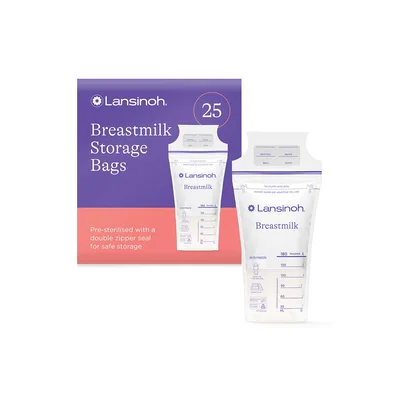
Storage bags are the other workhorse. Pump into the bottle, pour into a bag, label it with the date and time, and lay it flat in the freezer at home so it stacks neatly. Lansinoh's bags have a double zip seal and a write-on panel, which saves you hunting for masking tape.


The NHS has clear guidance on how long expressed milk keeps in the fridge, freezer and a cool bag, so it is worth bookmarking that page on your phone. Your childcare provider will also have their own rules about labelling and storing milk, so check those before day one.
A Little Note Before You Go Back
Some days you will pump more than your baby drinks. Some days you will get half what you hoped and cry a little in the meeting room. Both are completely normal.
And if, after a few weeks, you decide to drop a session, mix in formula or stop altogether? That is a perfectly good decision too. Feeding your baby is not a test you can fail. 💛
If friends and family are asking what you need for the return to work, a work-ready pump, a cooler and a stack of storage bags make brilliant wishlist additions. You can add them to your BubsNest registry and let the people who love you help out.
Ready to Create Your Baby Registry?
Start your free baby registry today and share it with friends and family.
Get Started Free