Starting Solids: A No-Stress Guide to Your Baby's First Foods
Forget baby rice and rigid timelines. Here is everything you actually need to know about weaning your baby onto solid food, from first tastes to the gear that makes it less messy.
Baby rice was never the gold standard of weaning. Somewhere along the way it became the default first food, the thing everyone assumed you had to start with, but guidelines have moved on and your options are so much more exciting than a bowl of grey sludge. Whether you are team puree, team baby-led, or (like most of us) team whatever-works-today, there is no single right way to introduce solids. There is just finding what clicks for you and your baby.
If the thought of weaning makes you slightly nervous, you are in very good company. But honestly? It is one of the most fun milestones of the first year. Messy, yes. Occasionally baffling, absolutely. But watching your baby discover flavour for the first time is genuinely brilliant. Let us walk through it together. 🍌
When Is Your Baby Ready?
The NHS recommends starting solids at around six months, but the calendar date matters less than the signs your baby shows you. Three things need to line up before you start.
- They can sit up with support and hold their head steady. This is about airway safety, not sitting perfectly alone in a highchair.
- They have lost the tongue-thrust reflex. If food goes in and gets immediately pushed back out, they are not quite there yet. Give it a week and try again.
- They can coordinate eyes, hands and mouth. Reaching for food, grabbing it and bringing it towards their face is a big green light.
Waking more at night or chewing fists does not necessarily mean they need food. Babies do these things for all sorts of reasons. Trust the three signs above rather than well-meaning comments from relatives about how "that baby needs something more solid."
Purees, Baby-Led Weaning, or Both?
This is where the internet gets noisy. You will find passionate camps on both sides, each convinced their way is the only way. The reality? Most families end up doing a mix, and that is completely fine.
Purees give you control over texture and are great if your baby is cautious or you want to introduce allergens in a measured way. Start smooth, then get chunkier over a few weeks. The key is not to get stuck on perfectly blended everything for months on end.
Baby-led weaning (BLW) skips purees entirely and offers soft finger foods from the start. Steamed broccoli florets, strips of ripe avocado, banana spears, soft cooked carrot sticks. Your baby explores at their own pace, learning to chew before they swallow. It is messy but genuinely brilliant for developing hand-eye coordination.
Combination feeding is what most parents actually do. Spoon-feeding porridge in the morning, offering finger foods at lunch, handing over a loaded spoon at dinner. No rules say you have to pick a lane and stay in it.
First Foods Worth Trying
Forget the idea that you need to work through a rigid checklist. The goal in the early weeks is exposure, not nutrition. Milk is still doing the heavy lifting. These are just tastes, textures and experiences.
Some brilliant first foods to start with:
- Vegetables first. Sweet potato, butternut squash, broccoli, courgette, carrot. Offering veg before fruit is not a hard rule, but it can help your baby get used to savoury flavours before the sweetness of fruit steals the show.
- Soft fruits. Banana, ripe pear, avocado, mango. Serve as finger-sized pieces for BLW or mashed smooth for spoon feeding.
- Iron-rich foods. These matter from six months. Think well-cooked red meat, lentils, chickpeas, fortified baby cereal (not baby rice, something with actual flavour).
- Allergens, early. Current guidance says to introduce common allergens like peanut (as smooth peanut butter mixed into porridge), egg and cow's milk from six months, one at a time, with a few days between each new one.
Foods to avoid before twelve months: whole nuts (choking risk), honey (botulism risk), added salt and sugar. Everything else is fair game, including mild spices. Cinnamon porridge, cumin-roasted sweet potato, garlic butter on toast. Your baby does not need bland food. 🌶️
The Gear You Actually Need
Weaning kit can spiral fast. Every shop will try to sell you a full silicone rainbow of bowls, plates, spoons, cups, bibs, splat mats, freezer trays and food processors. You do not need all of it. Here is what genuinely earns its place.
A good set of training spoons
Your baby will want to hold the spoon themselves surprisingly early. Soft silicone spoons with chunky handles are easier for little fists to grip than the slim metal ones from your cutlery drawer. A placemat underneath catches most of what misses.
Suction bowls and plates
A bowl that sticks to the highchair tray is not a luxury, it is a sanity saver. Without suction, that bowl is getting launched across the kitchen within thirty seconds. Look for ones that peel off easily for washing but hold firm against enthusiastic baby hands.
A first cup
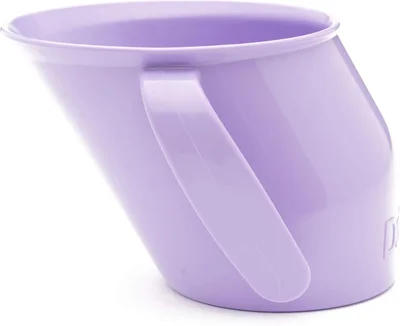
From six months you can offer small sips of water with meals. An open cup or a slanted training cup teaches proper sipping mechanics from the start. Sippy cups with valves work but can slow down the learning process. Starting with an open cup feels brave, but babies pick it up faster than you would think.

Long-sleeve bibs
Regular bibs will not cut it here. Weaning is a full-body experience. A long-sleeved, wipe-clean bib that covers arms and chest saves you changing outfits three times a day. Some clip onto the highchair tray to create a food-catching pocket, which is pure genius.
A food prep tool (if you are doing purees)
You do not strictly need a dedicated baby food maker. A fork and a saucepan will get you surprisingly far. But if you are batch-cooking purees to freeze, a steamer-blender combo saves real time. Steam, blend, portion into ice cube trays, and you have a freezer full of meals ready to defrost.
What Nobody Mentions About the First Few Weeks
Your baby might hate it. Seriously. Some babies take one look at a spoon and turn their head. Others gag on the tiniest piece of banana. This is normal and it does not mean weaning has failed.
Gagging is not choking. This is the single most important thing to understand. Gagging is loud, dramatic and your baby's way of moving food around their mouth as they learn. Choking is silent. Learn the difference (a baby first aid course is worth every penny) and you will feel so much calmer at mealtimes.
Most of the food will end up on the floor, in their hair, smeared across the highchair, or stuffed down the side of the seat. Very little will actually be swallowed in the first few weeks, and that is completely fine. Remember, milk is still the main event until twelve months. Solids are just practice.
Some days your baby will demolish a bowl of porridge and two banana spears. The next day they will refuse everything and just want milk. This is normal baby behaviour, not a sign that something is wrong.
Keeping Your Sanity (and Your Kitchen)
A few practical things that make the weaning months easier:
- A splat mat under the highchair. A cheap shower curtain or a plastic tablecloth from the pound shop works perfectly. Saves your floor and your mood.
- Batch cook and freeze. One hour of cooking on a Sunday gives you two weeks of puree cubes. Label everything. Your future self will thank you.
- Eat together when you can. Babies learn by watching. Sitting with them and eating the same food (or a version of it) takes the pressure off and makes mealtimes social rather than stressful.
- Offer, do not force. Put the food in front of them and let them decide. Pressure creates fussy eaters. Patience creates adventurous ones.
- Take photos. The spaghetti-in-the-hair moments are hilarious in hindsight, even when they feel exhausting in the moment.
Your Weaning Checklist
Before you start, make sure you have:
- A safe, supportive highchair with a footrest (feet dangling makes swallowing harder)
- Soft silicone spoons and a suction bowl or plate
- Full-coverage bibs (at least three, because laundry)
- An open cup or training cup for water
- A camera ready, because the faces are priceless
And that is genuinely it for the basics. Everything else can wait until you know what kind of eater your baby is going to be.
Weaning is not a test. There is no pass or fail, no perfect timeline, and absolutely no need to compare your baby's progress with anyone else's. Some babies are demolishing curry by seven months. Others are still suspicious of toast at nine months. Both are normal. Both are fine.
The best approach? Keep it relaxed, keep it fun, and keep the wet wipes close. You have got this. 💛
Ready to build your weaning kit? Add your favourites to your BubsNest registry and let friends and family help tick them off.
Ready to Create Your Baby Registry?
Start your free baby registry today and share it with friends and family.
Get Started Free