Rolling, Crawling, Climbing: Baby-Proofing Your Home One Milestone at a Time
You do not need to lock down the whole house before your baby arrives. Here is what to baby-proof at each new milestone, from the first roll to the first climb.
Here is a myth worth busting straight away: you do not need to baby-proof your entire home before your baby arrives.
Honestly. That newborn is not going anywhere. For the first few months, the most dangerous thing they can do is wriggle, and the most dangerous place in the house is any raised surface you leave them on.
So if you are heavily pregnant and staring at your kitchen cupboards in a panic, breathe. Baby-proofing works best in waves, timed to what your baby can actually do. Each new skill opens up a new layer of the house, and you only need to stay one step ahead. 👣
Here is the plan, milestone by milestone.
Milestone 1: The first roll (roughly 3 to 6 months)
Rolling tends to arrive with zero warning. One day your baby is a contented starfish on the changing mat, the next they have flipped over and are halfway to the edge.
The good news? This stage is mostly about your habits rather than buying anything.
- Never leave your baby alone on a raised surface. Changing tables, beds and sofas included, even for "just a second" to grab a nappy.
- Keep everything you need within reach before you start a change, so you are not tempted to step away.
- Use the floor. A changing mat on the carpet is never going to fall anywhere.
- Keep the cot clear. Safe sleep guidance stays the same once they roll: firm flat mattress, no pillows, bumpers or loose toys.
If your baby starts rolling onto their tummy in their sleep, have a chat with your health visitor about what that means for your setup.
Milestone 2: On the move (roughly 6 to 10 months)
Crawling, commando-shuffling, bottom-scooting, rolling across the room like a determined little log. However your baby chooses to travel, this is when the floor becomes their kingdom.
Best trick in the book? Get down on your hands and knees and crawl around each room. It sounds daft, but you will spot things you never noticed from standing height: the trailing phone charger, the dropped coin under the sofa, the plug socket behind the plant.
Things to tackle at this stage:
- Low cupboards. Especially under the kitchen and bathroom sinks, where cleaning products usually live. Move the nasties up high and lock what stays low.
- Small objects. Coins, buttons, older siblings' building bricks. Anything that fits through a toilet roll tube is a choking hazard.
- Button batteries. Check remote controls, kitchen scales and car keys. Make sure battery compartments are screwed shut and spares are stored well out of reach.
- Cables and cords. Tuck wires behind furniture and wind blind cords up high, out of reach of the cot and any chairs.
- Stairs. A gate at the bottom and the top, before they work out how to get there.
Magnetic cupboard locks are a lovely option if you are renting or simply hate the look of clunky catches. They fit inside the door, so nothing shows from the outside, and you open them with a magnetic key.
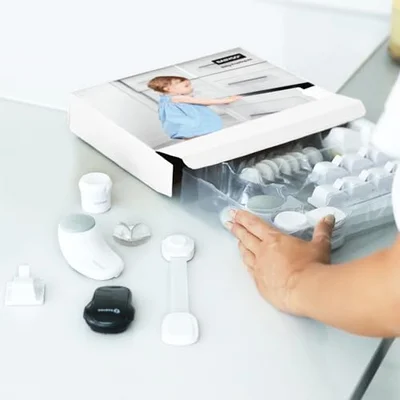

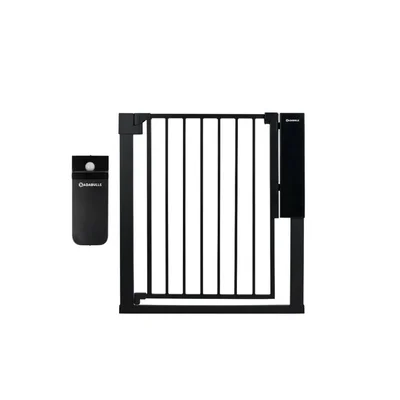
For gates, think about where each one is going. A screw-fitted gate is the safer choice at the top of the stairs, because a pressure-fitted gate can be pushed out and its bottom bar becomes a trip hazard right where you least want one. Pressure-fitted gates are handy for the bottom of the stairs, kitchen doorways and between rooms.
An auto-close gate is worth its weight in gold if you are forever walking through with a baby on one hip and a cup of tea in the other hand. It swings shut behind you, so nobody has to remember.

Milestone 3: Pulling up and cruising (roughly 8 to 12 months)
Suddenly your baby discovers that the world has a second floor. Coffee tables, bookcases, the side of the sofa, your legs. Anything sturdy-ish becomes something to haul themselves up on.
This is the stage where furniture becomes the main event.
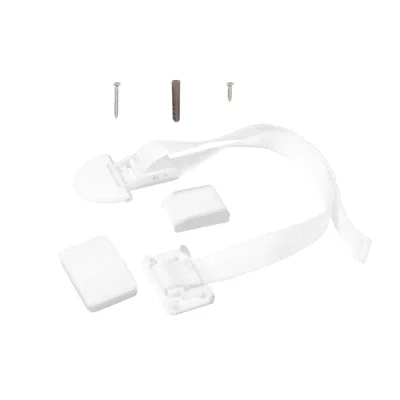
- Anchor tall furniture to the wall. Bookcases, chests of drawers, wardrobes and TV units. A cruising baby who pulls on an open drawer can tip a whole unit over. This is the single most important job on the list.
- Secure the TV. Flat screens are top-heavy. Wall-mount it or strap it to its stand.
- Soften sharp corners. Coffee tables and hearths sit exactly at forehead height for a wobbly cruiser.
- Clear the tablecloths. One tug and everything on the table (including hot drinks) comes down with it.
- Lower the cot mattress to its lowest setting before they can stand in it.
Anti-tip kits are cheap, quick to fit and genuinely one of the best things you can do for your home. If you only buy one thing from this whole post, make it this.

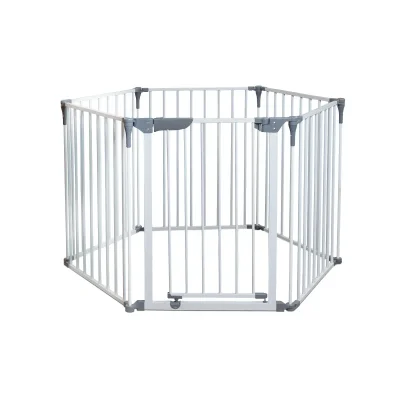
Got a log burner, an open fireplace or a radiator that runs scorching hot? A freestanding playpen barrier can be shaped around it to fence off the danger zone. Many of them also convert into a gate or a full play area, so you get a safe space to pop your cruiser in while you answer the door.
Milestone 4: Walking and climbing (roughly 12 months onwards)
Congratulations, you now live with a tiny mountaineer. 🧗 Toddlers do not just walk, they climb. Chairs become ladders, drawers become steps, and the kitchen worktop becomes the summit.
Time for the final layer:
- Windows. Fit window restrictors on upstairs windows and move beds, chairs and toy boxes away from them. Climbers will use anything as a step.
- Medicines and vitamins. Up high and locked away, not in a handbag on the floor or a bedside drawer.
- Kitchen. Turn pan handles inwards, use the back rings on the hob and push kettles and their cords to the back of the worktop.
- Bathroom. Keep the door closed and never leave water in the bath. Little ones can get into trouble in very shallow water.
- Doors. Finger guards on hinges are cheap and save a lot of tears.
- Garden. Ponds, water butts, sheds full of tools. Fence off or cover what you can.
A few final reassurances
No home is ever 100% baby-proof, and that is not the goal. The goal is to remove the serious risks so that the bumps and tumbles that do happen are the small, ordinary kind.
Supervision will always beat any gadget. But a few well-placed locks, gates and straps mean you can turn your back to stir the pasta without your heart leaping into your throat.
It is also worth doing a baby first aid course before your little one gets mobile. Many local groups and charities run them, and they will give you confidence for the moments you hope never come. If you are ever worried about an accident or injury, call your GP or NHS 111, or 999 in an emergency.
Pop it on your wishlist
Here is a secret: grandparents LOVE buying safety kit. It feels useful, practical and protective, which is exactly how they feel about your baby.
Add a gate, a set of cupboard locks and an anti-tip kit to your BubsNest wishlist and let the people who love your baby help keep them safe. One less thing on your to-do list before the crawling chaos begins. 💛
Ready to Create Your Baby Registry?
Start your free baby registry today and share it with friends and family.
Get Started Free