Best Toddler Puzzles UK 2026: Start With Lift-and-Find at 12 Months, Save the 26-Letter Board for Two
Five wooden first puzzles from £8 to £20, compared on starting age, piece count, grip and what the puzzle gives back. A £13 Little Dutch board that makes animal sounds wins overall, but the right pick depends on how old your toddler is right now.
COMPARISON · PLAY & LEARN
A first puzzle looks like the easiest present on the list. It is small, it is wooden, it costs less than a round of coffees, and it will be out of the wrapping paper in seconds. Then you watch a 13-month-old try to wedge a giraffe into a slot shaped like a duck, and you realise the age on the box matters a lot more than the pictures on the board.
Toddler puzzles move in stages. Around the first birthday most children can pull a piece out but not put it back. A few months later they will drop a single shape into a hole that is the same outline. By two, many can match a whole board of shapes, and some start caring about what the pieces mean: an animal name, a colour, a letter. Buy a puzzle a stage too early and it gets ignored. Buy one a stage too late and it is finished in a week.
So rather than ranking five puzzles on looks, we compared them on the things that decide whether one actually gets played with: the starting age the maker gives, how many pieces there are, how easy those pieces are to grip, and what the puzzle gives back when a child gets it right. Prices run from about £8 to £20, and every one is in stock with our retail partners as we publish, which matters if you are shopping for Christmas.
The short version: lift-and-find boards with few pieces suit 12 months, chunky stand-up animals suit 18 months, and the 26-letter board is a two-year-old gift that will last into preschool.
Lil' Bubba's verdicts
- Best Overall: Little Dutch Wooden Sound Puzzle · 8.5/10 - plays a matching animal sound when a piece goes home, a strong reason for a one-year-old to try again
- Best First Puzzle Under £10: Done by Deer First Layer Puzzle · 8.2/10 - a small lift-and-find board from 12 months that slips into a changing bag
- Best for Two-Year-Olds: Bigjigs Toys Uppercase Alphabet Puzzle · 8.3/10 - 26 chunky capital letters, each matched to a coloured slot, with years of use in it
- Best for First Animal Words: Trixie Wooden Animal Puzzle · 8.0/10 - seven chunky animals that stand up on their own once the puzzle is done
- Best for Shapes and Building: Classic World Geometric Puzzle · 7.6/10 - a tray of geometric blocks that doubles as a stacking set
Quick comparison
| Puzzle | Price | Maker age | Pieces | Grip | Gives back | Rating |
|---|---|---|---|---|---|---|
| Little Dutch Wooden Sound Puzzle | £13 | 12m+ | 7 shapes | Chunky lift-out | Sound on placement (2 x AAA) | |
| Done by Deer First Layer Puzzle | £8 | 12m+ | A few layered shapes | Chunky lift-out | Picture underneath | |
| Bigjigs Toys Uppercase Alphabet Puzzle | £20 | 18m+ (chunky version) | 26 letters | Chunky letters | Colour match, letter learning | |
| Trixie Wooden Animal Puzzle | £12 | 18m+ | 7 animals | Chunky, no knobs | Pieces stand as figures | |
| Classic World Geometric Puzzle | £19 | Not stated by UK seller | A tray of blocks | 3D blocks | Shapes, colours, building |
Prices are what our partners were charging on 9 November 2026 and move with sales. The Bigjigs board was on offer at £16 at one partner when we checked.
How we picked the 5
We started with every first puzzle in the BubsNest catalogue and kept only wooden, toddler-age inset or layer puzzles from established toy brands, then cut anything out of stock, anything sold only as a multi-puzzle bundle and anything we could not match to a real UK retailer listing. That left five puzzles from five different makers.
For each one we checked the retailer listing for live price, stock, stated age and dimensions, read the maker's own specifications, and went through what parents say about it. Where feedback was thin, we say so rather than padding it out. None of these brands paid to be included, and the ratings reflect how well each puzzle fits the age it is sold for, not how many features it has.
What to look for in a toddler puzzle
Start with the age, not the theme. A 12-month-old needs very few pieces, each one a simple outline, and ideally a reward for pulling it out as well as putting it back. An 18-month-old can handle six or seven distinct shapes. A two-year-old can work through a full board, especially if colour helps them match.
Count the pieces. More pieces means more play time but also more to lose under the sofa. For a first puzzle, five to seven is plenty. The 26-piece alphabet board in this list is a different kind of toy, built for repetition over months rather than a quick win.
Check the grip. Knobs and pegs are the classic first-puzzle handle, but thick chunky pieces work too and double as toys. Thin flat pieces with no knob are hard for small fingers to lift out of a snug slot.
Look for something that gives back. A picture underneath, a sound, or a piece that stands up as a figure all give a toddler a reason to finish. Puzzles with no reward tend to get tipped out and left.
Check the safety basics. Every puzzle here is sold in the UK for toddlers and painted with water-based or non-toxic finishes according to the makers. Still, check for splinters and loose paint when you unbox, supervise play, and keep any battery compartment screwed shut. Puzzles labelled 18 months or older are not tested for younger babies, so follow the label.
1. Little Dutch Wooden Sound Puzzle

The Little Dutch Wooden Sound Puzzle is a classic inset board with a twist: lift a chunky animal out, put it back in the right spot, and the board plays a matching sound. It is sold from 12 months, measures about 30 by 21 cm, and comes in farm and woodland themes with seven pieces.
The sound is not triggered by pressure. Each slot has a small light sensor, so the noise plays when the piece changes how much light reaches it. That clever design is also its one real quirk, which we cover below. At around £13 it is the best value way to give a one-year-old a puzzle that rewards them for trying.
What parents love
- A reason to keep going. One parent told us: "The sounds are great, and she has so much fun taking the pieces in and out and hearing them." For a one-year-old who cannot yet match shapes reliably, that instant feedback is what keeps them at it.
- Chunky, easy pieces. The animals are thick wooden shapes that small hands can grab without a knob, and they double as little figures for pretend play.
- Grows with them. At 12 months it is about the sounds. By 18 months to two years it becomes a naming game: which animal makes that noise?
- Good value for a sound toy. Most electronic first puzzles cost more and are plastic. This one is wooden with water-based paint and still comes in around £13.
What to know before you buy
- Needs light and batteries. It takes 2 x AAA batteries, not included. The sensors work best in a bright room, and we hear repeatedly that the sounds can fail to play in dim evening light.
- Switch it off after play. Direct sunlight can set the sensors off, so a board left on by a window may start making noises by itself. There is an on and off switch on the back.
- Fewer pieces than it looks. Seven pieces is right for a first puzzle but it will not stretch a confident two-and-a-half-year-old for long.
Best for
- One-year-olds who need a reward to keep trying
- Families who want a sound toy that is still wooden
- Learning animal names and noises together
- A Christmas or first birthday present under £15


2. Done by Deer First Layer Puzzle
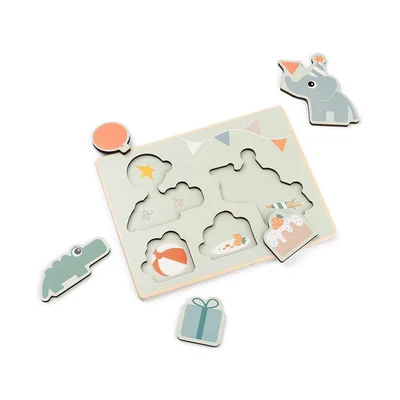
The Done by Deer First Layer Puzzle is the gentlest start in this list. It is a small wooden board, about 21 by 16 cm and just 1 cm deep, with a few chunky shapes that lift out to show a picture hidden underneath. Done by Deer rates it from 12 months.
The idea is lift-and-find rather than match-and-place. A one-year-old gets a win just from pulling a piece out, and the matching part comes later. In the brand's soft Scandi colour palette and at under £8, it is an easy add-on gift or stocking filler.
What parents love
- Success from the first go. Because there is a picture under each piece, lifting is its own reward. We hear from parents that this is the stage most first puzzles skip.
- Small and light. At 140 g boxed, it fits in a changing bag for cafes and car journeys, which bigger boards do not.
- Calm design. The muted colour mix suits parents who want toys that sit nicely on a shelf.
- Cheapest here. Around £7.61 at our partner when we checked, with responsibly sourced wood and EN 71 testing.
What to know before you buy
- Quick to outgrow. With so few pieces, most children master it within a few months. Think of it as a first step, not a long-term toy.
- Muted colours. Soft tones look lovely but give less colour contrast to help very young babies spot the shapes.
- Thin feedback so far. It is a newer design and there is not a lot of parent feedback yet, so our score leans on how well the format suits the age.
Best for
- First puzzles at 12 to 15 months
- Stocking fillers and add-on gifts under £10
- Puzzles for the changing bag or travel
- Parents who prefer a calm, neutral look
3. Bigjigs Toys Uppercase Alphabet Puzzle

The Bigjigs Toys Uppercase Alphabet Puzzle is the most ambitious board here. It has 26 chunky wooden capital letters, each painted to match a coloured slot on a roughly 28 cm square base, so a child can match on colour before they know any letters at all.
Bigjigs sells this chunky version from 18 months, but for most families it really comes into its own between two and four, when letter names start to matter. It is listed at £20, and was on offer at £16 at one of our partners when we checked.
What parents love
- Built to last for years. One parent shared that the pieces are "strong and give hours of fun". Thick letters survive being thrown, chewed and stood on.
- Colour does the early work. Matching each letter to its coloured slot lets younger toddlers succeed before they recognise a single letter.
- Clearly made letters. A parent told us they loved the "bright colours and beautifully made capital letters". They are easy to read and easy to trace with a finger.
- Ready for preschool. It turns naturally into spelling a name, finding the first letter of a word and playing "I spy" games.
What to know before you buy
- Too much for a one-year-old. Twenty-six pieces is overwhelming at 12 months. Buy the Little Dutch or Done by Deer first and save this one.
- More to lose. With 26 pieces, a missing letter is likely at some point. A storage box or bag helps.
- Capitals only. Schools in the UK start with lowercase letters. Bigjigs sells a lowercase version separately if you want both.
Best for
- Two to four-year-olds starting on letters
- Children who enjoy repeating the same puzzle again and again
- Grandparents looking for a gift with a long life
- Families getting ready for nursery or preschool
4. Trixie Wooden Animal Puzzle
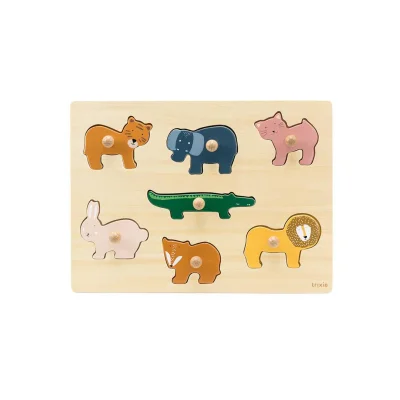
The Trixie Wooden Animal Puzzle is a 30 by 22 cm wooden tray with seven chunky animals in Trixie's trademark friendly faces. Trixie and our partner list it from 18 months, and say it is not suitable under 12 months.
There are no knobs. Instead, each animal is thick enough to grip and stand up on its own, so once the board is done the pieces become a little set of animal figures. At around £12 it sits in the middle of this list on price.
What parents love
- Pieces that become toys. Chunky animals that stand up mean the play carries on after the puzzle is finished: lining them up, feeding them, making them talk.
- Great for first words. Distinct, friendly animals give you plenty to name together, which is how most toddlers start using puzzles anyway.
- Sturdy and simple. We hear repeatedly from parents that Trixie's wooden pieces stand up well to being dropped and chewed, and the paint is water-based.
- Fair price. Around £11.96 at our partner when we checked, for seven full-size wooden animals.
What to know before you buy
- 18-month label. It is not meant for a 12-month-old, so as a first birthday present it would need to wait.
- No knobs. Thick pieces help, but a toddler who struggles with fine grip may need a hand lifting them out at first.
- No reward built in. There is no picture underneath and no sound, so the fun comes from you naming the animals together.
Best for
- Toddlers from 18 months learning animal names
- Children who love small-world and pretend play
- A gift that works as a puzzle and a toy set
- Parents who want a simple, sturdy wooden classic
5. Classic World Geometric Puzzle
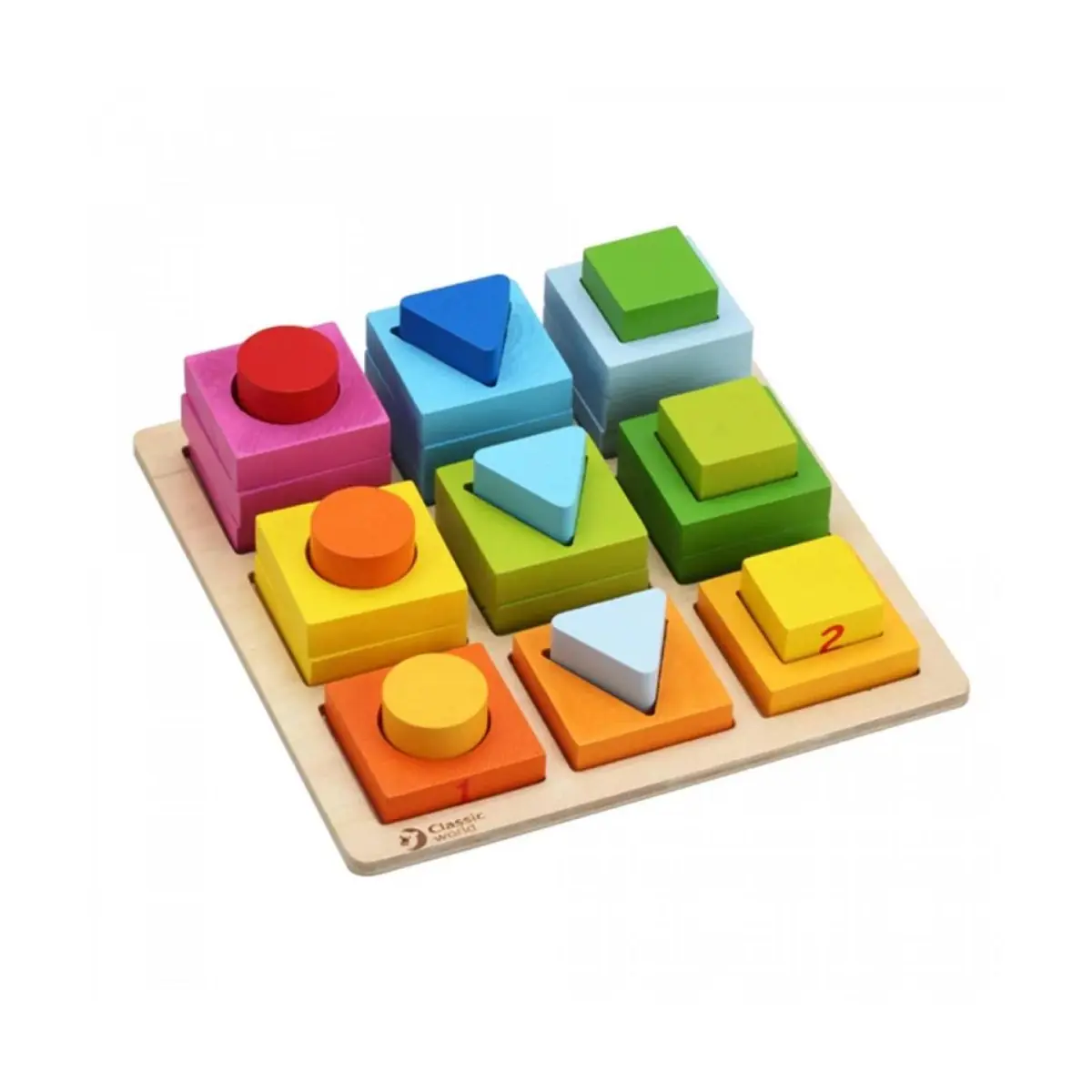
The Classic World Geometric Puzzle takes a different approach. Instead of flat inset pieces, it is a 22.5 cm square tray, about 6 cm deep, packed with brightly painted wooden blocks in different shapes and sizes. The puzzle is fitting them all back in.
That makes it harder than a flat board, because the blocks have to go in the right way up as well as the right place. The upside is that the pieces are proper building blocks, so it doubles as a stacking set. It is about £19, and our partner was showing low stock when we checked.
What parents love
- Two toys in one. The blocks build towers and patterns as well as fitting back into the tray, which stretches its life well past toddlerhood.
- Shape and colour learning. Circles, squares, triangles and more in strong colours give plenty to talk about, and counting comes naturally.
- Good for little hands. One parent described it as "a useful toy for strengthening hand muscles", and turning blocks to fit is great fine motor practice.
- Sustainable wood. Classic World uses sustainable wood and non-toxic paints according to the maker.
What to know before you buy
- Age not clear. Our UK partner does not give an age, and other sellers list it from 12 months. We would hand it over closer to 18 months to two years.
- Harder than it looks. Fitting 3D blocks back into a deep tray can frustrate younger toddlers, so expect to help at first.
- Thin feedback and low stock. There is little parent feedback on this exact model and stock was running low when we checked.
Best for
- Toddlers who love stacking and building
- Learning shapes, colours and early counting
- Older siblings sharing toys with younger ones
- Families who prefer open-ended toys
What about Melissa & Doug or Bigjigs peg puzzles?
Two names come up again and again when parents talk about first puzzles: the Melissa & Doug chunky and knob puzzles, and the Bigjigs My First Peg Puzzle range. Both are good starting points, with large knobs and four or five pieces.
We have not included them here because we could not match those exact puzzles to an in-stock listing with our retail partners this week. If you already own one, the puzzles in this list are a natural next step: the Little Dutch adds sound, the Trixie adds figures, and the Bigjigs alphabet adds letters.
How to choose
Choose the Little Dutch Wooden Sound Puzzle if your toddler is around 12 to 18 months and needs a reason to keep trying. The sound reward makes it our overall pick, as long as you play in a bright room and switch it off afterwards.
Choose the Done by Deer First Layer Puzzle if you want the gentlest possible first puzzle, a stocking filler under £10 or something small enough for the changing bag.
Choose the Bigjigs Toys Uppercase Alphabet Puzzle if your child is two or older, or if you want one puzzle that will last into preschool. It is the longest-lasting buy here.
Choose the Trixie Wooden Animal Puzzle for an 18-month-old who loves animals and pretend play, and you want pieces that become toys once the puzzle is done.
Choose the Classic World Geometric Puzzle if your toddler is more into building than matching, or you want something an older sibling will play with too.
Add it to your Nest
Puzzles are one of the most requested first birthday and Christmas gifts, and one of the easiest to double up on. Add the one that suits your toddler's age to your free BubsNest registry so family can see what you already have, and pick the next stage when the time comes. You can find more toy comparisons in our community guides.
Ready to Create Your Baby Registry?
Start your free baby registry today and share it with friends and family.
Get Started Free