BIBS Colour vs Nanobébé Flexy: The Latex Cherry Needs Replacing Sooner, the Silicone Shield Hugs a Newborn's Face
Natural rubber cherry teat or one-piece bendy silicone? We compare BIBS Colour and Nanobébé Flexy dummies on price, lifespan, cleaning, sizing and which babies actually keep them in.
COMPARISON · FEEDING & SOOTHING
Dummies are the cheapest thing on most newborn lists and the one parents end up rebuying most often. Buy the wrong shape and you find out at 3am, when it pings out for the tenth time. Buy the right one and it quietly earns its place in every changing bag, cot and coat pocket for the next year or two.
BIBS Colour and Nanobébé Flexy are two of the dummies parents ask us about most once the hospital freebies run out, and on paper they could not be more different. BIBS is a Danish design classic: a round natural rubber cherry teat on a curved plastic shield, sold in three sizes and dozens of muted colours. Nanobébé Flexy is a single piece of soft silicone with a shield that bends to follow the curve of a baby's nose and chin, designed with breastfed newborns in mind.
The price gap is small, a couple of pounds a pack. The real differences are how long each one lasts, how you clean it and how long your baby can stay with it. We worked through live UK prices, both brands' care guidance and a lot of parent feedback to work out which one suits which family.
Lil' Bubba's verdicts
- Best for Newborns and Breastfed Babies: Nanobébé Flexy Soothers · 8.5/10 - soft one-piece silicone that curves away from the nose, from £5.99 for two
- Best for Growing With Your Baby: BIBS Colour Soothers 2 Pack · 8.0/10 - three sizes run from birth to toddler, and the natural rubber cherry is the softest teat here
Quick comparison
| BIBS Colour | Nanobébé Flexy | |
|---|---|---|
| Price (2-pack) | From £7.66, usually £10.95 | From £5.99 (4-pack £9.99) |
| Teat | Round cherry, natural rubber latex | Breast-like, silicone, lengthens as baby sucks |
| Shield | Curved, with large air holes | Flexible silicone, contours nose and chin |
| Construction | Two parts (teat and shield) | One piece |
| Sizes | Size 1 (0-6m), 2 (6-18m), 3 (18m+) | 0-3 months, 3+ months |
| Replacement | Every 4-6 weeks (brand advice) | Check before every use, replace at first sign of wear |
| Cleaning | Boiling water poured over, air dry; no dishwasher | Steriliser and dishwasher safe |
| Latex-free | No | Yes |
| Our rating |
How we picked these two
We started with the dummies parents add to their Nests most often that we hadn't yet put head to head, then narrowed it to two that take genuinely different approaches: natural rubber versus silicone, two-piece versus one-piece, a brand that grows to toddlerhood versus one built around the newborn weeks.
We checked live UK prices across the retailers we work with, read both brands' care and safety guidance, and went through parent feedback looking for patterns rather than one-off rants. Neither brand saw this piece before it went live, and nobody paid to be included.
What to look for in a dummy
Material. Natural rubber latex is softer, stretchier and closer to skin, which is why some babies who reject everything else take to it. The trade-off is that it breaks down with heat, light and saliva, so it needs replacing more often, and it is a no-go for latex allergies. Silicone is firmer, odourless, heat tolerant and far longer lasting, and usually happy in a steriliser or dishwasher.
Teat shape. Round cherry teats are symmetrical so they work whichever way up they go in. Breast-like and orthodontic teats are flatter or more elongated. There is no strong evidence that one shape is better for teeth; the shape that matters is the one your baby will actually keep in.
Shield. Look for a shield that is curved, has air holes and is clearly bigger than your baby's mouth. A shield that sits off the skin helps with dribble rash; one that flexes is kinder on tiny noses.
One-piece or two-piece. One-piece dummies have no joins where milk and dribble can collect. Two-piece designs are fine too, but check the join every time you clean it.
Safety habits. Whatever you buy, give the teat a firm tug before each use and bin it at the first sign of cracks, stickiness or swelling. Never tie a dummy on a long cord, and only use a short clip while your baby is awake. If you're breastfeeding, many parents wait until feeding is well established, often around four weeks, before introducing one. If you use a dummy for sleep, offer it consistently and don't put it back in if it falls out once your baby is asleep.
1. BIBS Colour Soothers 2 Pack
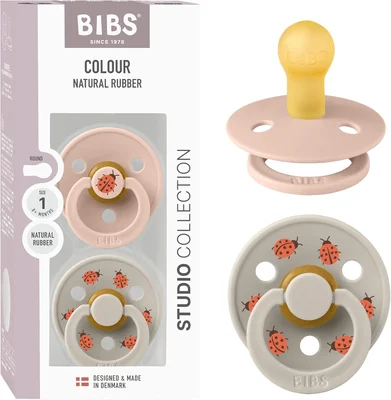
BIBS has been making dummies in Denmark since the late 1970s, and the Colour range is the one you'll see clipped to buggies in every café. The design is simple: a round cherry-shaped teat in natural rubber latex, fixed to a gently curved shield with two large air holes and a handle on the front for a clip.
The catch is lifespan. Natural rubber is lovely and soft, but it breaks down with use, and BIBS itself advises swapping dummies every four to six weeks. That turns a £10.95 two-pack into a regular purchase rather than a one-off, and it means sterilising the gentle way: boiling water poured over, then four to six hours of air drying, with no dishwasher and no electric steam steriliser.
What parents love
- Softest teat here. Natural rubber is squishier and more skin-like than silicone, and lots of babies who spit out firmer dummies settle with it. One parent told us: 'She refused every other dummy we tried, this is the only one she'll use.'
- Three sizes, birth to toddler. Size 1, 2 and 3 cover newborns right through to 18 months and beyond, so a baby who loves it never has to switch brands.
- A shield that sits off the skin. The curved shape and big air holes leave a gap round the mouth, which parents of dribbly babies say helps with red, sore patches.
- Colours parents actually like. Dozens of muted shades and seasonal prints, and some colourways drop to £7.66 for two.
What to know before you buy
- Replace every four to six weeks. The teat swells and goes sticky as latex ages, and that's your signal to bin it. Over a year, the spend adds up.
- Gentle cleaning only. No dishwasher and no electric steam steriliser, just boiling water and patience while it air dries.
- Not for latex allergies. If anyone at home has a latex allergy, choose a silicone dummy instead.
Best for
- Babies who refuse firmer silicone teats
- Families who want one dummy brand from newborn to toddler
- Dribbly babies prone to rashes round the mouth
- Parents who care how the changing bag looks

2. Nanobébé Flexy Soothers

Nanobébé made its name with breast-shaped bottles, and the Flexy dummy follows the same thinking. It's a single piece of soft silicone, no joins and no separate parts, with a breast-like teat that lengthens as baby sucks and a shield that flexes round the nose and chin instead of pressing flat against the face.
It's also the cheaper buy: £5.99 for two direct from the brand, £6.99 on Amazon and £9.99 for a four-pack. Silicone stands up far better than latex to heat and repeated cleaning, so it goes in the steriliser and the dishwasher, and you won't be replacing it on a monthly schedule, though you should still check it before every use.
What parents love
- Built for tiny faces. The curved, flexible shield follows the nose and chin, and parents of newborns say it doesn't squash the nose. A parent shared: 'It was the only one our newborn would take, and it didn't leave a mark on her nose.'
- Friendly to breastfed babies. The soft, breast-like teat is why many breastfeeding parents try it first, and we hear repeatedly that it didn't upset an established latch.
- One piece, easy to clean. No gaps for milk or dribble to sit in, and it copes happily with the dishwasher and steriliser.
- Cheapest per dummy. Around £2.50 a dummy in the four-pack, and it lasts longer between replacements.
What to know before you buy
- Only two stages. 0-3 months and 3+ months; there's no dedicated toddler size, so older babies may end up moving to another brand.
- Fit isn't universal. The snug, contoured shield suits most babies, but a few parents find it takes a couple of goes to sit right, and some babies simply prefer a round teat.
- Silicone loves fluff. Like all silicone dummies it picks up lint in pockets and bags, so a dummy case is worth having.
Best for
- Newborns from day one
- Breastfed babies
- Parents who want dishwasher-safe, low-fuss cleaning
- Households with a latex allergy
What about MAM and Tommee Tippee?
The two biggest high-street dummy brands both make excellent soothers, and we've compared them against each other separately in our community section. If your baby is already happy with one of those, there's no reason to switch.
BIBS and Nanobébé are worth trying when the high-street options haven't clicked: BIBS if your baby wants something softer, Nanobébé if a standard shield seems to sit awkwardly on a very small face.
How to choose
Choose the BIBS Colour if your baby has turned down silicone dummies, if you want one brand that grows from newborn to toddler, or if you're happy to treat dummies as a monthly consumable in return for the softest teat.
Choose the Nanobébé Flexy if you're shopping before baby arrives, you're breastfeeding, anyone at home has a latex allergy, or you want a dummy that goes in the dishwasher and lasts.
Still not sure? Buy one pack of each. At under £20 for both, it's the cheapest way to find out what your baby actually prefers, and most babies make their opinion very clear.
Add it to your Nest
Whichever wins in your house, add it to your free BubsNest registry so family can pick up spares, and you'll always know which size and shape to reorder.
Ready to Create Your Baby Registry?
Start your free baby registry today and share it with friends and family.
Get Started Free