The Big-Ticket Baby Registry Items: How to Choose Without Losing Your Mind
The pushchair, the car seat, the sleep setup, the baby monitor. Four big purchases that shape your daily life as a parent. Here is how to choose wisely and get help paying for them.
The average first-time parent in the UK spends somewhere around £1,600 on baby gear before their little one even arrives. That is a lot of money. And if you have spent even five minutes looking at pushchairs online, you already know that roughly half of that budget can disappear on just three or four big purchases.
The thing is, these big-ticket items are also the ones that matter most. They are the things you will use every single day, the things that keep your baby safe, and the things you will either love or quietly resent for the next two years. Getting them right is worth the research. Getting them wrong means either living with the frustration or buying again. 💰
So here is the honest guide to choosing the big four, what actually matters when you are comparing options, and how to get them onto your registry without needing a second mortgage.
Why These Four Deserve the Most Brain Space
Your baby registry will eventually have dozens of items on it. Muslins, sleepsuits, bath thermometers, the lot. But the four purchases that will genuinely shape your daily life are the pushchair, the car seat, the sleep setup, and the baby monitor.
Everything else is relatively cheap to swap if you get it wrong. Bought the wrong brand of bottles? Try another for a tenner. But a pushchair that does not fold one-handed when you are holding a screaming baby in a car park? That is a different kind of regret.
These are also the items your friends and family actually want to chip in for. Nobody wants to buy you a six-pack of muslins as a gift (well, some people do, but they are the practical ones). The big stuff is where group gifting shines.
The Pushchair: Your Daily Driver
Think of your pushchair like a car. You would not buy a car without thinking about where you drive, how often, and whether you need to parallel park. Same logic applies here.
If you live in a city, weight and fold size are everything. You need something that collapses quickly, fits in the boot of a normal-sized car, and does not weigh as much as your baby. If you are more suburban or rural, bigger wheels and suspension matter more because pavements are optional and gravel is not your friend.
The questions that actually matter when choosing:
- Can you fold it one-handed? You will be holding a baby. Always.
- Does it fit in YOUR boot? Not the demo car in the shop. Yours.
- Is it suitable from birth, or do you need a separate carrycot or car seat adapter?
- How heavy is it? Check the actual number, not just the "lightweight" marketing.
If you want something compact that genuinely travels well, a lightweight stroller that folds small is worth its weight in gold (literally, because you will be lifting it constantly).
The Car Seat: Safety First, Always
This is the one purchase where there is absolutely no room for compromise. Every car seat sold in the UK must meet i-Size (R129) or R44 safety standards, so the baseline is already good. But there are real differences in how easy they are to install, how well they fit in your car, and how long your baby will be comfortable in them.
For newborns, you want a Group 0+ infant carrier. These are the ones you can click in and out of the car and carry with you, which sounds convenient until you realise they weigh about 4kg empty and your arm goes numb after two minutes. Still, for quick errands and keeping a sleeping baby undisturbed, they are brilliant.
The biggest decision is whether to go with an ISOFIX base. It makes installing the seat easier and more secure, but it is an extra cost and you will need to check it fits your car. Most modern cars have ISOFIX points, but "most" is not "all", so check before you buy.
A few things to test in person if you can:
- Does the seat fit in your car? Some are wider than others.
- Can you adjust the harness without a PhD in engineering?
- Is the canopy actually useful, or just decorative?
- Does it click onto your pushchair frame? Travel system compatibility saves a lot of hassle.



The Sleep Setup: Where They Spend Most of Their Time
Newborns sleep somewhere between 14 and 17 hours a day. Which means the place they sleep is arguably the most important piece of furniture in your house for the first few months.
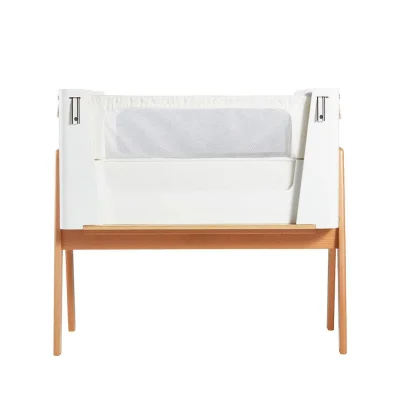
For the first six months, it is recommended to have your baby sleep in the same room as you. This is where a bedside crib is genuinely life-changing. It sits right next to your bed at mattress height, often with a drop-down side, so you can settle and feed your baby without actually getting up. At 3am, not having to stand up feels like winning the lottery.
After six months (or whenever you are ready to transition), you will want a proper cot or cot bed. Cot beds convert into a toddler bed later, so they last longer, but they take up more space. If your nursery is on the smaller side, a standard cot might be the better call.
What to look for in a sleep setup:
- A firm, flat mattress that fits snugly with no gaps at the edges.
- Adjustable mattress heights, so you are not bending double to pick up a newborn.
- If it is a bedside crib, check it is compatible with your bed height.
- Skip the bumpers, pillows, and anything fluffy. Clear cot, fitted sheet, done.

The Baby Monitor: Your Eyes When You Leave the Room
You do not technically need a baby monitor. Parents have been successfully raising children without them for thousands of years. But once you have one, you will wonder how anyone ever managed without it.
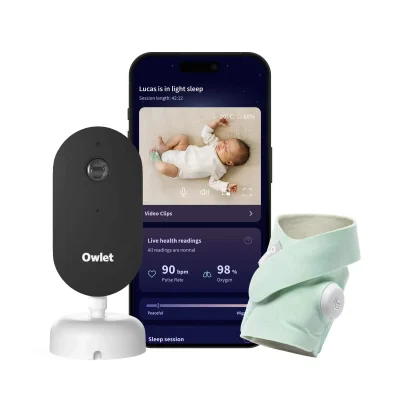
The basic choice is audio-only versus video. Audio monitors are cheaper and simpler, but video monitors let you check whether your baby is actually awake or just making those weird sleep noises that all babies make (the grunting, the squeaking, the random yelling into the void at 2am). 📹
If you go video, the next question is Wi-Fi or dedicated signal. Wi-Fi monitors let you watch from your phone anywhere, which is great for peace of mind. Dedicated signal monitors have a parent unit with a screen, which means no app to fiddle with and no reliance on your broadband staying connected.
The features that actually earn their keep:
- Night vision. Essential, obviously.
- Two-way audio, so you can shush from the sofa.
- Room temperature display. Useful but not critical if you already have a room thermometer.
- Movement or breathing tracking. This falls into "nice to have for anxious new parents" territory, and there is no shame in wanting that reassurance.



The Group Gifting Trick
Here is the registry secret that nobody tells you: you do not have to buy these things yourself. The whole point of a baby wishlist is that your friends, family, and generous colleagues can chip in together for the big stuff instead of buying you seventeen muslin cloths.
Add your big-ticket items to your BubsNest registry and turn on group gifting. Grandma contributes £50, your best friend adds £30, your work lot does a collection, and suddenly that pushchair you thought was out of budget is sitting in your hallway.
It is genuinely one of the smartest ways to afford the good stuff without blowing your entire baby budget in one go. And people prefer it, too. Knowing they contributed to something meaningful beats guessing what size sleepsuit to buy. 🎁
The Bottom Line
You do not need to spend a fortune, and you definitely do not need the most expensive version of everything. What you need is the right version for your life, your space, and your budget. A £200 pushchair that fits your boot and folds easily will make you happier than a £1,200 one that does not.
Do your research on the big four. Test them in person if you can. Add them to your registry so people can help. And then stop worrying, because your baby genuinely does not care what brand their car seat is. They care that you are there. Everything else is just logistics.
Ready to Create Your Baby Registry?
Start your free baby registry today and share it with friends and family.
Get Started Free