Diaper Genie Platinum vs Ubbi Steel Nappy Bin: The £90 One Has a Foot Pedal, the £80 One Takes Any Bin Bag
Two stainless steel nappy bins, £10 apart. The Diaper Genie Platinum opens with your foot and stands 69cm tall; the Ubbi needs a hand on the lid but runs on ordinary bin bags and locks against toddlers. Here is which one suits your nursery.
COMPARISON · NAPPY CHANGING
Most nappy bins are plastic boxes that run on branded refill cassettes, and the refills are where the money goes. Two bins break that pattern by being made of stainless steel, which does not soak up smells the way plastic slowly does over a year of use. The Ubbi Steel Nappy Bin has been the default steel option in UK nurseries for years. The Diaper Genie Platinum is the newer arrival, sitting at £89.99 against the Ubbi at £79.99.
On paper they look like the same product at a £10 gap. In practice they solve different problems. The Diaper Genie is a tall pedal bin: you press it with your foot, drop the nappy in, and your hands never leave the baby. The Ubbi is a shorter bin with a sliding lid you push open with one hand, and it takes any ordinary kitchen bin bag, so there is no refill to buy for as long as you own it.
That makes this less a question of which bin smells less (both seal well when they are shut) and more a question of what bothers you more: reaching for a lid mid-change, or paying for proprietary bags for two or three years. We read through the manufacturers' specs, current UK listings and a long run of parent reviews on both bins to work out where each one earns its price.
Lil' Bubba's verdicts
- Best Overall: Ubbi Steel Nappy Bin · 8.5/10 - any bin bag works, holds more nappies and has a child lock
- Best for hands-free changes: Diaper Genie Platinum · 8.0/10 - a foot pedal and 69cm height mean no bending and no free hand needed
Quick comparison
| Diaper Genie Platinum | Ubbi Steel Nappy Bin | |
|---|---|---|
| Price | £89.99 | £79.99 |
| Rating | ||
| Height | 27in (about 69cm) | 19.5in (about 50cm) |
| Capacity | Up to 47 newborn nappies | Up to 55 newborn nappies |
| How it opens | Foot pedal, lid closes when you lift your foot | Sliding lid, pushed open by hand |
| Bags | Diaper Genie Easy Roll refill (18 bags per roll) | Any standard kitchen bin bag |
| Odour seal | Odour-lock clamps plus a carbon filter | Rubber seals and a sliding lid that limits air movement |
| Child lock | No | Yes |
How we picked these two
We set out to compare the two stainless steel nappy bins actually stocked in our UK retail channels, rather than another plastic cassette bin. We have covered the cassette bins (Tommee Tippee, Angelcare, Shnuggle) several times already, and the question parents keep asking us is narrower: if I am going to spend £80 or more on a steel bin, which one? We checked each bin's manufacturer specs, current UK prices, and patterns across a large set of parent reviews, weighting complaints that came up repeatedly over one-off delivery problems.
What to look for in a nappy bin
The bags, not the bin, set the real cost. A bin is a one-off purchase. Bags are a weekly one for two to three years. Bins that need their own refills lock you into that brand's pricing and stock, so check the refill is easy to buy in the UK before you commit.
How you open it matters at 3am. During a change you have one hand on a wriggling baby. A foot pedal keeps both hands free; a hand-operated lid means letting go for a second or parking the nappy on the mat first.
Material matters over time. Plastic is slightly porous and can hold on to smells after months of use, even after cleaning. Steel wipes clean and stays neutral, which is the main reason both of these bins cost more than a cassette bin.
Capacity is quoted in newborn nappies. Both brands give figures for newborn size. Bigger nappies from around six months fill a bin much faster, so treat the headline number as a best case.
Toddlers will find it. By the time your baby is pulling up on furniture, a bin they can open is a problem. A child lock is worth more than it sounds when you are buying for a newborn.
Height and footprint. A taller bin saves bending, a shorter one tucks under a changing unit. Measure the gap you have before ordering.
1. Diaper Genie Platinum
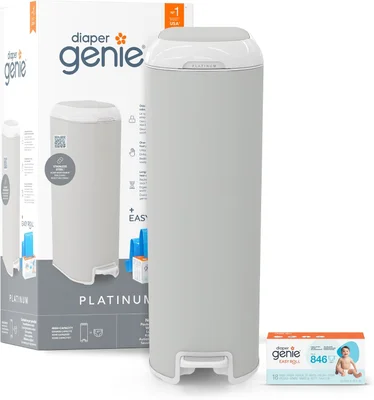
The Diaper Genie Platinum is a stainless steel pedal bin built specifically for nappies. At 27 inches (about 69cm) it is noticeably taller than most nappy bins, and the wide opening plus foot pedal means you can step, drop and walk away without bending or taking a hand off your baby. Odour-locking clamps hold the bag shut at the top, and a carbon filter in the lid adds a second layer.
It runs on Diaper Genie's own Easy Roll refill, a roll of 18 perforated bags made from a multi-layer film with an odour barrier. The brand says one roll lasts up to five months, or around 846 newborn nappies. One roll comes in the box. The catch is that these bags are specific to the Platinum: they are not the same refills as the older plastic Diaper Genie bins, so you cannot use stock you might find for those.
What parents love
- Truly hands-free. The pedal opens it and the lid closes as soon as you lift your foot. Parents who change at a standing height say it is the easiest bin they have used mid-change.
- No bending. At around 69cm tall the opening sits close to changing-table height, which parents recovering from a caesarean or with bad backs particularly notice.
- Strong odour control when shut. One parent told us: 'Odour control is on point.' The clamps and carbon filter together do a good job between emptying.
- Long-lasting refill. Eighteen bags on one roll means you are buying refills a few times a year rather than every few weeks.
What to know before you buy
- You are tied to one refill. The Platinum only takes its own Easy Roll bags. Check you can buy them easily in the UK before choosing this bin, as it is a newer arrival here than in the US.
- The pedal is the weak point. A recurring complaint is a pedal that works loose or arrives damaged. A parent shared that theirs 'keeps falling off', so check it on arrival while you can still return it.
- No child lock, and smaller than it looks. It holds fewer nappies than the shorter Ubbi, and one parent said 'storage is less than advertised'. A curious toddler can also step on the pedal.
Best for
- Parents who want both hands on the baby throughout every change
- Anyone recovering from a caesarean or with back pain who wants to avoid bending
- Nurseries with a tall changing unit and floor space beside it
- Families who would rather buy a refill twice a year than think about bin bag sizes

2. Ubbi Steel Nappy Bin
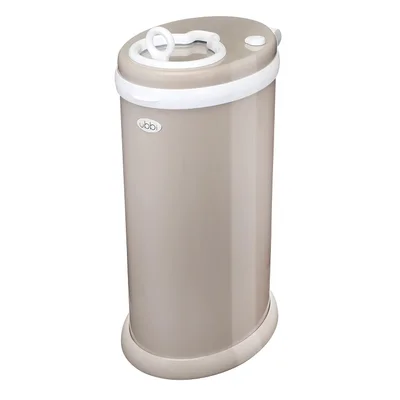
The Ubbi is the bin most parents picture when they think of a steel nappy bin. It is a 19.5 inch (about 50cm) powder-coated steel box with a sliding lid on top: you push the lid back, drop the nappy in, and it slides closed. Rubber seals around the opening and the sliding action, which moves less air than a flip-up lid, keep smells inside.
Its defining feature is that it needs no special bags at all. Any standard kitchen bin bag fits, which is why parents who have done the maths over two or three years of nappies tend to land on it. It also has a childproof lock on the lid and holds up to 55 newborn nappies, more than the Diaper Genie despite being shorter.
What parents love
- Any bin bag works. No refills, no cassettes, no hunting for stock. We hear repeatedly from parents that this is the reason they chose it, and the saving adds up over the nappy years.
- Sealed when closed. One parent put it best: 'When it's closed, you can't smell a thing.'
- Childproof lock. Once your baby is mobile, the lock keeps little hands out, something the Diaper Genie does not offer.
- Built to last. Plenty of parents report it working the same after three years, and many keep it for a second child.
What to know before you buy
- You need a hand to open it. There is no pedal. You either let go of the baby for a second or fold the nappy and park it on the mat until you are done.
- Smell escapes on opening and emptying. A parent shared that some smell gets out each time the lid slides back. Many wrap dirty nappies in a nappy sack first, and several suggest changing the bag outside.
- Watch the finish. A minority of reviews mention rust spots on the lid corners after months of use, so wipe it dry if it gets wet.
Best for
- Parents who want the lowest running cost over the nappy years
- Homes with an older sibling or a baby about to start crawling
- Smaller nurseries where a 50cm bin can tuck under a changing unit
- Anyone who wants a bin they can keep for a second baby
What about plastic cassette bins?
If £80 to £90 feels like a lot for a bin, the plastic cassette bins from Tommee Tippee and Angelcare cost a third of the price up front. The trade-off is the refill cassettes, which are where those bins make their money, and plastic that can hold on to smells over time. We have compared those separately in our other nappy bin guides on the BubsNest community. If you are choosing between a steel bin and a cassette bin, the deciding factor is usually how long you expect to be in nappies and whether a second baby is likely.
How to choose
Choose the Diaper Genie Platinum if keeping both hands on your baby is the priority and you have floor space for a tall bin. It is the more comfortable bin to use mid-change, especially if bending is hard after a caesarean. Just confirm you can get its Easy Roll refills easily, and check the pedal as soon as it arrives.
Choose the Ubbi Steel Nappy Bin if you want the lower running cost and the safer bin once your baby is mobile. It holds more, it locks, it takes any bin bag, and it costs £10 less. You give up the pedal, which most parents adapt to within a week by parking the nappy on the mat until the change is done.
For most UK families we would pick the Ubbi. The no-refill design and child lock matter for longer than the convenience of a pedal does.
Add it to your Nest
Still deciding? Add both to your free BubsNest registry and let family and friends help with the bigger nursery buys. You can compare prices across retailers and come back to the decision once you have measured the space by your changing unit.
Ready to Create Your Baby Registry?
Start your free baby registry today and share it with friends and family.
Get Started Free