Expecting an Autumn Baby? The Seasonal Essentials Nobody Mentions
If your due date falls between October and December, your essentials list looks completely different. Here is the seasonal gear guide that summer-baby lists skip.
If your due date falls somewhere between October and December, you are about to skip the newborn-in-a-muslin-cloth phase entirely. While your summer-baby friends were worrying about sun hats and UV covers, your mental shopping list looks completely different: fleece-lined everything, TOG ratings, and the eternal question of how many layers is too many layers.
Here is the thing, though. Most baby essentials guides are written for a generic, season-neutral baby. They will tell you to buy vests and sleepsuits but not how many warm ones. They will mention a blanket but not which weight. If you are bringing a baby home when the heating is already on, you need advice that accounts for the actual weather outside your front door.
This is that guide.
The Layering Rule That Simplifies Everything
The standard advice is to dress your baby in one more layer than you are wearing yourself. It sounds vague, but once you get the hang of it, it genuinely works. If you are comfortable in a jumper, your baby needs a vest, a sleepsuit, and a cardigan or zip-up hoodie. If you are reaching for your coat, add a warm outer layer for them too.
The trick with autumn is that temperatures swing wildly. You might leave the house on a crisp October morning needing a full pramsuit and come home in afternoon sunshine with a sweaty, cross baby. Dress in removable layers rather than one thick outfit, and keep a lighter sleepsuit in your changing bag for those warmer-than-expected moments.
Nighttime: Getting TOG Ratings Right
TOG ratings measure the thermal resistance of sleep bags and duvets. The higher the number, the warmer the bag. For an autumn or winter baby, you will probably want:
- 1.0 TOG for rooms at 21-23 degrees (well-heated homes)
- 2.5 TOG for rooms at 16-20 degrees (the recommended bedroom temperature range)
- 3.5 TOG only if your room regularly drops below 16 degrees
The room temperature, not the season, dictates the TOG. If your house runs warm, you do not need the thickest bag just because it is November. A room thermometer is about five pounds and removes the guesswork entirely.
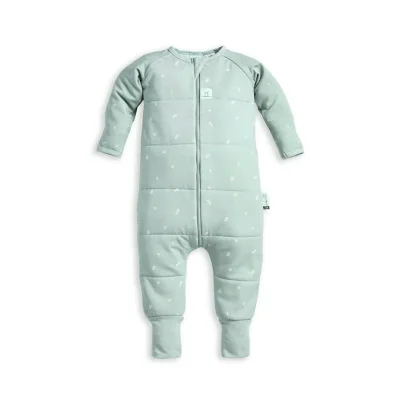
A long-sleeved sleep onesie is brilliant for colder nights because it covers arms and legs without needing extra blankets on top. Look for one in 2.5 TOG for most homes.

Out and About: Pushchair Warmth
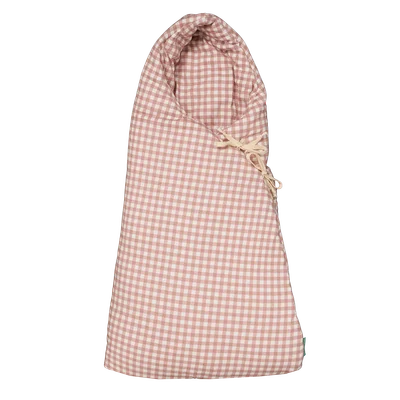
This is where autumn babies actually need different gear. A good footmuff turns your pushchair into a warm cocoon, and it means you can skip the bulky snowsuit for shorter outings. Most footmuffs unzip at the bottom for temperature regulation, which is genuinely useful when you duck into a warm shop and need to let some heat out quickly.

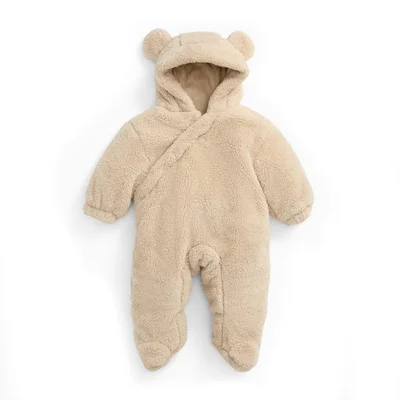
For longer walks or genuinely cold days, a pramsuit or snowsuit over their normal layers is the way to go. Choose one that is easy to get on and off, because wrestling a wriggling baby into a complicated zip-up while they scream in the hallway is nobody's idea of fun. Borg-lined pramsuits are popular for a reason: warm without being bulky, and they look ridiculously cute.
The Car Seat Rule You Need to Know
Never put a baby in a thick coat or snowsuit in their car seat. Bulky padding compresses in a crash, which means the harness is not tight enough against their body to protect them properly. Instead, strap them in wearing their normal layers and tuck a blanket over the top of the harness. A fleece-lined car seat liner that sits underneath them is fine, but anything thick between their body and the straps is not safe.
This catches a lot of parents out, especially with older relatives who suggest bundling them up before strapping them in. It is one of the most important safety rules for winter babies, and it applies to every car journey, no matter how short.
Your Autumn Baby Shopping List
Here is the practical rundown of what you will actually use:
- 6-8 long-sleeved sleepsuits (they live in these)
- 6-8 long-sleeved vests (the base layer for everything)
- 2-3 cardigans or zip-up hoodies (the removable middle layer)
- 1-2 hats that stay on (look for ones with ties or a chin strap)
- 1 pramsuit or snowsuit for outdoor walks
- A footmuff for your pushchair
- 2-3 sleep bags in the right TOG for your home
- A room thermometer
- A couple of muslins (yes, still - spit-ups do not take winter off)
What You Can Probably Skip
Tiny newborn shoes. They cannot walk and their feet need to move freely. Adorable, but pointless.
Multiple snowsuits in newborn size. They grow out of newborn in roughly three weeks. One is plenty.
A heated blanket for the cot. Not safe for unsupervised sleep, full stop.
An elaborate winter coat. A pramsuit does the job outdoors, and indoors they do not need one. Save the coat money for the next size up.
The Best Bit About an Autumn Baby
Here is what nobody tells you about having a baby in the colder months: those early weeks of hibernation are actually magical. There is no pressure to be anywhere. Nobody expects you at a barbecue or a park meetup. The sofa, a box set, and a newborn curled up on your chest while the rain patters against the window - that is the autumn baby experience, and honestly, it is one of the loveliest ways to start.
If you are building your wishlist and want to make sure the seasonal stuff is covered, your BubsNest registry is a great place to add the items that summer-baby lists forget about. Grandparents love buying the cosy stuff. Let them. 🍂
Ready to Create Your Baby Registry?
Start your free baby registry today and share it with friends and family.
Get Started Free