Glass Baby Bottles Buyer's Guide 2026: The £10 Lansinoh Fits Your Pump, the BIBS Latex Teat Is a Running Cost
Lansinoh at £10, Philips Avent at £12 and BIBS at £15 to £18: the glass is nearly identical, so here is what the extra pounds really buy in teat, fit and long-term cost.
COMPARISON · FEEDING TIME
Glass is having a moment in the bottle aisle. Parents tell us they switch for three reasons: they would rather not warm milk in plastic, they want a bottle that still looks clean after six months of dishwasher cycles, and they like seeing exactly how much milk is left without squinting at a cloudy scale. The trade-off is weight, plus the small but real worry of dropping one on a tiled kitchen floor at 3am.
What makes glass bottles tricky to compare is that the bottles themselves are close to identical. All three in this guide are heat-resistant glass, all go in the dishwasher, and all can be sterilised the usual ways. Where they really differ is the teat, the neck, and what else in your feeding kit they plug into. Get that wrong and the nicest glass in the world ends up at the back of a cupboard because your baby will not take it.
So we have split this guide by price tier, roughly £10, £12 and £15 to £18 a bottle, and asked one simple question at each step: what do the extra couple of pounds actually buy? We read through current retailer listings, brand spec sheets and hundreds of parent comments, then weighed up the things that matter after the first fortnight: how the teat suits a breastfed baby, how heavy the bottle feels at the end of a long feed, and what you will keep spending on afterwards.
Lil' Bubba's verdicts
- Best Overall and Best Value: Lansinoh Glass Feeding Bottle · 8.5/10 - £9.99 for 160ml, pumps straight in with a Lansinoh pump, and the teat comes in four flows.
- Best for Combination Feeding: Philips Avent Natural Response Glass · 8.0/10 - the teat only releases milk when baby actively sucks, and replacements are easy to find.
- Best for Design-Led Nurseries: BIBS Baby Glass Bottle · 7.5/10 - borosilicate glass and a choice of latex or silicone teat, but latex teats need swapping every one to two months.
Glass bottles at a glance
| Tier | Bottle | Typical price | Sizes | Teat | Stand-out extra | Rating |
|---|---|---|---|---|---|---|
| Budget | Lansinoh Glass | £9.99 (160ml), £10.99 (240ml) | 160ml, 240ml | NaturalWave silicone, four flows | Fits Lansinoh breast pumps | |
| Mid | Philips Avent Natural Response Glass | £11.99 (120ml), £13.99 (240ml) | 120ml, 240ml | Natural Response silicone | Teat style shared with the plastic Natural range | |
| Premium | BIBS Baby Glass Bottle | £12.57 to £17.95 single, about £20 to £30 for two | 110ml to 240ml | Round natural rubber latex or silicone | Two-pack set adds a milk lock and funnel |
How we picked the 3
We started with every glass feeding bottle we could find from established brands sold in the UK, then narrowed it down. Each pick had to be in stock with retailers we work with, cost under £20 for a single bottle, and have enough parent feedback behind it to judge how it behaves after a few weeks of real use, not just out of the box. We wanted one clear option at each price point and three different teat philosophies, so that whatever your baby prefers, one of these should suit.
We left out glass bottles sold only in large starter bundles, plus anything from sellers we could not find a track record for. Ratings reflect the whole experience: teat acceptance, everyday handling, cleaning, durability and what you will spend over the first year.
What to look for in a glass baby bottle
The teat matters more than the glass. Most feeding trouble is a teat problem. If your baby is breastfed, look for a wide, gently sloped teat and start on the slowest flow. If the bottle range offers several flow sizes that fit the same bottle, you will not need to rebuy as feeds speed up.
Check the neck fits the rest of your kit. A wide neck is easier to fill and clean, but it also decides whether the bottle fits your breast pump, your steriliser and your bottle warmer. Pumping straight into the bottle you feed from saves washing a whole set of parts.
Weight and size. Glass is heavier than plastic, and a full 240ml bottle can feel it on a tired wrist. Many parents start with the small size for newborn feeds and add bigger bottles later.
Glass quality and protection. Look for borosilicate or thermal shock-resistant glass, which copes better with going from a cold fridge to warm water. None of these three includes a protective sleeve, so a silicone sleeve is a sensible extra if you have hard floors. Check bottles for chips before every feed and replace any that are damaged.
Running costs. Teats wear out. Silicone teats typically last a couple of months, natural latex teats less. Factor in replacement teats, not just the bottle price, when you compare.
1. Lansinoh Glass Feeding Bottle

The Lansinoh glass bottle is the one we would hand to most parents first. At £9.99 for the 160ml size, or £10.99 for 240ml, it is the cheapest of the three, and the brand describes the glass as heat and thermal shock-resistant, so moving it between fridge and warm water is not the gamble it can be with thinner glass.
The clever part is the wide neck. It is the same fitting Lansinoh uses on its breast pumps, so if you pump with one you can express straight into this bottle, add a teat and feed, with no decanting. The NaturalWave teat is designed with breastfed babies in mind and comes in four flow sizes that all fit, with the slow flow supplied. There are only four parts to wash and the whole thing is dishwasher safe.
What parents love
- Pump, store and feed in one bottle. If you already own a Lansinoh pump, this is the easiest glass setup there is. Fewer containers, fewer parts in the steriliser.
- A teat breastfed babies accept. The NaturalWave shape is the reason most parents pick it. A parent shared: 'Our breastfed baby took to the teat and latched well.'
- Easy to keep clean. Smooth glass and just four parts. We hear repeatedly from parents that it is easier to clean and sterilise than the plastic bottles it replaced.
- The lowest price per bottle. At roughly £10 a bottle, glass stops being a premium choice. The two-pack and four-pack bring nothing cheaper per bottle, so buy singles while you test the teat.
What to know before you buy
- No sleeve included. It is still glass. One parent told us: 'We liked the nipples but the glass bottles broke easily.' Add a silicone sleeve if your kitchen has hard floors.
- The 160ml size gets outgrown. Fine for the early months, but expect to add the 240ml size once feeds grow.
- Only the slow teat comes in the box. Faster flows are sold separately, a small cost but worth planning for.
Best for
- Parents who pump with a Lansinoh breast pump
- Breastfed babies having their first bottles
- Anyone who wants glass without paying a premium
- Combination feeders who want one bottle for expressed milk and formula

2. Philips Avent Natural Response Glass
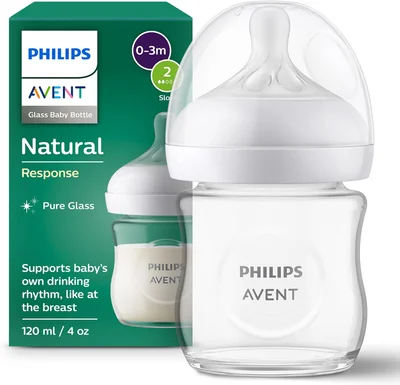
The Philips Avent Natural Response glass bottle sits in the middle at £11.99 for 120ml or £13.99 for 240ml. The draw is the Natural Response teat, which only releases milk when your baby actively sucks. When they pause to swallow and breathe, the flow stops instead of dribbling, which is the closest a bottle gets to the pace of a breastfeed. It holds a 4.7 out of 5 rating across more than 200 reviews on the brand's own shop.
The other big plus is how easy it is to live with. Avent is stocked almost everywhere, the glass bottle uses the same style of teat as the plastic Natural range, and replacement teats in every flow are easy to pick up on a normal shopping trip. If you already own plastic Avent bottles, the teats you have will make sense here too.
What parents love
- Baby sets the pace. The teat only flows when baby sucks, which suits babies who gulp, splutter or switch between breast and bottle.
- Less dribble and wind. One parent put it best: 'The anti-colic valve is a big bonus, no dripping at all.'
- Stays looking new. Parents regularly mention the glass still looks clear after months of dishwashing and sterilising, and it is easy to see when it is truly clean.
- Easy-to-find teats. Replacements in every flow are on almost every baby shelf, so a lost teat is never a crisis.
What to know before you buy
- It is the heavy one. A parent shared: 'It is made of glass and quite heavy, you need to be extra careful around newborns.' The 240ml size especially is noticeable on tired wrists.
- The 120ml size is small. Great for newborns, but it is the dearest per millilitre of the three, and you will need bigger bottles within a few months.
- No sleeve in the box. Like the others, it relies on you being careful or adding a sleeve.
Best for
- Combination feeding, breast and bottle
- Families already using plastic Avent bottles
- Babies who gulp or splutter on faster teats
- Parents who want teats they can replace anywhere
3. BIBS Baby Glass Bottle

BIBS is the Danish brand best known for its round latex dummies, and its glass bottle carries the same look: soft muted colours, a round teat and lab-grade borosilicate glass. Prices swing with size and colour, from £12.57 for some 225ml singles up to £17.95, with two-packs from about £20 to £30.
The bottle itself is solid. It meets the European safety standard for feeding bottles, the glass is top-rack dishwasher safe, and you choose between a natural rubber latex teat, very soft and familiar if your baby already loves a BIBS dummy, or a silicone one. The two-bottle set adds a milk lock and a fold-flat funnel, handy for carrying formula powder out and about.
What parents love
- A choice of teat material. Latex for softness, silicone for longevity, in the same bottle. Few glass bottles offer both.
- Familiar for BIBS dummy babies. Parents we hear from often pick it for exactly this reason: the round teat feels like the dummy their baby already accepts.
- Tough borosilicate glass. Borosilicate copes well with temperature changes, which matters when you are warming milk straight from the fridge.
- The prettiest on the worktop. If your nursery and kitchen are carefully styled, this is the one that looks the part, and it makes a lovely gift.
What to know before you buy
- Teats are a running cost. BIBS advises replacing latex teats every one to two months and silicone every two to three. Over a year, that adds up.
- Not everything goes in the dishwasher. The teat and funnel need hand washing, and the brand recommends boiling to sterilise rather than heat above 100°C.
- Latex is not for everyone. Pick the silicone teat if anyone in the family has a latex allergy, and expect some colours and sizes to sell out.
Best for
- Babies who already love a BIBS dummy
- Design-led nurseries and kitchens
- Gift lists and baby showers
- Parents happy to hand-wash teats

What about Dr Brown's glass bottles?
Dr Brown's Options+ also comes in glass, usually as a twin pack. Its internal vent system is popular with parents of very windy babies, but it adds extra parts to wash and assemble at every feed. If colic is your main worry rather than plastic, it is worth a look, and our wider feeding comparisons cover anti-colic bottles in more depth. For most families switching to glass for its own sake, the three above are simpler to live with.
How to choose
Choose the Lansinoh Glass Feeding Bottle if you want glass at the lowest price, you are breastfeeding or pumping, and especially if you already own a Lansinoh pump. It is the easiest all-rounder and the safest first buy.
Choose the Philips Avent Natural Response Glass if you are combination feeding, your baby gulps or splutters, or you already have Avent bottles at home. Pay the extra £2 for a teat that lets your baby set the pace.
Choose the BIBS Baby Glass Bottle if looks matter, your baby is devoted to a BIBS dummy, or you are buying a gift. Just budget for replacement teats from the start.
Whichever you pick, buy one bottle first and see how your baby takes the teat before committing to a set.
Add it to your Nest
Not sure which teat your baby will take? Add your favourite to your free BubsNest registry so friends and family can pick up the right bottles, and you can swap sizes later as feeds grow.
Ready to Create Your Baby Registry?
Start your free baby registry today and share it with friends and family.
Get Started Free