Globber Walk N Roll vs Tiny Love 5in1: The Lighter One Is a Ride-On First, the Busier One a Walker First
Two push-along walkers that both turn into ride-ons for under £50. The Globber is a battery-free, recycled-plastic ride-on with a walker mode; the Tiny Love is a walker with a lights-and-music panel and a proper front-wheel brake. Here is which one suits your baby.
COMPARISON · PLAY & LEARN
Somewhere between eight and fourteen months, most babies start hauling themselves up on the sofa and shuffling sideways along it. That is the moment a lot of parents go looking for a walker, and it is also the moment the shopping gets confusing. Sit-in walkers are out of favour with UK child safety bodies, so the sensible choice is a walk-behind or push-along design that your baby stands behind and steers. The catch is that a push walker on its own has a short life: once your little one is walking confidently, it gets parked in a corner.
That is why convertible walkers that turn into ride-ons have become so popular, and why these two are worth comparing side by side. The Globber Walk N Roll 2in1 Ecologic and the Tiny Love 5in1 Here I Grow Walk Behind & Ride-On sit within a couple of pounds of each other at just under £50, both are rated from 6 months to 3 years, and both flip from walker to ride-on without tools.
Look closer, though, and they are built from opposite ends. The Globber is essentially a minimalist ride-on that also works as a walker: no batteries, no lights, no music, made from recycled plastic and wheat straw. The Tiny Love is essentially an activity walker that also works as a ride-on: a detachable electronic panel, three front-wheel settings including a proper safety brake, and five named modes. Which one is right depends far more on your baby's stage, and your tolerance for flashing lights, than on the price.
We compared the brand specifications, current UK retail listings and the feedback we hear from parents about push walkers in general, then judged each one on the questions that matter at home: how well it controls speed, how long it stays useful, and how much it takes over your living room.
Lil' Bubba's verdicts
- Best for first steps: Tiny Love 5in1 Walk Behind & Ride-On · 8.0/10 - the front-wheel brake and speed settings give wobbly walkers real support, and the panel keeps them busy before they are ready
- Best for the ride-on years: Globber Walk N Roll 2in1 Ecologic · 7.5/10 - a light, quiet, battery-free ride-on with a 20kg limit and a walker mode that works best for confident cruisers
Quick comparison
| Globber Walk N Roll 2in1 Ecologic | Tiny Love 5in1 Walk Behind & Ride-On | |
|---|---|---|
| Our rating | 7.5/10 | 8.0/10 |
| Typical UK price | From about £48 | From about £50 |
| Age range | 6 to 36 months | 6 to 36 months |
| Modes | 2: ride-on, walker | 5: sit & play, stand & play, walk behind, ride-on, push toy |
| Speed control | Rear wheels add friction in walker mode | Front wheel: safety brake, go-faster or 360° swivel |
| Activities | 3 sticker sets | Detachable electronic panel with lights, music, mirror, beads and switches |
| Batteries | None | 3 x AAA (not included) |
| Max user weight | 20kg | Not stated by the brand |
| Storage | Under-seat compartment | Storage bin |
| Materials | Recycled plastic and bio-sourced wheat straw | Plastic, soft-coated wheels |
| Size | Compact, listed at about 2.4kg | 57 x 45 x 37cm |
How we picked the 2
We started with the convertible push walkers parents most often add to their Nests, then filtered for designs that are genuinely walk-behind rather than sit-in, come from established brands with UK stockists, and are in stock today. Both of these passed, sit at the same price, and share the same age rating, which makes the differences in how they are built much easier to see. We then went through the brand specifications line by line and weighed them against the issues parents raise most about walkers: runaway speed on hard floors, tipping when babies lean on the handle, noise, and how quickly the toy is outgrown.
What to look for in a push walker
Speed control comes first. A new walker leans on the handle and the walker rolls away faster than their legs can follow. That is the classic face-plant moment. Look for wheels that can be slowed down, either with a brake or with resistance built into the wheels, and remember that laminate and wooden floors make everything roll faster than carpet.
Stability under a leaning baby. Babies pull up on the handle from sitting, so the base needs to be wide and heavy enough that it does not tip backwards when they do. Wider wheelbases and low centres of gravity help.
A handle at the right height. The handle should sit around your baby's chest or tummy when they stand. Too low and they stoop; too high and they hang off it.
Life after walking. Most babies use a walker in walker mode for a few months at most. A ride-on mode, storage for toys or a push-toy role is what stretches it into the toddler years and makes the money worthwhile.
How much stimulation you want. Activity panels keep pre-walkers entertained at floor level, but lights and music are not for every household. If you already have a busy toy box, a quieter design may suit you better.
Walk-behind, not sit-in. Both walkers in this comparison are designed to be pushed or ridden, not sat in with feet dangling. Always use them on flat ground, well away from stairs, and supervise every session.
1. Globber Walk N Roll 2in1 Ecologic
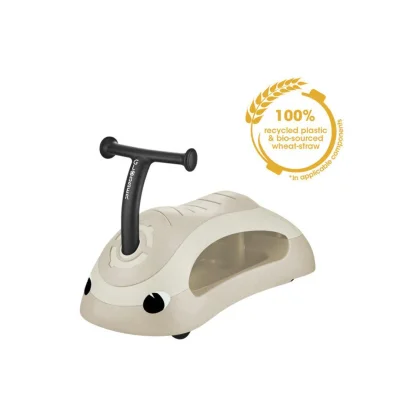
Globber is best known for scooters and balance bikes, and the Walk N Roll 2in1 Ecologic shows it. This is a sleek, low-slung ride-on with a T-bar handle. To switch to walker mode you reverse the T-bar so it becomes a push handle, then untuck the special rear wheels so they add resistance. Flip it back and the wheels tuck in to roll freely for scooting around on. There are no tools and no loose parts to lose.
It is made from recycled plastic and bio-sourced wheat straw, it picked up a German Design Award for 2026, and it comes in soft Berry, Pistachio and Coconut shades that look far calmer in a living room than most toddler toys. There is a storage compartment under the seat and three sticker sets so your child can decorate it. There are no electronics at all, which parents either love or miss.
What parents love
- A ride-on that lasts. With a 20kg maximum user weight and a 3-year age rating, the ride-on mode carries on well past the walking milestone. We hear repeatedly from parents that the ride-on stage is where convertible walkers earn their keep, and this is the stronger ride-on of the two.
- Quiet and battery-free. No music, no flashing lights and no AAAs to replace. A parent shared that the silence was the selling point after a year of singing toys.
- Light and easy to move. Listed at around 2.4kg by one UK retailer, it is easy to carry between rooms or take to grandparents.
- Looks good and feels responsible. The recycled and wheat-straw build plus the muted colourways are a real draw for parents who care about what the nursery looks like.
What to know before you buy
- The walker mode is gentle, not a brake. The rear wheels add friction rather than locking or properly slowing the walker. On smooth floors, very new walkers may still find it rolls faster than they would like.
- Nothing to do for pre-walkers. There is no activity panel, so a 7-month-old who cannot yet stand gets very little from it beyond sitting on the seat with help.
- Only two modes. It does fewer things than the Tiny Love, so if you want a toy that keeps a baby busy at floor level, it is not that.
Best for
- Babies who are already cruising confidently and nearly walking
- Families who want a ride-on that will last to age 3
- Homes with enough noisy toys already
- Parents who prefer recycled materials and calm colours



2. Tiny Love 5in1 Here I Grow Walk Behind & Ride-On

Tiny Love comes at this from the baby-development side, and it shows in how the 5in1 is staged. From 6 months your baby sits in front of a detachable electronic panel full of things to do: a rotating ball with beads, a peek-a-boo mirror, knobs and switches, spinning gears, a squeaker and musical buttons with two modes. From around 10 months the panel sits at the right height for cruising, so they can stand and play. Then it becomes a walk-behind walker, a ride-on from about 15 months and a push toy from 18 months.
The key feature is the front wheel, which has three settings: a first-step safety brake, a go-faster mode once walking is steadier, and a 360° swivel mode for pushing it around later. Combined with soft-coated wheels and a storage bin, it is the more hands-on, more structured of the two.
What parents love
- Real speed control. The safety brake on the front wheel tackles the biggest walker complaint head-on. Parents we hear from regularly say runaway walkers are the reason they gave up on cheaper ones, and this is the feature that stops it.
- Useful before your baby can walk. The sit and play and stand and play stages mean it earns its place from about 6 months, months before the Globber has much to offer.
- A panel that comes off. The electronic activity panel is detachable, so it can be played with on its own or removed once your toddler moves on to the ride-on.
- Grows in clear stages. One parent put it best: the joy of a 5-in-1 is that it changes just as your baby gets bored of the last mode.
What to know before you buy
- Batteries and noise. It needs 3 x AAA batteries, not included, and the lights and music will not suit every home.
- Bulkier footprint. At 57 x 45 x 37cm it takes up more floor space than the Globber and looks more like a toy than a piece of design.
- Weight limit not published. Tiny Love does not state a maximum user weight, so the Globber's 20kg figure gives more confidence for bigger toddlers in ride-on mode.
Best for
- Babies around 8 to 11 months who are just starting to pull up
- Homes with hard floors where speed control really matters
- Parents who want one toy that covers floor play, first steps and riding
- Babies who love buttons, lights and music

Head-to-head: where the differences show
First steps. The Tiny Love wins clearly. A proper front-wheel safety brake with a separate go-faster setting is a better answer to the wobbly first-walker problem than the Globber's rear-wheel friction.
Before walking. Again the Tiny Love. Its panel gives a sitting or cruising baby something to do. The Globber is mainly a seat until your baby can stand behind it.
Ride-on years. The Globber takes this one. It is designed by a ride-on brand, it is lighter, it has a published 20kg limit and it does not have a play panel in the way.
Living with it. The Globber is quieter, smaller and better looking. The Tiny Love is busier, louder and needs batteries.
Price. A draw. Both sit just under £50, so this is a decision about stage and style rather than budget.
What about sit-in baby walkers?
You will still see traditional sit-in walkers for sale, where a baby sits in a fabric seat inside a wheeled frame. UK child safety advice steers parents away from these because they let babies move quickly towards stairs, heaters and hot drinks before they have the balance or judgement to cope. Walk-behind designs like the two here are the safer alternative. If you want a wider look at walk-behind options, see our push-along walkers roundup.
How to choose
Choose the Tiny Love 5in1 if your baby is between about 8 and 11 months, just starting to pull up, and you have laminate, tiles or wooden floors. The safety brake and the activity panel make the most difference at exactly this stage, and the ride-on and push-toy modes keep it useful afterwards.
Choose the Globber Walk N Roll 2in1 Ecologic if your baby is already cruising confidently, you are buying with the toddler years in mind, or you simply do not want another toy with lights and songs. It is the better ride-on, the calmer object in your living room and it will never need new batteries.
If you are buying as a first-birthday gift, the Globber is often the smarter pick because most one-year-olds are close to walking already. For a gift at 6 to 9 months, the Tiny Love has more to offer straight away.
Add it to your Nest
Not sure which stage your baby will be at by the time it arrives? Add your favourite to your free BubsNest registry so family can gift it at the right moment, and compare prices across UK retailers in one place.
Ready to Create Your Baby Registry?
Start your free baby registry today and share it with friends and family.
Get Started Free