Introducing Allergens to Your Baby: What the Guidelines Actually Say (and How Not to Panic)
The advice on when to introduce peanuts, eggs and other allergens has completely changed. Here is what you need to know, step by step.
Ten years ago, the advice was simple: keep peanuts, eggs, and anything remotely allergenic well away from your baby until they turned one. Doctors said it, grandparents repeated it, and anyone who slipped their six-month-old a smear of hummus got The Look.
The science has completely flipped. Current guidelines now recommend introducing common allergens from around six months, ideally before your baby turns one. Earlier introduction is actually thought to reduce the risk of developing an allergy, not increase it. Which means everything your mum told you? Kindly outdated. 🥜
Why Did the Advice Change?
A landmark study published in 2015, called LEAP (Learning Early About Peanut Allergy), followed hundreds of babies considered at high risk of peanut allergy. The group that ate peanut regularly from around four to six months had an 80% lower chance of developing a peanut allergy by age five, compared to the group that avoided it entirely.
Since then, the evidence has only grown stronger. The EAT study showed similar patterns with egg, milk, and other allergens. The conclusion? Avoidance was actually part of the problem.
Health guidelines across the UK, Europe, Australia, and the US have now shifted to reflect this. The current recommendation is clear: introduce allergenic foods early and keep offering them regularly.
When to Start
You can begin introducing allergens from around six months, once your baby is showing signs of readiness for solid food. Those signs include sitting up with minimal support, reaching for food, and losing the tongue-thrust reflex that pushes food back out of their mouth.
If your baby has severe eczema or an existing food allergy, speak to your GP or health professional before starting. They may recommend introducing certain allergens under supervision, or starting even earlier (from four months) with medical guidance.
For everyone else? Around six months is the sweet spot. Do not wait until after their first birthday, as the window where early introduction seems most protective starts to close.
The Common Allergens: What to Introduce
There are 14 major allergens recognised in the UK. The ones most relevant to babies are:
- Peanuts (smooth peanut butter, never whole nuts)
- Hen's eggs (well-cooked scrambled egg, hard-boiled, or in baking)
- Cow's milk (in cooking or on cereal, not as a main drink before 12 months)
- Tree nuts (smooth nut butters, never whole)
- Wheat (bread fingers, pasta, porridge)
- Soya (tofu, soya yoghurt)
- Fish and shellfish (well-cooked flaked fish)
- Sesame (tahini, hummus)
You do not need to introduce all of these in one frantic week. Take it one allergen at a time, a few days apart, so you can spot any reaction clearly.
How to Actually Do It (Without Spiralling)
Here is the bit that stresses most parents out. The practical how. It is genuinely simpler than it sounds.
Start small. Offer a tiny amount of the new food, about half a teaspoon or a thin smear on a finger or toast soldier. You are not trying to feed them a full portion. You are introducing their immune system to something new.
Do it early in the day. Mornings or lunchtimes are ideal, because if there is a reaction you will notice it while you are awake and alert, not at 2am wondering if that rash is new.
One new allergen at a time. Leave at least three days between introducing each new allergen. That way, if something does cause a reaction, you will know exactly which food was responsible.
Keep offering it. Once your baby has tried a food without any reaction, keep it in the rotation. Regular exposure is what matters. A single taste of peanut butter at seven months does not do the job if you never offer it again. Aim for two to three times a week for each tolerated allergen.
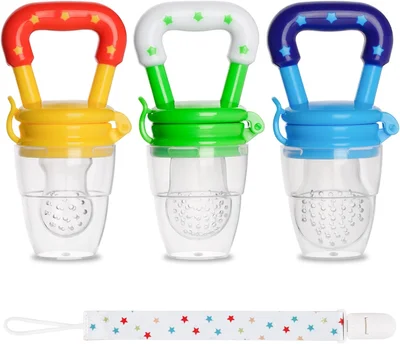
A mesh or silicone fruit feeder can be brilliant for this stage. You can pop a small amount of soft food, like ripe banana mixed with a thin smear of nut butter, into the feeder and let your baby explore it safely at their own pace.

What Does a Reaction Look Like?
Most babies will sail through allergen introduction without any issues at all. But it helps to know what to watch for, because a calm parent spots things faster than a panicking one.
Mild reactions (usually appear within minutes to two hours):
- A few hives or red blotches around the mouth or face
- Mild swelling of the lips
- An itchy mouth (baby may rub their face or seem uncomfortable)
- A bit of tummy discomfort or loose nappy
A mild reaction does not necessarily mean a full allergy. But do stop offering that food and speak to your GP before trying it again.
Severe reactions (anaphylaxis) are rare, but call 999 immediately if you see:
- Difficulty breathing, wheezing, or persistent coughing
- Swelling of the tongue or throat
- Sudden floppiness or unresponsiveness
- Widespread hives with any breathing changes
This is why introducing allergens during the day, when you are awake and focused, matters. Not because reactions are likely, but because being prepared takes the fear out of it.
Setting Yourself Up for Success
Allergen introduction is really just another chapter of weaning, and the same gear that helps with first foods helps here too. A suction bowl or plate keeps portions in place while your baby pokes at something new, and a decent bib with a food catcher saves your sanity when hummus inevitably ends up everywhere except inside the baby. 😅
A complete weaning set with suction bowls, soft spoons, and a silicone bib makes the whole process smoother, especially if you are juggling multiple new foods across the week.

What If Allergies Run in the Family?
If you, your partner, or your baby's siblings have a diagnosed food allergy, eczema, asthma, or hay fever, your baby may be at higher risk. This does not mean you should avoid allergens. In fact, early introduction may be even more important for these babies.
What it does mean is that you should have a conversation with your GP or paediatrician before starting. They might suggest introducing certain foods under medical supervision, particularly peanut if there is a strong family history. Some families are referred to an allergy clinic for a supervised food challenge, which sounds scarier than it is. You basically feed the baby a tiny amount of the food in a clinical setting while a professional watches.
Babies with severe eczema (the kind that needs prescription creams, not just a bit of dry skin) are also flagged for closer monitoring. Talk to your health professional, follow their plan, and know that early introduction under guidance is still the goal.
The Allergen Cheat Sheet
Because you will forget everything above at 7am while trying to make porridge with one hand, here is the short version:
- Start around six months (or earlier with medical guidance for high-risk babies)
- One new allergen at a time, three days apart
- Mornings are best so you can watch for reactions during the day
- Start tiny: half a teaspoon or a thin smear
- Keep going: offer tolerated allergens two to three times a week
- Never give whole nuts to babies or young children (choking risk)
- Talk to your GP if there is a family history of allergies or severe eczema
Allergen introduction sounds intimidating on paper, but once you are in the rhythm of it, it is just... food. A bit of peanut butter on toast. Some scrambled egg. A dollop of hummus. Your baby will probably be more relaxed about the whole thing than you are.
Want to keep all your weaning essentials in one place? Pop them on your BubsNest wishlist so friends and family know exactly what you need for this messy, wonderful stage.
Ready to Create Your Baby Registry?
Start your free baby registry today and share it with friends and family.
Get Started Free