LittleLife vs Mini First Aid Family Kit: The 115-Piece Box Stays Home, the 473g Pouch Travels
Two family first aid kits at around £27 to £30, built for different jobs. The Mini First Aid box brings a digital thermometer and cold pack for the house; the LittleLife pouch is light enough to live in the changing bag.
COMPARISON · HEALTH & SAFETY
Nobody puts a first aid kit at the top of their baby list. It sits somewhere between the nappy bin and the room thermometer, gets bought in a hurry around the third trimester, and then lives in a cupboard until the day a toddler meets the corner of a coffee table. That is exactly the day you find out whether you bought the right one.
The two family kits parents add to their Nests most often look almost interchangeable on a product page. Both are around £27 to £30, both come in a zipped bag, both promise plasters, bandages, burn gel and stickers for brave little patients. But open them side by side and they are built for different jobs. The Mini First Aid Family Kit is a 115-piece home box with a digital thermometer, an instant cold pack, foil blankets and a resuscitation face shield. The LittleLife Family Kit is a 473g pouch that fits in a changing bag, swaps the cold pack and shears for eye wash, saline wipes and wound closure strips, and leaves you a zip pocket for your own medicines.
So this is not a question of which kit has more in it. It is a question of where the kit will live, and what tends to go wrong there. We compared the itemised contents, sizes and weights from the brands and retailers, and read through what parents say after actually using each one on grazed knees, splinters and holiday mishaps.
Lil' Bubba's verdicts
- Best for the home cupboard: Mini First Aid Family First Aid Kit · 8.5/10 - more kit for less money, with a proper digital thermometer and a cold pack for bumped heads
- Best for days out and holidays: LittleLife Family First Aid Kit · 8.0/10 - smaller, lighter and better organised, with eye wash and wound closure strips the bigger box skips
Quick comparison
| LittleLife Family | Mini First Aid Family | |
|---|---|---|
| Typical price | £29.99 (smaller Mini size around £20) | £26.99 |
| Weight | 473g | 587g |
| Size | 17 x 12 x 7cm | 22 x 15 x 9cm |
| Thermometer | Oral type | Digital |
| Stand-out extras | Eye wash, saline wipes, wound closure strips, crepe bandage, nappy sacks | Instant cold pack, clothing shears, 2 foil blankets, resuscitation face shield |
| Plasters | Assorted | 60 washproof (20 children's prints) plus 4 knee and elbow |
| Space for your own extras | Yes, zip pocket | Limited once packed |
| Our rating |
How we picked the 2
We started with the first aid and healthcare kits BubsNest parents add to their Nests, then filtered out grooming sets (nail clippers and hairbrushes are not first aid) and anything without a published, itemised contents list. These two were the only family kits from established UK brands with full contents lists, live UK stock and a price under £30. We compared each item line by line, checked sizes and weights against the brand listings, and weighed what parents say after using them in real life. Neither brand saw this article before it was published, and nothing here is sponsored.
What to look for in a family first aid kit
A thermometer you will actually use. For babies and young children, a digital thermometer used under the arm is the usual recommendation, so a kit that includes a decent digital one saves you buying it separately. A thermometer that is fiddly or single-use is a gap you will need to fill.
Things for the injuries toddlers really get. Most family first aid is grazes, splinters, small cuts, minor burns, bumped heads and something in the eye. Look for low-adherent dressings, tweezers, burn gel, a cold pack or a plan for one, and an eye wash or sterile saline.
Size that matches where it lives. A kit for the kitchen cupboard can be big. A kit for the changing bag or the car door pocket has to be small enough that you never take it out to save space.
Room for medicines. Neither of these kits includes infant paracetamol or ibuprofen, an oral syringe or antihistamine, and you will want all of them within reach. A kit with a spare pocket makes that easy.
A guide, and some training. A leaflet helps in the moment, but no kit replaces a baby and child first aid course. Many parents book one before the baby starts crawling, and it changes how confidently you use whatever kit you own.
Child-friendly touches. Printed plasters and bravery stickers sound like fluff until you are trying to dress the knee of a screaming two-year-old. They help more than you would think.
1. LittleLife Family First Aid Kit
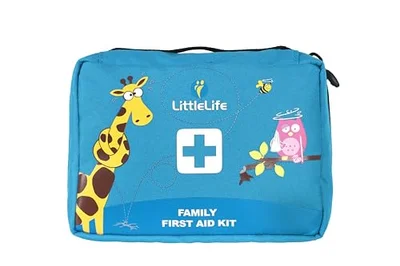
LittleLife makes children's rucksacks and travel kit, and this family first aid kit feels like it was designed by people who spend a lot of time packing for days out. It is a compact blue zipped pouch, 17 x 12 x 7cm and 473g, with the contents held in clearly organised compartments so you can find the tweezers without tipping everything onto a picnic blanket.
The contents lean towards the things that happen away from home: sterile saline wipes for cleaning a graze when there is no tap nearby, an eye wash for sand and grit, wound closure strips for small cuts, eyepad dressings, a crepe bandage for a twisted ankle and nappy sacks for disposing of anything messy. It is CE certified, comes with a primary care leaflet and "Brave Little Star" stickers, and leaves you a zip pocket for your own medicines. There is also a smaller Mini size at around £20 if you only want the basics for the pushchair basket.
What parents love
- Compact enough to never leave behind. It slips into a changing bag or a car door pocket. One parent told us: 'this is compact too. We bought one to put in our caravan'.
- Well organised. The compartments mean you can see what you have and what you have used, which matters when you are restocking after a summer of grazes.
- Room for your own extras. A parent shared: 'It has everything I need and a little zip pocket to which I have added antihistamines.'
- The right items for travel. Eye wash, saline wipes and closure strips cover the beach, park and campsite injuries a home-focused kit tends to miss.
What to know before you buy
- Fewer items for the money. At £29.99 it is the dearer of the two with fewer pieces. One parent put it best: 'if you compare it to other first aid kits then I would say it is expensive for 42 items'.
- The thermometer is basic. It is an oral type rather than a reusable digital underarm thermometer, so you will still want a proper one for a baby.
- No cold pack. For a bumped head you will need to improvise with something from the freezer, which is fine at home and harder at the park.
Best for
- Living permanently in the changing bag or car
- Holidays, caravans and camping trips
- Parents who want space to add their own medicines
- A second kit alongside a bigger one at home

2. Mini First Aid Family First Aid Kit

Mini First Aid is a first aid training company that runs baby and child classes across the UK, and its family kit reads like a course reading list turned into a box. At £26.99 it is cheaper than the LittleLife and holds far more: 60 washproof plasters (20 with children's prints), knee and elbow plasters, wound pads, conforming and triangular bandages, burn gel sachets, tweezers, a digital thermometer, an instant cold pack, two foil blankets (adult and child), a resuscitation face shield and paramedic-style shears that can cut through clothing or a seat belt.
The "115 pieces" headline is worth a pinch of salt. The itemised list at one major retailer adds up to roughly 103 items, and around half of the total is plasters. That does not make it a worse kit, it just means the real comparison is about what is in the box rather than the number on the front. On that measure it is strong: it covers the scary-but-rare moments as well as the everyday ones, and the guide is written by people who teach this for a living.
What parents love
- A proper thermometer included. The digital thermometer is the single most useful item for a baby household, and it saves you buying one separately.
- The cold pack. Toddlers bump their heads constantly. We hear repeatedly from parents that a snap-and-use cold pack is the item they reach for most after plasters.
- Covers the serious stuff too. Foil blankets, the face shield and the shears are things you hope never to use, but are reassuring to have in the house and the car.
- Better value. More pieces and more useful kit for £3 less than the LittleLife.
What to know before you buy
- Bigger and heavier. At 22 x 15 x 9cm and 587g it is a cupboard or car-boot kit, not something you will carry in a changing bag every day.
- No eye wash or saline. It relies on non-alcohol wipes for cleaning, so for grit in the eye or a muddy graze away from a tap you will want to add sterile saline pods.
- Tight once packed. There is less spare room for your own medicines and syringe, so those may need to live separately.
Best for
- The main kit for the home
- First-time parents who want a thermometer included
- Keeping in the car boot for longer trips
- Families with toddlers who bump, trip and graze daily
What about a pharmacy kit, or building your own?
A general pharmacy first aid kit is often cheaper, but it is usually designed for adults, with large dressings, no child-friendly plasters and no thermometer. Building your own can work well if you are organised: a digital thermometer, plasters, low-adherent dressings, tweezers, burn gel, saline pods, a cold pack, infant paracetamol and ibuprofen with an oral syringe, and a small bag. Most parents we hear from start with a family kit like these two and add to it over time, which is the easiest way to make sure nothing important is missing on the day you need it.
How to choose
Choose the Mini First Aid Family First Aid Kit if you want one main kit for the house. It is cheaper, it includes the digital thermometer and cold pack you will use most, and it covers the rare but serious situations too. Keep it somewhere every adult in the house knows about.
Choose the LittleLife Family First Aid Kit if the kit needs to travel with you. It is small and light enough to live in the changing bag permanently, it is better organised, and its eye wash, saline wipes and closure strips are exactly what you need at the park or on holiday. Add your own medicines to the zip pocket and it becomes a complete grab-and-go kit.
Plenty of families end up with both: the Mini First Aid box in the kitchen and the LittleLife pouch in the changing bag. Together they cost under £60 and cover almost everything a baby and toddler will throw at you. Whichever you pick, a baby and child first aid course is the best thing you can add to it.
Add it to your Nest
Family and friends often want to buy something useful rather than another outfit. Add your favourite first aid kit to your free BubsNest registry so someone can tick it off for you, and compare prices across UK retailers in one place.
Ready to Create Your Baby Registry?
Start your free baby registry today and share it with friends and family.
Get Started Free