MAM Easy Start vs Lansinoh NaturalWave: Which Anti-Colic Bottle Makes the Switch Smoother?
Two of the UK’s most popular anti-colic bottles go head to head. We compare the MAM Easy Start and the Lansinoh NaturalWave on colic reduction, teat design, cleaning, and real parent feedback to help you pick the right one.
COMPARISON · FEEDING
Choosing an anti-colic bottle can feel like picking a side in a debate you did not know existed. Both the MAM Easy Start and the Lansinoh NaturalWave are designed to reduce wind, ease the breast-to-bottle switch, and keep feeds calm, but they go about it in genuinely different ways. One self-sterilises in the microwave. The other slots straight onto a breast pump. One has a flat, skin-textured teat. The other flexes and moves like the real thing.
If you are combination feeding, or planning to introduce a bottle while breastfeeding, the right choice depends less on which bottle is "better" and more on which bottle fits your routine. We dug into the specs, tested the claims, and gathered feedback from parents who have used both to help you decide without the guesswork.
Below you will find our honest ratings, a side-by-side comparison table, and a detailed look at what parents actually love (and quietly grumble about) for each bottle.
Lil' Bubba's verdicts
- Best Overall: MAM Easy Start Anti-Colic · 8.0/10 - clinically backed colic reduction with a clever self-sterilising trick that saves time and suitcase space
- Best for Breastfed Babies: Lansinoh NaturalWave · 7.5/10 - the teat most likely to be accepted by an exclusively breastfed baby, with a seamless pump-to-feed workflow
Quick comparison
| MAM Easy Start | Lansinoh NaturalWave | |
|---|---|---|
| Rating | ||
| Anti-colic method | Vented base with dimpled holes | AVS Air Ventilation System in teat |
| Teat style | Flat SkinSoft silicone | Flexible NaturalWave silicone |
| Self-sterilising | Yes (3 min microwave) | No (boil or separate steriliser) |
| Pump compatible | No (standard neck) | Yes (Lansinoh pumps) |
| Sizes | 130 ml, 160 ml, 260 ml, 320 ml | 160 ml, 240 ml |
| Teat flows | 5 (extra-slow to X-flow) | 3 (slow, medium, fast) |
| Parts to wash | 4 (base, teat, ring, cap) | 3 (bottle, teat, collar) |
| Price (approx.) | From ~£9 (2-pack, 130 ml) | From ~£16 (starter set, 2 bottles + 3 teats) |
How we picked these two
We started with the bottles UK parents search for most when moving from breast to bottle. The MAM Easy Start consistently tops bestseller lists and carries clinical data showing up to 80% colic reduction. The Lansinoh NaturalWave is the bottle most recommended by breastfeeding support groups for its teat shape and pump compatibility. Together they represent the two dominant philosophies in anti-colic bottle design: vent the air out of the milk (MAM) versus shape the teat so the baby swallows less air in the first place (Lansinoh).
We cross-referenced manufacturer specs with real-world parent feedback, focusing on colic relief, breast acceptance, ease of cleaning, and durability. No sponsored placements, no affiliate bias on ratings.
What to look for in an anti-colic bottle
All anti-colic bottles try to solve the same problem: air gets into the milk, baby swallows it, and the result is wind, discomfort, and sometimes full-blown colic. But the engineering varies widely.
Venting method. Some bottles vent through the base (MAM, Dr Brown's), others through the teat (Lansinoh, Tommee Tippee). Base venting keeps air completely out of the liquid. Teat venting is simpler to clean but may let tiny bubbles through.
Teat shape and material. If you are combination feeding, the teat matters as much as the anti-colic tech. A teat that feels too different from the breast can cause nipple confusion, where the baby starts to refuse one or the other. Look for a wide base, soft silicone, and a shape that requires the baby to latch rather than just suck.
Flow rate range. Newborns need an extra-slow or slow flow. If the bottle brand only offers one or two flow rates, you may outgrow it quickly or find the flow too fast for a tiny baby.
Cleaning complexity. More parts means more crevices. If you are sterilising six bottles a day, the difference between three parts and five parts adds up fast. Self-sterilising bottles skip the steriliser entirely but still need a wash first.
1. MAM Easy Start Anti-Colic
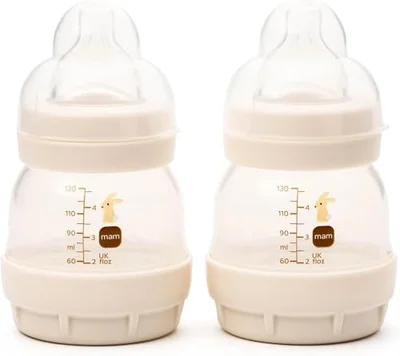
The MAM Easy Start is the UK's bestselling anti-colic bottle for a reason. Its patented vented base is studded with tiny dimpled holes that let air into the bottle without letting it into the milk. The result, backed by clinical testing, is up to 80% fewer colic symptoms. It is not a subtle difference. Parents we hear from regularly describe a genuine before-and-after shift once they switched.
The self-sterilising feature is the other headline. Pull the bottle apart, add 20 ml of water to the base, reassemble, and microwave for three minutes. No steriliser, no chemicals, no waiting for a kettle. For travel, or for anyone short on worktop space, it is a genuine time-saver.
What parents love
- Colic relief that parents notice. The vented base genuinely reduces wind. One parent told us: "Since switching to these bottles, our baby is noticeably more settled during feeds and burps so much more easily afterwards."
- Self-sterilising convenience. Three minutes in the microwave and done. No separate steriliser to buy, store, or descale.
- High acceptance rate. The flat SkinSoft teat has a 94% acceptance rate in MAM's own testing. The texture is designed to mimic skin, which helps babies latch confidently.
- Grows with your baby. Five teat sizes and four bottle capacities (130 ml to 320 ml) cover newborn through weaning age without switching brands.
What to know before you buy
- Assembly takes practice. Four separate parts (base, teat, ring, cap) mean more pieces to wash and more chances of a leak if you rush the reassembly at 3 a.m.
- Cooling time after sterilising. The bottle needs 10+ minutes to cool after microwaving. If the baby is already crying, that wait feels longer than it is.
- No pump compatibility. You cannot express directly into a MAM bottle the way you can with Lansinoh. An extra transfer step if you are pumping.
Best for
- Babies with colic, reflux, or excessive wind
- Parents who want a steriliser-free, travel-friendly setup
- Combination feeders looking for high breast acceptance
- First-time parents who want clinical backing and a wide size range

2. Lansinoh NaturalWave
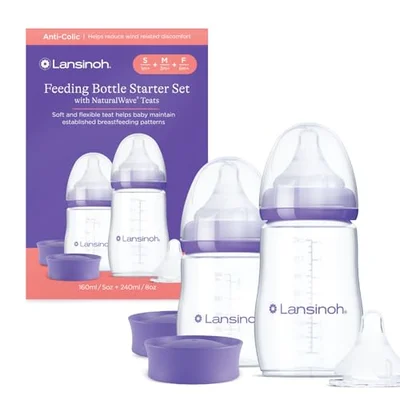
The Lansinoh NaturalWave takes a different approach. Rather than engineering the air out of the bottle, it engineers the teat to behave like a breast. The NaturalWave teat is clinically proven to reduce nipple confusion, encouraging the same tongue movement and latch pattern your baby uses when breastfeeding. If your priority is protecting the breastfeeding relationship while introducing a bottle, this is the one most recommended by lactation consultants.
The pump-to-feed workflow is the other standout. If you use a Lansinoh breast pump, you can express directly into the bottle, store it, and feed from it without ever transferring milk. One bottle, zero waste, minimal washing up.
What parents love
- Breast-like latch. The wide, textured teat base and gradual slope mimic the breast closely. A parent shared: "These were the only bottles our breastfed baby would accept. The teat shape is much closer to the real thing than anything else we tried."
- Simple to clean. Only three parts per bottle and a wide neck that lets you reach every corner. Dishwasher safe for the truly exhausted.
- Pump-store-feed in one bottle. Express with a Lansinoh pump, pop on a lid, refrigerate, swap to a teat, feed. No decanting.
- Effective anti-colic vent. The AVS system channels air away from the milk through the teat collar. Parents report noticeably less wind and spit-up.
What to know before you buy
- Teat durability. The most common complaint: the soft silicone teats can split or tear within a few weeks, especially under frequent sterilisation. Budget for replacement teats earlier than the suggested seven-week guideline.
- Slow flow can run fast. A minority of parents find the "slow" flow teat delivers milk faster than expected, which can cause spluttering in very young babies. Worth testing with expressed milk before a full feed.
- No self-sterilising. You will need a separate steriliser or five minutes of boiling. Not a dealbreaker, but MAM's microwave trick is hard to unsee once you have tried it.
Best for
- Exclusively breastfed babies being introduced to a bottle
- Combination feeders who want to protect the breastfeeding latch
- Parents using a Lansinoh breast pump who want a single-bottle workflow
- Anyone who values simplicity and fewer parts to wash
What about Dr Brown's, Tommee Tippee, or Philips Avent?
These three come up in every anti-colic bottle conversation, and for good reason. Dr Brown's Options+ uses an internal vent system backed by peer-reviewed research and is often recommended for severe colic, but the extra internal parts make cleaning more involved. Tommee Tippee Advanced Anti-Colic has a star-shaped venting valve in the teat that most parents find simpler to maintain, and it is widely available in UK supermarkets. Philips Avent Natural Response takes a flow-control approach where the petal-shaped teat only releases milk when the baby actively sucks, mimicking breastfeeding rhythm rather than tackling air directly. All three are strong choices. If none of the above are quite right, those are worth a look.
How to choose
If colic is your main concern and you want the strongest clinical evidence plus a travel-friendly self-sterilising trick, the MAM Easy Start is the safer bet. Its vented base keeps air out of the milk entirely, and the size range means you will not outgrow it.
If protecting the breastfeeding latch is your priority and you are introducing a bottle to an exclusively breastfed baby, the Lansinoh NaturalWave is purpose-built for that job. The teat design is clinically proven to reduce nipple confusion, and the pump-to-feed workflow is hard to beat for expressing parents.
Plenty of parents end up buying both and letting their baby decide. At these price points, trying two is cheaper than guessing wrong once.
Add it to your Nest
Whichever bottle you choose, add it to your free BubsNest registry so friends and family know exactly which one to buy. No duplicate gifts, no awkward returns.
Ready to Create Your Baby Registry?
Start your free baby registry today and share it with friends and family.
Get Started Free