Mamas & Papas Baby Snug vs Ingenuity Baby Base 2-in-1: Which Support Seat Wins?
Two popular baby support seats, two very different approaches. We compare the Mamas & Papas Baby Snug and the Ingenuity Baby Base 2-in-1 on fit, features, value, and real parent experiences.
COMPARISON · PLAY & LEARN
Your baby has found their balance. That wobble has steadied into something closer to a proper sit, and suddenly they want to be upright for everything, from playtime to snacks to watching the world from a brand-new angle. A dedicated support seat gives them a safe spot to practise while you reclaim both hands for a few precious minutes.
The Mamas & Papas Baby Snug and the Ingenuity Baby Base 2-in-1 are two of the most popular baby support seats in the UK right now, and they take genuinely different approaches to the same job. One is a floor-first seat with an activity tray designed to keep little hands busy from as early as three months. The other starts later but earns its keep longer, converting from floor seat to dining-chair booster so your child has a proper seat at the family table.
We gathered real parent experiences and examined the specs side by side. Neither seat is perfect, and neither is the wrong choice, but one will almost certainly suit your family better than the other. Here is how they compare.
Lil' Bubba's verdicts
- Best Overall: Mamas & Papas Baby Snug · 8.0/10 - starts at 3 months, rock-solid stability, and an activity tray that genuinely entertains
- Best Value: Ingenuity Baby Base 2-in-1 · 7.5/10 - costs less and converts to a dining-chair booster that lasts until age three
Quick comparison
| Mamas & Papas Baby Snug | Ingenuity Baby Base 2-in-1 | |
|---|---|---|
| Price | ~£44 | ~£30 |
| Age range | 3-12+ months | 6-36 months |
| Weight | 1.7 kg (2.5 kg with tray) | ~2 kg |
| Booster mode | No | Yes (straps to dining chair) |
| Tray | Activity tray (8 interactive features) | Feeding tray (self-storing, dishwasher-safe) |
| Insert | Removable foam (2-stage) | Removable foam |
| Cleaning | Wipe-clean | Wipe-clean + dishwasher-safe tray |
| Rating | 8.0/10 | 7.5/10 |
How we picked the two
Both seats landed here because parents keep asking the same question: which support seat? We filtered for products with in-stock UK availability and strong review numbers, then narrowed to these two because they represent genuinely different philosophies. One prioritises early use and play. The other prioritises long-term value and mealtimes. Comparing them puts the real trade-offs on the table so you can decide what matters most.
What to look for in a baby support seat
Starting age. Some seats work from three months once baby has independent head and neck control. Others need independent sitting at six months. Starting earlier sounds better, but only if the seat genuinely supports that posture safely.
Longevity. A seat that converts to a booster or removes its insert to grow with your child spreads the cost over a longer window. Check the upper weight or age limit before you buy.
Stability. A wide, low base reduces tipping risk. Non-slip feet or a grippy base material helps on hard floors. The golden rule: never use any support seat on a raised surface like a table or worktop.
Cleaning. Weaning plus support seat equals mess. Look for wipe-clean surfaces and removable trays. A dishwasher-safe tray is a genuine time-saver during baby-led weaning.
Portability. If you visit grandparents regularly or eat out often, weight matters. Anything under 2.5 kg is easy to toss in the car.
Fit. Chunkier babies sometimes struggle with narrow leg holes. Check that the seat accommodates larger thighs comfortably, especially if your little one is on the higher percentiles.
Tray purpose. Activity trays with toys keep hands busy during independent play. Feeding trays prioritise snack-time and early weaning. Think about what you actually need the seat for most.
Session length. Physiotherapists recommend limiting time in any containment seat to 15-20 minutes. Tummy time and free movement should remain the priority for building core strength.
1. Mamas & Papas Baby Snug
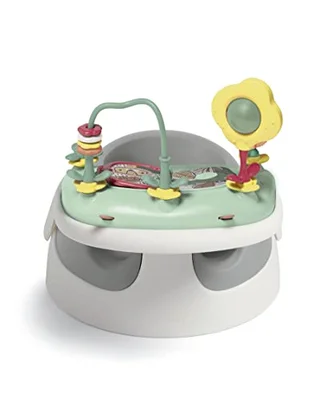
The Baby Snug is the seat UK parents reach for when other floor seats do not fit. Its wide, rounded base sits low to the ground, and the moulded plastic shell cradles your baby securely without squeezing chunky thighs. A soft foam insert snugs things up for younger babies from around three months, and you remove it later to give a bigger child more room, making this a genuine two-stage seat.
The optional activity tray clips on with a satisfying click and brings eight interactive features: a beaded loop, spinning flower, bendy stalk, teether, mirror-backed picture book, and a large suction pad for attaching other toys. It is designed for play first, though parents do use it for early weaning with mixed results.
What parents love
- Generous fit. One parent told us: "Chubby legs fit in this one where the other seat was impossible."
- Longevity. Parents we hear from regularly call it their most-used baby item from three months through to nearly two years.
- Stability. The wide, low base stays planted on tile, wood, and carpet without sliding or rocking.
- Easy clean. Wipe-clean surfaces with no food-trapping crevices, so a quick cloth after snack time is enough.
What to know before you buy
- No suction base. The seat must only be used on the floor. There is nothing to stop it sliding off a table or worktop, so never use it on a raised surface.
- Stage 2 mobility. Once the insert comes out, the seat is light enough for a determined toddler to push around the kitchen rather than sit in it.
- Tray resistance. Some babies find the activity tray too close and restrictive, and older ones work out how to pop it off.
Best for
- Parents of larger babies who outgrew narrower seats
- Families wanting a play-focused seat from 3 months
- Small-space households needing a portable floor seat
- Parents who value quick, wipe-clean surfaces


2. Ingenuity Baby Base 2-in-1
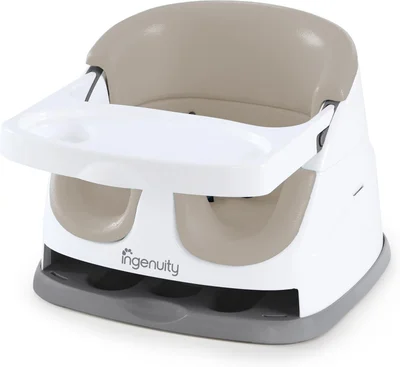
The Ingenuity takes a different approach. Instead of starting early and focusing on play, it begins at six months and earns its keep by converting into a dining-chair booster. Strap it to an adult chair with the built-in harness system, slide out the tray, and your baby has a proper seat at the family table without the bulk of a full highchair.
On the floor, it works as a straightforward support seat with a grippy base that parents praise for its suction-like hold on hard surfaces. The removable foam insert provides a snug fit for smaller babies, and you remove it as they grow. What sets it apart is the self-storing tray: slide it out from underneath when needed, pop it in the dishwasher when done, and tuck it away when it is not in use. No loose parts to misplace.
What parents love
- Value for money. At around £30, it undercuts most named-brand support seats while offering genuine booster functionality.
- Grippy base. A parent shared: "It has grippy plastic on the bottom so it will not slide. It feels like it has a giant suction cup."
- Easy cleaning. The tray is dishwasher-safe and the seat avoids the food-trapping crevices that plague cheaper alternatives.
- Lightweight portability. At around 2 kg, it is easy to bring along to restaurants or to the grandparents' house.
What to know before you buy
- Strap fiddliness. The crotch strap is short and tricky to buckle with a wriggly baby in place, and the chair straps can feel loose on narrower seats.
- Crumb trap. Food debris works its way between the foam liner and the plastic base, making deep cleans more involved than a quick wipe.
- Chair compatibility. It does not fit benches or all dining chair shapes. Measure your chairs first: you need a seat at least 43 cm wide, 39 cm deep, with a 25 cm backrest.
Best for
- Families who eat out often or visit grandparents regularly
- Parents wanting a booster without buying a full highchair
- Budget-conscious buyers who still want a quality seat
- Small-space households where a full highchair is overkill
What about the Bumbo?
The Bumbo Floor Seat is probably the first name that comes to mind when anyone mentions baby support seats. It is still widely available, but we could not include it in this comparison because it is not sold through our partner channels. If you are considering one, be aware that many parents report it runs narrow in the leg holes, and physiotherapists have raised concerns about the rounded back encouraging a slumped rather than active sitting posture. Both the Baby Snug and the Ingenuity offer wider leg space and longer usable lifespans.
How to choose
If your baby is younger than six months and you want a seat they can use right now, the Mamas & Papas Baby Snug is the clear pick. Its two-stage design means it grows with them, the activity tray keeps hands busy during independent play, and it is wide enough for the chunkiest thighs. It costs around £14 more than the Ingenuity, but you gain three extra months of earlier use.
If your baby is already sitting and you want something that pulls double duty at the dining table, the Ingenuity Baby Base 2-in-1 offers better long-term value. It stays useful until age three, the dishwasher-safe tray makes weaning mess manageable, and the price point leaves room in the budget for other essentials. Just check your dining chairs meet the minimum dimensions before you buy.
Both seats share the same golden rule: use them on the floor, keep sessions under 20 minutes, and prioritise tummy time for core development. A support seat is a convenience tool, not a replacement for free movement.
Add it to your Nest
Whichever seat suits your family, add it to your free BubsNest registry so friends and family know exactly which one to buy. No duplicates, no guesswork, no awkward returns.
Ready to Create Your Baby Registry?
Start your free baby registry today and share it with friends and family.
Get Started Free