Medela Freestyle Mini Hands-Free vs Kinderkraft Gentleflow: The £127 Pump Hides in Your Bra, the £70 One Runs Half an Hour Longer
Two double electric breast pumps, £57 apart. The Medela's collection cups tuck into your bra so your hands stay free; the Kinderkraft uses bottles but brings five shield sizes and a two-hour battery. Here's who each one suits.
COMPARISON · FEEDING TIME
Almost every double electric breast pump between £70 and £130 works the same way inside: a small motor, two tubes, two breast shields and somewhere for the milk to go. What decides whether you actually reach for it every day is that last part. Either a bottle hangs off each shield and you hold it (or buy a pumping bra to hold it for you), or a soft collection cup tucks inside your normal nursing bra and your hands stay free.
The Medela Freestyle Mini Hands-Free and the Kinderkraft Gentleflow sit on opposite sides of that line, and £57 apart. The Medela puts two light collection cups in your bra and runs from a palm-sized motor on a lanyard. The Kinderkraft is a classic bottle-style double with a longer battery, more breast shield sizes in the box and a price that undercuts nearly every branded double pump on sale in the UK.
We compared the official spec sheets, live UK prices across the retailers we work with, and what parents tell us after weeks of daily pumping. Neither of these is a hospital-grade rental, and neither claims to be. The real question is which one fits the way you will pump: in short bursts around a newborn who wants holding, or in planned sessions on the sofa or at a desk.
Lil' Bubba's verdicts
- Best Overall: Medela Freestyle Mini Hands-Free · 8.5/10 - in-bra collection cups mean you can pump while you hold the baby, eat or type
- Best Value: Kinderkraft Gentleflow · 7.5/10 - £70 buys a double pump with five shield sizes and a two-hour battery
Quick comparison
| Feature | Medela Freestyle Mini Hands-Free | Kinderkraft Gentleflow |
|---|---|---|
| Price (from) | £127 | £70 |
| Style | Double electric, in-bra collection cups | Double electric, bottle style |
| Hands-free? | Yes, cups sit in a normal nursing bra | Only with a pumping bra |
| Battery | Up to 1.5 hours (about 6 sessions) | Up to 2 hours, USB-C charging |
| Settings | 9 pre-programmed settings, 2-Phase Expression | 3 modes x 9 intensity levels, memory |
| Fit sizes in the box | Standard shield plus 3 inserts (15, 18, 21mm) | 5 shields (17, 19, 21, 24, 27mm) |
| Weight | Palm-sized motor, cups about 76g each | Motor unit 344g, 180ml bottles |
| Single pumping | Yes | Yes |
| Our rating |
How we picked the 2
Both pumps come from the products we can actually send you to: in stock right now at UK retailers we work with, from brands with a real presence in British nurseries. Neither has been compared on our blog before, and they share the same basic job, double electric pumping on battery power, so the differences are about design rather than category.
We weighted day-to-day usability above headline numbers. That means how hands-free the pump really is, how many parts you wash at 3am, how long the battery lasts between charges and how many breast shield sizes come in the box. Neither brand leads with a comparable suction figure, so we have not invented one. Parent feedback was gathered anonymously and is quoted without names.
What to look for in a double electric breast pump
Fit comes first. A breast shield that is too big or too small is the most common reason a pump feels painful or seems to produce less than expected. Measure your nipple diameter, ideally just after a feed or pumping session, and look for a pump that includes your size or sells inserts cheaply. Extra sizes in the box save you a second order when your fit changes in the early weeks.
Bottles or cups. Bottle-style pumps are simple and usually cheaper, but the bottles hang from the shields, so you either hold them or wear a pumping bra. Collection-cup pumps sit inside your bra and free your hands, at the cost of smaller capacity and a little more care with posture.
Battery and charging. Two sessions a day for a working parent or six to eight for an exclusive pumper are very different loads. Check the stated run time and whether it charges by USB-C, which means one less cable to pack.
Parts and cleaning. Every piece that touches milk needs washing and sterilising after every session. Fewer parts, and parts that are dishwasher-safe, add up to hours saved over a few months.
Single or double. Double pumping roughly halves session time and many parents find it boosts output too. Both pumps here can also run one side at a time, useful if you pump on one side while feeding on the other.
If you are planning to pump exclusively, have a baby in neonatal care or have worries about supply, speak to your midwife, health visitor or an infant feeding specialist first. A hospital-grade rental may suit you better than either pump here.
1. Medela Freestyle Mini Hands-Free
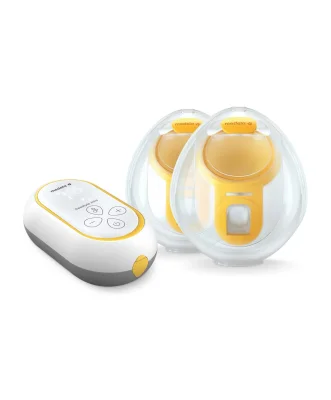
The Freestyle Mini Hands-Free is Medela's take on in-bra pumping without putting the motor inside the bra. A palm-sized motor unit hangs from a lanyard or clips to your waistband, two thin tubes run up to collection cups that weigh about 76g each, and the cups sit inside your usual nursing bra. You can hold the baby, eat lunch or answer emails while it runs.
Inside, it uses Medela's 2-Phase Expression rhythm, a quick stimulation phase followed by a slower, deeper expression phase, controlled with four buttons and nine pre-set settings. The built-in battery runs for up to an hour and a half, which Medela puts at about six sessions. Only three main parts touch milk, and all of them are dishwasher-safe. At £127 it is one of the cheapest ways into Medela's hands-free range.
What parents love
- Genuinely hands-free. The cups go into a normal nursing bra, so there is no special pumping bra to buy. You can pump while holding a baby who will not be put down, which is exactly when most parents need to express.
- Light on the breast. At around 76g a cup, the weight stays off your chest and on your waistband. A parent who uses the same style of hands-free cups shared: "I could forget I was wearing it."
- Quick to wash. Three main parts per side and all dishwasher-safe. For a pump you might use six times a day, that is the difference between a chore and a habit.
- A broad fit range. The standard shield plus three inserts (15, 18 and 21mm) covers most smaller sizes without a separate order, and Medela says the set fits over 95% of nipple sizes.
What to know before you buy
- Stay upright. Collection cups need you to sit or stand fairly straight. One parent put it best: "You do need to be careful to stay upright while pumping, or the cups will leak." Leaning over to pick up a toddler mid-session is a spill risk.
- Click everything home. A parent shared that the cups must be clicked into place properly when assembling, otherwise they can leak. Worth a practice run before your first session out of the house.
- Still tubed, and dearer. The tubes and motor are lighter than a bottle pump but still there, and you pay £57 more than the Kinderkraft for a shorter battery. It is audible in a silent room, though not one parents describe as annoyingly loud.
Best for
- Parents expressing several times a day around a newborn
- Returning to work and pumping at a desk or in the car (parked)
- Combination feeders who top up while baby feeds on the other side
- Anyone who has found bottle-style pumps a two-handed job
2. Kinderkraft Gentleflow

Kinderkraft is better known in the UK for car seats and pushchairs, but its Gentle range of breast pumps has quietly become one of the best-value ways to double pump. The Gentleflow is the simpler of its doubles: a 344g motor unit, two tubes, two breast shields and two 180ml bottles, with the option to pump one side at a time.
Where it beats the Medela on paper is what comes in the box. You get five shield sizes from 17mm to 27mm, six spare membranes and six spare valves, a storage pouch and a lanyard. The 1800mAh battery runs for up to two hours and charges over USB-C, so your phone cable works. Three modes and nine intensity levels give you 27 combinations, a memory function starts you where you left off, and an on-screen timer keeps sessions consistent.
What parents love
- The price. At £70 it costs about 45% less than the Medela and less than many branded single pumps. If you are not sure how much you will pump, that is a much smaller gamble.
- Five sizes in the box. Shields from 17mm to 27mm cover far more of the fit range than most pumps at any price, so you can change size as your body changes without ordering inserts.
- Battery for a full day. Up to two hours of pumping and USB-C charging. A parent shared their first impression in one word: "Impressive."
- Spares included. Six membranes and six valves are the small parts that wear first. Having them in the drawer means a split valve does not end your evening session.
What to know before you buy
- Not hands-free on its own. The 180ml bottles hang from the shields, so you hold them or add a pumping bra. Holding a baby and pumping at the same time is hard work.
- Little long-term track record. The Gentleflow is a recent launch and Kinderkraft does not publish a suction figure. It is a strong pick for occasional or regular pumping, but if you plan to pump exclusively we would want more long-term feedback first.
- Stock can be patchy. At least one UK retailer is showing its last few units, and colour availability varies. Check stock before you build a routine around it.
Best for
- First-time pumpers unsure how much they will express
- Occasional pumping for a partner's feed or a night off
- Parents who pump sitting down at set times
- A second pump for work, the car or grandparents' house

What about all-in-one wearable pumps?
If you want no tubes at all, the motor, battery and milk container can all sit inside the bra in pumps like the Elvie Stride 2 and the Momcozy S12 Pro. We put those two head to head here, and you can see the wider field in our wearable breast pump roundup and our guide to portable electric pumps. They are quieter to wear under clothes but usually cost more per side than either pump on this page.
How to choose
Choose the Medela Freestyle Mini Hands-Free if you will pump most days and need your hands while you do it. The in-bra cups are the whole point: pumping while you settle, feed or work makes a routine you will keep up. The extra £57 buys freedom rather than suction.
Choose the Kinderkraft Gentleflow if you pump sitting down at set times, are not sure yet how much you will express, or want a second pump for work. It has the longer battery and the bigger range of shield sizes, and at £70 it leaves room in the budget for a pumping bra if you want to go hands-free later.
Either way, get your shield size right first. The best pump in the world will not feel good with the wrong fit.
Add it to your Nest
Still weighing them up? Add both to your free BubsNest registry and decide nearer the time. Friends and family can see exactly which pump you want, and you can swap it for the other right up to the day it is bought.
Ready to Create Your Baby Registry?
Start your free baby registry today and share it with friends and family.
Get Started Free