Medela Solo vs Lansinoh Wearable Single: Which Hands-Free Breast Pump Wins?
Two of the most popular hands-free single electric breast pumps in the UK go head to head. We compare suction, portability, value and real parent experiences to help you choose.
COMPARISON · FEEDING & BREASTFEEDING
If you have been researching hands-free breast pumps, two names keep coming up: the Medela Solo and the Lansinoh Wearable Single. Both promise to free your hands while you express, both come from brands that hospitals and midwives recommend, and both sit in the roughly £80-£115 price bracket that most parents weigh up before committing.
But they take very different approaches to "hands-free." The Medela Solo pairs a lightweight in-bra collection cup with a small external pump unit connected by a tube, giving you hospital-grade suction in a compact package. The Lansinoh Wearable Single puts the entire motor, battery and collection cup into one self-contained unit that sits inside your bra with no tubes at all. That fundamental design difference shapes everything from how discreet each pump feels to how much milk it holds and how you move while wearing it.
We dug into the specs, tested the ergonomics and gathered real parent feedback to find out which one deserves a spot in your feeding toolkit.
Lil' Bubba's verdicts
- Best Overall: Lansinoh Wearable Single · 8.0/10 - true cord-free freedom with better value and larger capacity
- Best for First-Time Pumpers: Medela Solo · 7.5/10 - trusted brand ecosystem with app guidance and ultra-simple cleaning
Quick comparison
| Medela Solo | Lansinoh Wearable | |
|---|---|---|
| Price (approx.) | £112 | £80 |
| Design | Cup + tube + pump unit | All-in-one in-bra |
| Cup weight | 76 g | 244 g (full unit) |
| Capacity | 150 ml | 180 ml |
| Battery life | ~1.5 hrs (6 sessions) | ~1.5 hrs |
| Suction levels | 9 | 9 hospital-grade |
| Pumping modes | 2-Phase Expression | 4 (Stimulation, Expression, Massage, Auto) |
| Shield sizes incl. | 21, 24, 27 mm | 17, 19, 21, 24, 27 mm |
| Parts to clean | 3 (dishwasher safe) | 4 (dishwasher safe) |
| App | Medela Family (Bluetooth) | No |
| Tubes | Yes (closed system) | None |
| Best for | First-time pumpers, app users | Multitasking parents, value seekers |
How we picked the 2
We shortlisted single electric breast pumps from recognised brands that are available through UK retailers, in stock with current pricing, and widely discussed by parents. We cross-referenced product specifications, expert testing scores and real parent feedback collected from parenting communities and product reviews. Both pumps met our bar: hospital-grade suction, hands-free capability, established brand with UK customer support, and a price point that reflects the mainstream wearable pump market.
What to look for in a wearable breast pump
Flange fit matters most. A pump with the wrong flange size will be painful and inefficient regardless of how many features it has. Both pumps reviewed here include multiple sizes, but take the time to measure before your first session.
Truly wearable vs hands-free. "Hands-free" can mean anything from a pump that clips to your bra with tubes running to a motor on the table, to an all-in-one unit with no external parts at all. Think about where you will pump most often. If you want to walk around the house, cook dinner or chase a toddler, a tube-free design has obvious advantages. If you are mostly pumping at a desk or on the sofa, a tubed design with stronger suction may serve you just as well.
Capacity vs bulk. Larger collection cups hold more milk per session but take up more space in your bra and can feel heavier over a 20-minute pump. If you regularly express more than 120 ml per side, a 180 ml cup saves you an interruption. If you tend to express smaller volumes, a lighter cup may be more comfortable.
Cleaning convenience. You will clean this thing multiple times a day. Fewer parts, dishwasher-safe materials and wide openings make a genuine difference to your daily routine. Both pumps here score well, but the Medela has one fewer part to wash.
1. Medela Solo Hands Free Single
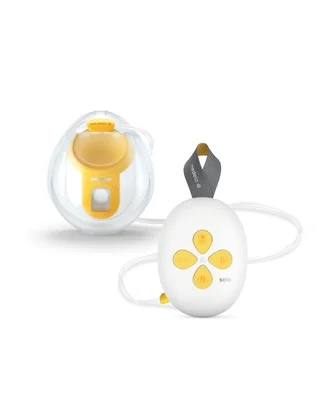
Medela is the name most associated with breast pumps in hospital settings, and the Solo brings that heritage into a compact, home-friendly package. The transparent collection cup slides into your nursing bra and connects via a thin closed-system tube to a palm-sized pump unit that clips to your waistband or sits beside you. At just 76 g per cup, you barely notice the weight in your bra, and the closed-system design means milk never enters the tubing, which simplifies hygiene.
Where the Solo genuinely shines is in its Medela Family app. Via Bluetooth, you can track pumping sessions, get personalised tips and monitor your expressing patterns over time. For parents who are new to pumping and want a bit of guidance, this is genuinely reassuring. The nine suction levels give you fine control, and Medela's proven 2-Phase Expression technology mimics the natural rhythm of a feeding baby, starting with a fast let-down phase before switching to slower, deeper expression.
What parents love
- Ultra-simple cleaning. Only three parts to wash, all dishwasher safe. One parent told us: "Only three parts made it not too daunting, even at 3 a.m."
- Trusted suction. Hospital-grade 2-Phase Expression technology delivers consistent results. A parent shared: "I managed to get more milk out, and it was much more comfortable than other pumps I had tried."
- Helpful app. Bluetooth tracking and personalised tips via the Medela Family app give new pumpers confidence in their routine.
- Lightweight cup. At 76 g, the collection cup is among the lightest available, making it comfortable for longer sessions.
What to know before you buy
- Tubing limits mobility. The closed-system tube is thin and flexible, but it still connects you to an external pump unit, which limits how freely you can move.
- Cup size can feel bulky. Some parents with smaller bra sizes find the 150 ml cup sits awkwardly in certain nursing bras.
- Pouring can be fiddly. Transferring milk from the collection cup to a bottle or storage bag requires care to avoid spillage.
Best for
- First-time pumpers who want app-guided support
- Parents who mostly pump at a desk, on the sofa or in bed
- Anyone who values ultra-simple cleaning with the fewest parts
- Parents already in the Medela ecosystem (bottles, shields, storage bags)

2. Lansinoh Wearable Single
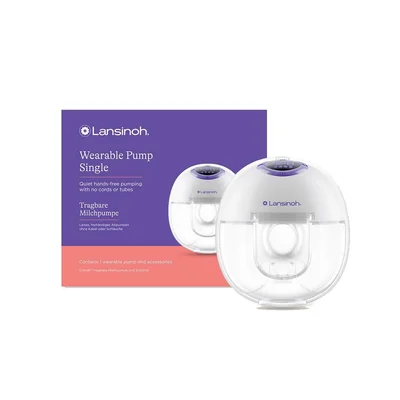
The Lansinoh Wearable Single takes the all-in-one approach: motor, battery and 180 ml collection cup in a single sealed unit that tucks inside your nursing bra with no tubes, no cords and no external parts. You press a button, drop it in your bra and walk away. For parents who want to make breakfast, supervise a toddler or fold laundry while expressing, this cord-free design changes everything.
Lansinoh gives you four distinct pumping modes, including a Massage mode and an Automatic mode that gradually increases suction every 15 seconds to find your optimal level without fiddling with buttons. The 180 ml cup holds 30 ml more than the Medela, which means fewer interruptions in a productive session. And at roughly £80, it undercuts the Solo by a meaningful margin.
What parents love
- Total freedom. No tubes, no cords, no external unit. One parent told us: "It has made all the difference to feeding my newborn. I can actually get things done while pumping."
- Excellent value. At £80, it is one of the most affordable true-wearable pumps from a major brand. Parents we hear from regularly say: "Great value for money considering the difference it has made."
- Comfortable fit. The ComfortFit breast cushion contours to the breast. A parent shared: "The pump is extremely comfortable and I found it easy to position centrally."
- Easy assembly. Four parts that click together intuitively. We hear repeatedly from parents that: "The ease of use with this pump is brilliant, especially compared to manual pumps."
What to know before you buy
- Heavier than cup-only designs. At 244 g, the all-in-one unit is noticeably heavier than the Medela's 76 g cup (though you avoid carrying a separate pump unit).
- Not office-discreet. The unit creates a visible profile under fitted tops. Parents say it is fine for home or a walk, but some feel self-conscious in a meeting.
- No app. There is no Bluetooth tracking. If you want to log sessions digitally, you will need a third-party app.
Best for
- Parents who want genuine hands-free pumping around the house
- Budget-conscious buyers who want a major-brand wearable pump under £100
- Anyone with an older child to supervise while expressing
- Parents who find tubes annoying or impractical

What about the Elvie Pump?
The Elvie Pump is the name that started the wearable pump revolution and remains one of the most discreet options on the market. However, it starts at around £270 for the single, which puts it in a different budget tier entirely. If discretion under clothing is your top priority and budget is not a constraint, it is worth a look. For most parents weighing up their first wearable pump, the Medela and Lansinoh offer stronger value at less than half the price.
How to choose
Choose the Medela Solo if you value a trusted hospital-grade brand with Bluetooth app tracking, want the lightest possible in-bra cup, and mostly pump while seated. Its 2-Phase Expression technology is proven and effective, and having only three parts to clean is a genuine daily convenience. The tube is a trade-off, but for desk-based or sofa-based pumping it barely matters.
Choose the Lansinoh Wearable Single if you want total freedom to move around while pumping, prefer a larger 180 ml capacity, and want to spend under £100. Its four pumping modes, including the clever Automatic mode, make it easy to find your rhythm without extensive setup. The trade-off is a heavier unit and a visible profile under fitted clothing.
Both pumps deliver hospital-grade suction with nine adjustable levels, both are dishwasher safe, and both include multiple flange sizes to help you find your fit. You genuinely cannot go wrong with either, but for sheer versatility and value, the Lansinoh edges it.
Add it to your Nest
Whichever pump you choose, add it to your free BubsNest registry so friends and family know exactly which one to buy. A breast pump is one of those items you really do not want two of.
Ready to Create Your Baby Registry?
Start your free baby registry today and share it with friends and family.
Get Started Free