Momcozy M5 Double vs Medela Motion InBra: Four Sessions a Charge at £144, Ten at £189
Two cordless in-bra double pumps, £45 apart. The Momcozy M5 Double brings a carry case and costs less; the Medela Motion InBra runs up to ten sessions per charge, fits smaller nipples and goes in the dishwasher. Here is which one suits your pumping day.
COMPARISON · FEEDING TIME
A wearable double pump is one of the few baby purchases that genuinely changes the shape of your day. Instead of sitting tethered to a wall socket with tubes and bottles, you slip two cups into your bra, press a button and carry on with the school run, the laptop or the toddler. The catch is that wearables are fussy: they live or die on fit, battery and how much washing up they create, and the price gap between them rarely tells you which one will suit your body.
The Momcozy M5 Double and the Medela Motion InBra are two of the pumps we see added to Nests most often when parents move past manual pumping. They look similar on paper: cordless, motor-in-the-cup, nine suction levels, roughly the same suction ceiling. At around £144 against £189, the obvious question is whether the extra £45 buys anything you will notice at 3am.
It does, but not where you might expect. The real differences are battery life per charge, how small the flange inserts go, whether the parts can go in the dishwasher, and what comes in the box. We compared the published specs, current UK pricing and a large pool of parent feedback, from first-week pumpers to people several months into exclusive pumping, to work out which trade-off matters for which family.
Lil' Bubba's verdicts
- Best Overall: Medela Motion InBra · 8.5/10 - up to ten sessions per charge, inserts down to 15mm and dishwasher-safe parts
- Best Value: Momcozy M5 Double · 8.0/10 - strong output for £45 less, with a carry case and cleaning brushes in the box
Quick comparison
| Momcozy M5 Double | Medela Motion InBra | |
|---|---|---|
| Rating | ||
| Typical UK price | About £144 | About £189 |
| Sessions per charge | Roughly 3 to 4 (about 2 hours of pumping) | Up to 10 (about 2.5 hours of pumping) |
| Suction levels | 3 modes, 9 levels | 2-phase expression, 9 levels |
| Max suction | Around 270mmHg | Up to 300mmHg |
| Flange and inserts | 24mm with 17, 19 and 21mm inserts | 24mm with 15, 18 and 21mm inserts |
| Noise | Under 50dB | 45dB or less |
| Cleaning | Steriliser-safe, hand wash recommended | Dishwasher and steriliser-safe parts |
| In the box | Carry case, cleaning brushes, nipple ruler | Storage bag, USB-C cables |
| Extras | Fit guide on the cups | Tilt alert vibrates before leaks, in-bra light |
How we picked the 2
We started from the wearable double pumps that BubsNest parents add to their Nests most often, then narrowed to pairs that sit within roughly £50 of each other, because that is the decision most people are actually making. Both pumps here are stocked by mainstream UK retailers we work with, both are cordless with the motor built into the cup, and both have enough real-world parent feedback for patterns to show up. We read reviews from parents at different stages, weighed recurring praise and complaints more heavily than one-off comments, and checked current specs and pricing rather than launch-day claims.
What to look for in a wearable double pump
Fit first, suction second. Almost every complaint about a wearable not "working" traces back to the wrong flange size. Measure your nipples (not the areola) before you choose, and look at the smallest insert each pump offers. If you measure under 17mm, that alone may decide this comparison.
Battery maths. Most exclusive pumpers are doing six to eight sessions a day in the early months. A pump that manages three or four sessions per charge needs topping up at least twice a day; one that manages ten might go a full day. Think about where you will be when it runs flat.
Washing up. You will clean these parts several times a day. Fewer pieces and dishwasher-safe components save real minutes, especially at night. Check whether the manufacturer recommends hand washing only.
Profile and noise. All in-bra pumps add bulk under clothing. A slimmer cup is more discreet in a meeting; a slightly louder motor matters more if you pump next to a sleeping baby or a partner.
What comes in the box. A carry case, cleaning brushes and extra inserts are easy to overlook until you are buying them separately. Replacement shields and membranes are a running cost on every wearable, so check their price before you commit.
Milk supply comes first. Wearables are brilliant for convenience, but some parents find a traditional double electric pump empties them more fully, particularly while supply is being established. If you are exclusively pumping for a newborn, it is worth talking to your midwife or a feeding specialist about whether a wearable should be your main pump or your on-the-go backup.
1. Momcozy M5 Double
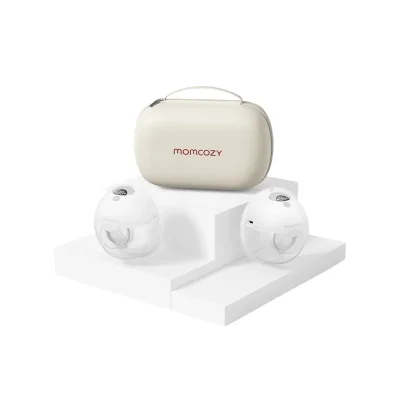
The M5 Double is the pump that made wearables feel affordable. For around £144 you get two cordless cups with the motor built in, three modes (stimulation, expression and mixed) across nine levels, and a flange angle designed to mimic how a baby latches. The cups sit fully inside a standard nursing bra with no exposed tubing.
Where it really scores is output for the money. Parents who have used both a hospital-style double pump and the M5 regularly tell us the volumes are comparable, which is not something you can say about every wearable at this price. It also arrives with a proper carry case, two cleaning brushes and a nipple ruler, so you are not buying accessories on day one.
What parents love
- Output that keeps up. The suction is strong for a wearable, and many parents get similar volumes to a mains pump. One parent told us: 'I have been using a hospital grade pump everyday for 6 months and the Momcozy gets equivalent milk volumes.'
- Simple to put together. Parts slot together with clear guides, which helps when you are half asleep and doing it for the fourth time that day.
- Everything in the box. A hard carry case, cleaning brushes and a sizing tool come as standard, which is unusual at this price.
- Good seal, few leaks. The double-sealed flange holds well when you move about, and leaks are a rare complaint as long as the size is right.
What to know before you buy
- Shorter battery. Expect roughly three to four sessions per charge. Exclusive pumpers will be charging it at least twice a day.
- Bulky under clothes. The cups are rounded and noticeable. A parent shared: 'It is bulky and very obvious when wearing, but this didn't bother me.' If discretion at work matters, bear this in mind.
- Hand washing and an awkward collector. Parts are steriliser-safe but hand washing is recommended, and the rounded milk collector cannot stand upright when full, so have a bottle or storage bag ready before you unclip.
Best for
- Parents pumping a few times a day alongside breastfeeding
- Anyone who wants strong output without spending close to £200
- Pumping on the go, thanks to the included carry case
- Nipple sizes from 17mm upwards



2. Medela Motion InBra
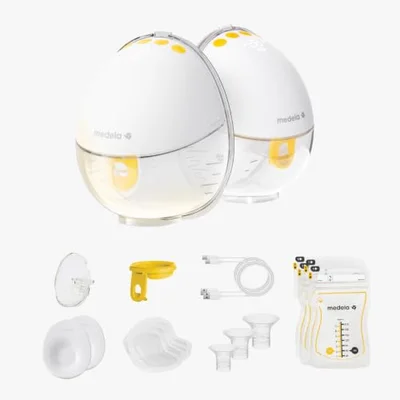
The Motion InBra is Medela's answer to the wearable wave, and it brings the brand's 2-phase expression rhythm (a quick stimulation phase, then slower, deeper expression) into a cup that weighs around 250g. It runs nine levels up to 300mmHg through 105-degree wide-angle shields, and the 150ml containers are a sensible size for most sessions.
The headline difference is stamina. Medela quotes up to ten sessions, or about two and a half hours of pumping, per USB-C charge. For someone pumping six or more times a day, that can mean charging once rather than juggling it around every other session. Add dishwasher-safe parts, a tilt alert that vibrates before you lean far enough to leak, and a small light for checking alignment in a dark room, and you can see where the extra £45 goes.
What parents love
- Comfortable once the size is right. The insert range runs down to 15mm, which suits parents who find most wearables too big. One parent put it best: 'As long as you get the correct breast shield size, the pump is comfortable to use.'
- Quiet and slim. At 45dB or less it is one of the quieter options. A parent shared: 'It isn't very noisy, I think it's about as discreet as a breast pump could be.'
- Battery for a full day. Up to ten sessions per charge means far less plugging in between pumps.
- Easy cleaning and leak warnings. Non-electric parts go in the dishwasher or steriliser, and the tilt alert catches you before milk spills.
What to know before you buy
- Battery drains when idle. The flip side of that long run time: if you leave it in a drawer, it loses charge. We hear repeatedly from parents that: 'When the pumps are left unused, they lose charge quickly so you have to plan to use them.'
- Light on accessories. There is no hard travel case, charging case or cleaning brush, and extra shield sizes cost more if the included inserts do not fit.
- A lot for occasional use. At around £189, it makes most sense if you pump daily. Some of the thinner plastic parts also need a gentle hand.
Best for
- Exclusive or heavy pumpers doing six or more sessions a day
- Parents returning to work who need a quiet, discreet pump
- Smaller nipple sizes, down to 15mm
- Anyone who wants to put pump parts straight in the dishwasher

What about heated or app-controlled pumps?
Neither of these versions has an app. Momcozy sells a separate M5 Smart model with app control if you want to adjust settings from your phone, and if you are curious about warming flanges or a charging case, we cover those pumps in our wearable breast pumps roundup. If you only pump now and then, a manual pump may be all you need, see our manual breast pump guide.
How to choose
Choose the Momcozy M5 Double if you are combining breastfeeding with a few pumping sessions a day, you measure 17mm or more, and you would rather keep £45 in your pocket. Its output punches above its price and the carry case makes it an easy grab-and-go pump. Just accept that you will be charging it more often and washing parts by hand.
Choose the Medela Motion InBra if you are pumping heavily or exclusively, returning to work, or have found other wearables too big. The longer battery, smaller insert, quieter motor and dishwasher-safe parts each save a little friction, and across six or more sessions a day that adds up quickly. Keep it charged rather than stored, and budget for a carry case separately.
If you are torn, measure first. Fit decides comfort and output on both pumps far more than the spec sheet does.
Add it to your Nest
Not ready to buy yet? Add your favourite to your free BubsNest registry so friends and family can chip in, and compare live prices across UK retailers whenever you are ready.
Ready to Create Your Baby Registry?
Start your free baby registry today and share it with friends and family.
Get Started Free