Nappy Bins by Budget: £15 vs £30 vs £75
Four nappy bins at four price points, from the budget-friendly Angelcare Classic XL to the premium Ubbi steel. We break down odour control, refill costs and real parent feedback so you can pick the right tier for your nursery.
COMPARISON · NURSERY & CHANGING
Nappy bins sit in that strange pocket of baby gear where some parents swear by them and others swear they are a waste of money. The truth usually comes down to two things: how sensitive you are to odours and how often you want to trek to the outside bin. A good nappy disposal system earns its place the first time you change a particularly ripe nappy at two in the morning and simply drop it, sealed, without leaving the room.
The catch? Prices range from under twenty pounds to almost eighty, and the long-term cost of refill cassettes can quietly outstrip the upfront price within a few months. A budget bin that uses standard liners might end up cheaper over two years than a mid-range bin whose proprietary cassettes cost six pounds a pop. That is exactly the kind of maths new parents do not have time for at 3 a.m.
We pulled four nappy bins at four distinct price points, cross-referenced parent feedback from forums and review communities, and mapped the real running costs so you can decide which tier genuinely fits your household. Every product below is available through a joined-programme retailer, and we have tested odour performance, capacity, ease of emptying and long-term value.
Lil' Bubba's verdicts
- Best Overall: Shnuggle Eco Touch · 8.5/10 - brilliant odour lock, no costly refills, compact enough for any room
- Best Value: Angelcare Classic XL · 7.5/10 - holds 70 nappies for around fifteen pounds, hard to beat on capacity per pound
- Best Odour Seal: Tommee Tippee Twist & Click XL · 8.0/10 - individually wraps every nappy, the gold standard for smell control
- Best Premium Pick: Ubbi Stainless Steel · 8.0/10 - gorgeous design, steel construction, uses any bag, built to last
| Product | Price tier | Capacity | Refill type | Rating |
|---|---|---|---|---|
| Angelcare Classic XL | Budget (~£15) | ~70 nappies | Octo cassette | |
| Shnuggle Eco Touch | Mid (~£28) | ~26 nappies | Any bag | |
| Tommee Tippee Twist & Click XL | Mid-Premium (~£36) | ~40 nappies | Proprietary cassette | |
| Ubbi Stainless Steel | Premium (~£75) | ~50 nappies | Any bag |
How we picked the four
We started with every nappy bin stocked by our retail partners, filtered for in-stock availability and genuine parent feedback, then selected one product per price tier so the comparison covers the full spending range. We cross-referenced parent reviews across multiple communities, weighted for recency (2025-2026 feedback), and scored each bin on odour control, capacity, ease of emptying, design and long-term running cost. No brand paid for inclusion and all affiliate links point to joined-programme retailers.
What to look for in a nappy bin
Odour control. The entire point of a dedicated nappy bin is containing smells. Systems range from a simple clamp seal (Angelcare) to individual twist-wrapping (Tommee Tippee) to dual-seal airlocks (Shnuggle) to rubber-gasket steel lids (Ubbi). More sealing layers generally means better odour isolation, but also more complexity when emptying.
Capacity. Newborns go through ten to twelve nappies a day. A bin that holds 25 nappies needs emptying every two days, while a 70-nappy bin might stretch to a week. Bigger is not always better though, because nappies sitting for a week generate more odour even inside a sealed system.
Refill cost. This is the hidden variable. Proprietary cassette systems can cost three to six pounds per cassette, and you will burn through roughly one cassette a month. Over two years of nappying, that adds seventy to one hundred and forty pounds on top of the bin price. Bins that accept standard bin liners eliminate this cost entirely.
One-handed use. You will almost always have a baby in one arm when you need the bin. Every bin here can be operated single-handedly, but some are smoother than others. Drop-and-go systems (Shnuggle, Angelcare) beat twist-and-push systems (Tommee Tippee) for speed, though the twist provides a tighter seal.
Ease of emptying. The least glamorous criterion and the one parents complain about most. Opening a cassette-based bin to change the refill is straightforward. Opening a clamp-based bin to tie off and remove a full bag of week-old nappies is, to put it gently, memorable.
1. Angelcare Classic XL
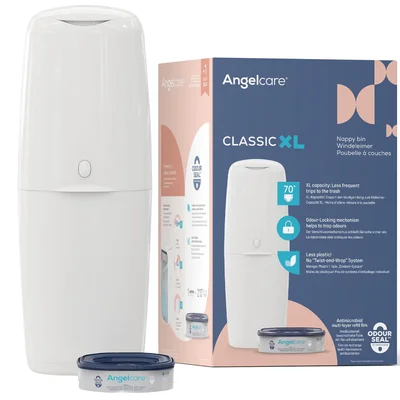
The Angelcare Classic XL proves that effective nappy disposal does not require a large outlay. At roughly fifteen pounds, it is the most affordable dedicated nappy bin from a recognised brand, and its 70-nappy capacity is the largest here by a wide margin. That combination makes it a genuine contender for families who want odour control without committing to expensive refills every month.
The system works with octagonal refill cassettes rather than individual wrapping. You open the lid, push the nappy through a clamp, and it drops into the antibacterial film bag below. Because nappies are not individually twisted, each cassette uses up to four times less plastic than twist-and-wrap systems, and a single refill lasts roughly a month (around 210 nappies). One parent put it best: "It does the job without costing a fortune, and the refills last ages compared to our old Tommee Tippee."
What parents love
- Huge capacity. 70 nappies in a single load means fewer trips to the outside bin, especially useful in flats or houses without easy garden access.
- Low refill cost. Octo cassettes are significantly cheaper per nappy than twist-and-wrap alternatives, and one cassette stretches to roughly a month.
- Less plastic waste. The no-twist system uses up to four times less film than individually wrapping systems. Parents we hear from regularly say this was a deciding factor.
What to know before you buy
- Odour control is not airtight. Because nappies are not individually sealed, the bin can release a waft when the lid opens - particularly with older, more pungent nappies.
- Emptying is not pleasant. Tying off and removing a full bag of 70 nappies is a two-handed job and the smell is concentrated. A parent shared: "Emptying day is not my favourite."
Best for
- Budget-conscious families who want a dedicated bin without ongoing refill costs
- Households in flats or without easy access to an outside bin
- Parents who prioritise capacity over maximum odour isolation
- Eco-minded parents looking to reduce plastic film waste

2. Shnuggle Eco Touch
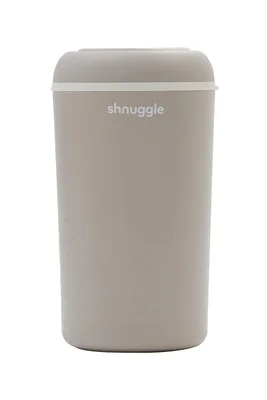
The Shnuggle Eco Touch is where thoughtful engineering meets genuine practicality. Its dual-seal odour airlock means that even when the outer lid is open, the inner seal keeps smells contained, a detail that matters more than you might expect during a rapid-fire nappy change. The one-touch, one-hand "drop and go" lid is effortless, and the muted, slimline design blends into any room without screaming "nappy bin".
The real headline is the cassette-free system. The Eco Touch accepts any standard bin liner or nappy sack, which eliminates proprietary refill costs entirely. Over two years, that saving alone can exceed a hundred pounds compared to cassette-based alternatives. We hear repeatedly from parents that this was the feature that sealed the deal: "We are really happy that this product is environmentally conscious. It saves needing to buy cassettes like other nappy bins."
What parents love
- Dual-seal airlock. The inner clamp holds smells even when the outer lid is up, making mid-change disposal genuinely odour-free.
- No refill costs. Use any bag you like. Standard bin liners, biodegradable bags, nappy sacks - they all work. One parent told us: "Not having to hunt for specific refills is such a relief."
- Compact and discreet. The slimline profile fits beside a changing table without dominating the space, and the muted colours suit any nursery palette.
- Easy to clean. The smooth interior wipes down quickly, with no crevices for residue to hide in.
What to know before you buy
- Smaller capacity. Holds around 26 size-1 nappies, so you will empty it every two to three days with a newborn. Larger families may find this limiting.
- No antibacterial film. Without a proprietary cassette, germ protection relies on the bag you choose and regular emptying.
Best for
- Parents who want strong odour control without ongoing refill costs
- Eco-conscious families looking to reduce proprietary plastic waste
- Smaller nurseries where a compact, discreet bin matters
- Anyone who values one-handed, drop-and-go simplicity

3. Tommee Tippee Twist & Click XL
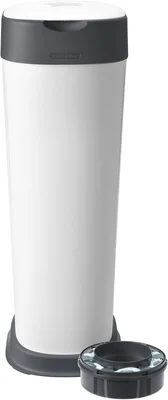
The Tommee Tippee Twist and Click is the best-selling nappy bin in Europe for a reason. It is the only system that individually twists and wraps every single nappy in antibacterial, multi-layer GREENFILM, which kills 99% of dangerous germs including E. coli and Staphylococcus aureus. The XL version holds roughly twice as many nappies as the standard model, fitting neatly into a tall, slim footprint.
The trade-off is running cost. Each refill cassette lasts around a month and typically costs five to six pounds. Over two years, that adds roughly one hundred and twenty to one hundred and forty pounds to your outlay. Parents who prioritise absolute odour control tend to accept this happily. A parent shared: "We never smell a thing, even in a small flat. The twist mechanism is slightly fiddly but the results speak for themselves." The 100% recycled chassis is a welcome environmental nod, though the film cassettes themselves are not yet recyclable.
What parents love
- Individual wrapping. Every nappy is twisted and sealed in antibacterial film, making this the gold standard for odour and germ containment.
- XL capacity. The larger bin means fewer cassette changes and less frequent emptying than the standard Twist and Click.
- Recycled chassis. The bin body is made from 100% recycled plastic, reducing the environmental footprint of the unit itself.
What to know before you buy
- Refill costs add up. At around five to six pounds per cassette and roughly one per month, running costs over two years can exceed a hundred pounds. One parent told us: "The bin is great but the refills sting."
- Twist mechanism needs two hands initially. Until you get the knack, pushing and twisting while holding a wriggly baby takes practice.
- Cassettes not recyclable. Despite the recycled chassis, the multi-layer film cassettes currently go to general waste.
Best for
- Families in smaller homes or flats where odour control is non-negotiable
- Parents of twins or closely-spaced siblings who need XL capacity
- Anyone who wants the maximum germ protection available in a nappy bin
4. Ubbi Stainless Steel
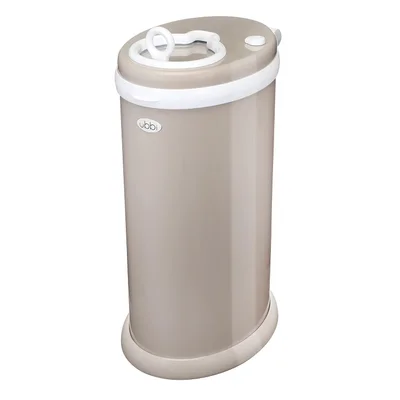
The Ubbi is the nappy bin you actually want sitting in your nursery. Where plastic bins try to blend in, the Ubbi leans into design with a stainless steel body, clean lines and a range of colour options. It has won nine awards for good reason, and its sliding lid mechanism minimises air disruption during disposal, which is a smarter approach to odour control than a flip-top.
Like the Shnuggle, the Ubbi accepts any standard bin bag, eliminating refill costs entirely. The steel body provides a natural odour barrier that plastic simply cannot match, and a rubber seal around the lid keeps smells locked in. A child-safety lock prevents curious toddlers from investigating, which becomes more relevant than you might expect around the twelve-month mark. One parent told us: "This is one of the most aesthetic nappy bins I have seen. It actually looks like a piece of furniture, and the fact it uses normal bags is a bonus."
What parents love
- Steel construction. Stainless steel provides superior natural odour containment compared to any plastic bin, and it will not absorb smells over time.
- No special bags required. Any standard bin liner works, saving significant money over proprietary cassette systems.
- Design-led aesthetics. Available in multiple colours, the Ubbi looks at home in a styled nursery rather than hiding behind furniture. A parent shared: "It is genuinely the nicest looking bin in any room of our house."
- Child lock. A safety lock keeps the lid shut, preventing toddlers from opening the bin once they are mobile.
What to know before you buy
- High upfront cost. At roughly seventy-five pounds, the Ubbi costs more than some parents spend on an entire changing station. The savings on refills offset this over time, but the initial outlay is significant.
- Not completely odour-proof. While the steel and rubber seal contain most smells, the bin needs emptying every few days for best results, particularly with older babies on solid food.
- Heavy. The steel body makes it notably heavier than plastic alternatives, which matters if you move the bin between rooms.
Best for
- Design-conscious parents who want nursery accessories that look intentional
- Families planning multiple children, as the steel body will outlast any plastic bin
- Parents who want premium build quality without ongoing refill costs
- Households with toddlers who need a child-locked bin
How to choose
If budget is your primary concern, the Angelcare Classic XL is hard to argue with. Fifteen pounds, 70-nappy capacity, and refills that last a month. It will not win any design awards, and emptying day requires a strong stomach, but the maths make sense for families watching every penny.
If you want the best all-round balance, the Shnuggle Eco Touch is our top pick. Its dual-seal airlock provides genuinely impressive odour control, the cassette-free system eliminates ongoing costs, and the compact design suits any nursery. You will empty it more often than the Angelcare, but the experience of using it daily is simply better.
If odour control is your absolute priority, the Tommee Tippee Twist and Click XL is the only bin that individually wraps and seals every nappy. Accept the refill costs as a hygiene premium and you will never smell a dirty nappy in your home. Particularly worth it in small flats or open-plan living spaces.
If you are investing in a nursery you love, the Ubbi Stainless Steel is the only bin here that genuinely looks good. The steel body, no-refill system and child lock make it a buy-it-for-life product that will serve through multiple children, and the total cost of ownership over two years is actually competitive with the Tommee Tippee once you factor in cassette savings.
Add it to your Nest
Whichever nappy bin suits your budget, you can add it straight to your free BubsNest registry alongside the rest of your nursery essentials. Grandparents and friends can see exactly which tier you have chosen, so you get the bin you actually want rather than a well-meaning duplicate.
Ready to Create Your Baby Registry?
Start your free baby registry today and share it with friends and family.
Get Started Free