Nappy Bins by Budget: £20 vs £35 vs £80 Tiers
Should you spend £20, £35 or £80 on a nappy bin? We compare three tiers to help you find the right balance of budget, odour control and ongoing cost.
COMPARISON · NURSERY ESSENTIALS
Every new parent knows the moment. You have just finished a nappy change, the baby is clean and happy, and then the smell hits you from across the room. Somewhere between the third and thirtieth nappy of the day, most parents start wondering whether a dedicated nappy bin is worth the investment, or whether a regular pedal bin and some scented bags will do the job.
The answer depends on how you feel about three things: upfront cost, ongoing cost and odour tolerance. A budget nappy bin might cost less than a restaurant meal, but its proprietary refill cassettes can quietly drain your wallet over two years of nappies. A premium option costs more on day one but may never need a special refill again. And in the middle, a new generation of eco-friendly designs is proving you do not need expensive cartridges to keep a nursery smelling fresh.
We compared three popular nappy bins, one from each price tier, drawing on product testing, manufacturer specs and hundreds of real parent experiences. Our goal: to help you find the right balance of budget, convenience and odour control for your household.
Lil’ Bubba’s verdicts
- Best Overall: Shnuggle Eco Touch · 8.5/10 - Cassette-free, one-handed use, excellent long-term value
- Best Budget: Tommee Tippee Twist and Click XL · 7.5/10 - Lowest upfront price, individually wraps each nappy
- Best Premium: Ubbi Stainless Steel · 8.0/10 - Sleek steel build, uses standard bags, built to last
Quick comparison
| Tommee Tippee Twist and Click XL | Shnuggle Eco Touch | Ubbi Stainless Steel | |
|---|---|---|---|
| Price tier | Budget (~£20) | Mid (~£34) | Premium (~£80) |
| Rating | |||
| Capacity | ~33 nappies | ~26 nappies | ~55 nappies |
| Needs special refills? | Yes (cassettes) | No (any bin liner) | No (any bin bag) |
| One-handed use | Yes (push and twist) | Yes (drop and go) | Yes (sliding lid) |
| Odour system | Individual wrapping + antibacterial film | Dual-seal odour airlock | Steel body + rubber seal + sliding lid |
| Eco credentials | 100% recycled chassis | 100% recyclable, cassette-free | No cassettes, steel is recyclable |
| Dimensions | Tall, slim profile | W24 x H43.2 x D35.5 cm | W21.3 x H49.5 x D28.9 cm |
How we picked the 3
We started with the nappy bins most frequently added to registries on our platform, then cross-referenced with independently tested recommendations and real parent reviews across forums and retail sites. To qualify, a product had to be in stock from a retailer with an active affiliate programme, priced in GBP, and backed by a detailed manufacturer description.
We grouped the finalists into three price tiers, budget (under £25), mid (£25-£50) and premium (over £50), and selected the strongest contender from each. Our ratings reflect odour control, ease of use, ongoing running cost, build quality and real parent satisfaction, weighted equally.
What to look for in a nappy bin
Odour control is everything. The whole point of a nappy bin is that it locks smells in so your nursery stays fresh. Some bins individually wrap each nappy in antibacterial film. Others rely on airtight seals or dual-lock airlocks. Both approaches work, but the mechanism matters less than the execution. Read what parents say about smell after three days of use, not just day one.
Running costs add up. A bin that needs proprietary cassettes every few weeks can cost £50-£100+ per year on refills alone. Over two years of nappy use, that budget bin might end up costing more than the premium one. Cassette-free designs let you use standard bin bags or biodegradable liners, keeping ongoing costs near zero.
One-handed operation is essential. You will almost always have a baby in one arm, a wipe in one hand, or both. Every nappy bin on this list can be operated single-handedly, but the mechanisms differ. Push-and-twist, drop-and-go, sliding lid: try to picture which movement feels most natural when you are standing at the changing station.
Capacity vs emptying frequency. A larger bin means fewer trips to the outside bin, but it also means older nappies sitting longer. Some parents prefer a smaller bin they empty every couple of days. Others want to go a full week. Neither approach is wrong, it depends on your routine and how sensitive your nose is.
Eco considerations. Single-use cassettes generate more plastic waste than standard bin bags. If sustainability matters to you, look for bins that work with regular liners or biodegradable alternatives. Recyclable materials in the bin itself are a bonus.
1. Tommee Tippee Twist and Click XL
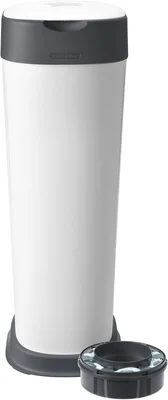
The Twist and Click is the nappy bin you will see in nearly every nursery. It is the number one nappy disposal system across Europe for good reason: it individually wraps each nappy in antibacterial film, sealing odours and germs away with every twist. The XL version holds around 33 nappies, roughly 25% more than standard competitors, and its tall, slim profile tucks neatly beside a changing unit.
At around £20, the upfront cost is hard to argue with. The catch, as many parents discover a few months in, is the refill cassettes. A three-pack runs around £16, and a heavy changer might go through one cassette every two to three weeks. Over two years that adds up to well over £100 in refills.
What parents love
- Individual wrapping. Each nappy is twisted and sealed, which means even when you open the lid, the older nappies underneath stay locked away. One parent told us: "Even if it completely fills over a few days, no smells escape."
- Low entry price. At around £20 it is one of the most affordable nappy bins on the market, making it an easy impulse add to any registry.
- Wide availability. Stocked everywhere, and refill cassettes are easy to find in supermarkets and online.
- Antibacterial film. The silver-based biocide treatment inhibits bacterial growth by up to 99%, adding a hygiene layer beyond just odour control.
What to know before you buy
- Refill costs stack up. Cassettes cost roughly £5 each, and you will need one every two to three weeks. Over two years that is a significant ongoing investment.
- Recent formula concerns. Parents we hear from regularly report that the newer eco-friendly bag material does not lock odours as effectively as the previous version, particularly in warmer weather.
- Proprietary lock-in. You must use Tommee Tippee cassettes. Third-party alternatives exist but fit can be inconsistent.
Best for
- Parents who want the lowest upfront cost
- Households that prefer individually sealed nappies
- Anyone who values wide high-street availability

2. Shnuggle Eco Touch
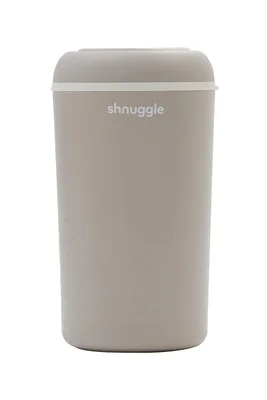
Shnuggle has built a reputation for thoughtful, well-designed baby products, and the Eco Touch nappy bin is no exception. Its standout feature is a dual-seal odour airlock that keeps smells contained even when the outer lid is open. Instead of expensive cassettes, it works with any standard bin liner or Shnuggle’s own biodegradable Better Bag liners, making it both wallet-friendly and planet-friendly in the long run.
At around £34, the Eco Touch sits in the middle ground between the budget cassette bins and the premium steel options. It weighs just 1.43 kg, measures W24 x H43.2 x D35.5 cm, and holds up to 26 newborn nappies. The one-handed drop-and-go system means you simply touch the lid, drop the nappy in, and the airlock does the rest.
What parents love
- No cassettes, ever. Standard bin liners work perfectly, saving significant money over the nappy years. A parent shared: "We use compostable bags and it costs us next to nothing to run."
- Genuinely locks in odour. The dual-seal airlock keeps the nursery fresh even between emptying. Parents we hear from regularly say the room stays odour-free for days at a time.
- One-touch operation. The drop-and-go lid is effortless with one hand, a real advantage during a wriggly nappy change.
- Eco design. Made from 100% recyclable plastic with no single-use packaging. Anti-bacterial treatment on everyday touchpoints adds peace of mind.
What to know before you buy
- Smaller capacity. At 26 nappies it holds fewer than either competitor here, so you will empty it more often, roughly every two to three days for a newborn.
- Newer to market. It does not have the decades-long track record of the Tommee Tippee or Ubbi, and availability can be patchier on the high street.
Best for
- Eco-conscious parents who want to avoid cassette waste
- Anyone looking for the best long-term value
- Small nurseries where a compact, lightweight bin is ideal
- Parents who prefer a simpler, fuss-free design

3. Ubbi Stainless Steel
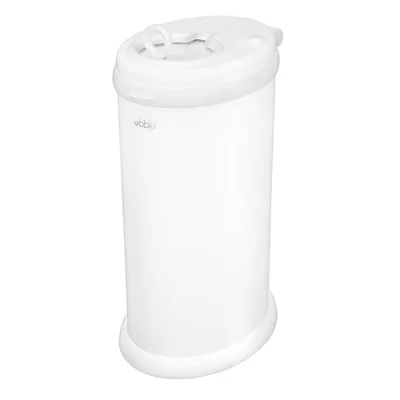
The Ubbi is the nappy bin you buy when you want something that looks as good as it works. Crafted from powder-coated stainless steel, it provides superior odour containment compared to plastic alternatives because steel does not absorb smells the way plastic can over time. The innovative sliding lid minimises air disruption when you open it, while a rubber seal ensures an airtight closure.
At around £80, it is the most expensive option here by some margin. But the Ubbi uses any standard bin bag, so there are zero ongoing refill costs. It also has the largest capacity at around 55 newborn nappies, and features a childproof lock to keep curious toddlers out. Available in a wide range of colours, it is the only nappy bin on this list that genuinely passes as a design piece.
What parents love
- Steel construction. Unlike plastic, steel does not absorb or retain odours over months of use. One parent put it best: "Even after a year the bin itself has zero lingering smell, which was never the case with our old plastic one."
- No special bags. Any standard bin bag fits, meaning zero ongoing refill costs. We hear repeatedly from parents that this is the feature that sold them.
- Huge capacity. Up to 55 newborn nappies means fewer emptying trips, ideal for busy households.
- Design-forward. Multiple colour options and a sleek silhouette make it the only nappy bin you would not mind having on show.
What to know before you buy
- High upfront cost. At £80 it costs four times the Tommee Tippee, though the lack of refill costs means it can pay for itself within a year.
- Needs regular emptying. Without individual wrapping, older nappies release odour into the shared airspace inside the bin. Parents report emptying every two to three days works best.
- Heavier. The steel body is noticeably heavier than plastic alternatives, something to consider if you plan to move the bin between rooms.
Best for
- Parents who want a premium, long-lasting product
- Design-conscious households where aesthetics matter
- Anyone who dislikes the ongoing cost and waste of cassette refills
- Families planning multiple children (the Ubbi will outlast several nappy stages)
What about the Angelcare and Korbell?
The Angelcare nappy bin is another popular budget option with a push-and-lock clamp system. It is not currently available through our retail partners with an active affiliate programme, so we could not include it in the full comparison. If you spot it on the high street, it is worth a look for its simple one-handed drop mechanism and competitive cassette pricing.
The Korbell sits in the mid-to-premium range and uses its own refill system. It has a loyal following, particularly among parents who like its foot-pedal operation, but limited availability through our channels meant we could not feature it fully here.
How to choose
If your budget is tight and you want the bin that most parents already trust, the Tommee Tippee Twist and Click XL is the safe pick. It individually wraps each nappy and the low upfront cost makes it an easy addition to any registry. Just factor the refill cassettes into your annual budget, roughly £80-£120 per year.
If you want the best balance of price, performance and planet-friendliness, the Shnuggle Eco Touch is our top recommendation. It costs around £14 more than the Tommee Tippee upfront but saves you every penny of refill spend from day one. The dual-seal airlock genuinely works, and the one-touch operation is the slickest of the three.
If you are happy investing more upfront for something that will look beautiful, last for years and never need a proprietary refill, the Ubbi Stainless Steel is the premium choice. Its steel body resists odour absorption better than any plastic bin, and over two children it comfortably pays for itself compared to cassette-based systems.
Add it to your Nest
Whichever tier suits your household, you can add your favourite nappy bin straight to your free BubsNest registry and share it with family and friends. One less thing to think about when the nappies start piling up.
Ready to Create Your Baby Registry?
Start your free baby registry today and share it with friends and family.
Get Started Free