Owlet Dream Sock vs Nanit Pro: Which Baby Monitor Deserves Your Nursery?
Two premium approaches to baby breathing monitoring - wearable pulse oximetry versus camera-based detection. We compare specs, parent feedback, and real-world quirks to help you choose.
COMPARISON · NURSERY & SLEEP
Two of the most talked-about names in baby monitoring take fundamentally different approaches to the same parental fear: is my baby breathing? The Owlet Dream Sock wraps around your baby's foot and reads their pulse rate and blood oxygen in real time. The Nanit Pro tracks breathing motion through a camera and a printed pattern on your baby's clothing, without anything electronic touching their skin.
Both cost north of £250. Both promise peace of mind. But they deliver it in very different ways, and the right choice depends less on which device is "better" and more on what kind of reassurance actually helps you sleep. We dug into parent feedback, spec sheets, and real-world quirks to help you decide.
Lil' Bubba's verdicts
- Best for Vitals Monitoring: Owlet Dream Sock · 8.5/10 - Medical-grade pulse oximetry with FDA/CE clearance, real-time heart rate and oxygen readings
- Best All-in-One System: Nanit Pro Complete · 8.0/10 - HD video, sleep analytics, and sensor-free breathing monitoring in one box
| Owlet Dream Sock | Nanit Pro Complete | |
|---|---|---|
| Price | £299 | £379 |
| Monitoring type | Wearable pulse oximetry (heart rate + SpO2) | Camera-based breathing motion detection |
| Sensors on baby | Yes - sock with LED sensors | No - pattern-printed clothing only |
| Video | No (camera sold separately, £159) | Yes - 1080p HD with night vision |
| Connectivity | Bluetooth to base station + Wi-Fi app | Wi-Fi to app |
| Battery life | Up to 8 hours (charges in 90 min) | Mains powered (camera) |
| Age range | 0-18 months (2.5-13.6 kg) | 0-5 years |
| Subscription | Optional (Owlet360 for historical data) | Free trial, then from £8/month for full analytics |
| Certification | FDA-cleared, CE/UKCA marked | ASTM-certified (cord safety) |
How we picked these two
We looked at which baby breathing monitors parents add most to their registries and wishlists, cross-referenced real parent feedback from forums and review communities, and compared published specifications. The Owlet Dream Sock and Nanit Pro Complete represent the two leading approaches to baby breathing monitoring in the UK market: wearable sensor versus camera-based detection. We did not receive products or payment from either brand.
What to look for in a baby breathing monitor
Baby breathing monitors fall into two broad camps. Wearable monitors like the Owlet clip onto or wrap around your baby and use sensors to read vitals directly. Camera-based systems like the Nanit watch your baby from above and use computer vision to detect breathing movement.
Neither type replaces proper safe-sleep practices. The Owlet Dream Sock has earned FDA clearance for its SpO2 accuracy, but health professionals advise that no monitor can prevent SIDS, and false alarms are common enough to cause unnecessary stress for some parents.
When comparing, consider: what data actually reassures you (heart rate numbers or a visual check), whether your baby tolerates things on their feet, how long you plan to use the monitor (the Owlet stops at 18 months, while camera systems grow with your child), and whether you want video monitoring included or are happy to add a camera separately.
Subscription costs matter too. Both products offer enhanced features behind a paywall, and those monthly fees add up over the months and years you will use them.
1. Owlet Dream Sock
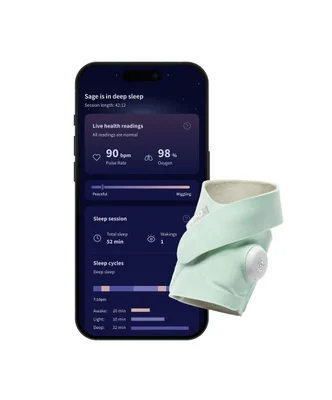
The Owlet Dream Sock is the only baby monitor in the UK with FDA clearance and CE/UKCA medical device marking for its pulse oximetry readings. It wraps around your baby's foot and uses LED sensors to track heart rate and blood oxygen saturation in real time, sending the data to a bedside Base Station and the Owlet Dream App on your phone.
The Base Station glows green when readings are within normal ranges, amber when it loses connection, and red with an audible alarm when heart rate or oxygen drops outside preset thresholds. For parents who find reassurance in actual numbers rather than a video feed, this is a category of one.
What parents love
- Medical-grade accuracy. Clinically evaluated for SpO2 accuracy across all skin tones, within +/- 3% of hospital-grade measurements. One parent told us: "Knowing it has actual FDA clearance, not just a CE mark, made it the only option for us."
- Glanceable base station. The green glow means you can check on baby without reaching for your phone or even opening your eyes properly. A parent shared: "I just roll over, see green, and go back to sleep."
- Free core app. Live pulse rate, oxygen readings, and sleep tracking are all included without a subscription. The paid Owlet360 tier adds historical trends but is genuinely optional.
- Quick charging. A flat sock charges to full in about 90 minutes and lasts a full night. The 20-minute quick charge gets you through a nap in a pinch.
What to know before you buy
- False alarms happen. Cold feet, lotion on skin, a loose fit, or an active sleeper can all trigger notifications. Most parents learn the tricks within a week, but those first few midnight alarms are jarring.
- No video. The Dream Sock monitors vitals only. If you also want to see your baby, you will need a separate camera, pushing the total investment past £450.
- 18-month ceiling. The sock is designed for babies up to 13.6 kg. Once your child outgrows it, you are back to a standard monitor or camera.
Best for
- Parents who find reassurance in real-time heart rate and oxygen numbers
- Families with a history of breathing concerns or premature birth
- Anyone who wants a medically certified device, not just a consumer gadget
- Parents who already own a video baby monitor and want to add vitals tracking





2. Nanit Pro Complete Monitor System
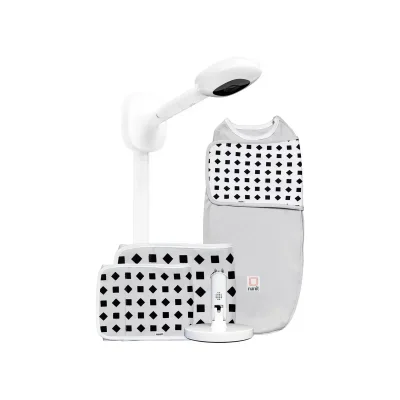
The Nanit Pro takes a completely different approach. Instead of putting sensors on your baby, it mounts a 1080p HD camera above the cot and uses computer vision to detect breathing motion through a printed pattern on the included Breathing Wear Band. Nothing electronic touches your child at all.
The Complete system comes with the Pro Camera, wall mount, flex stand for travel or moving between rooms, a small Breathing Wear Band, and a Smart Sheet. It is a genuine all-in-one: video monitor, breathing tracker, sleep analytics platform, and nursery environment sensor rolled into a single setup.
What parents love
- Nothing on baby's body. The Breathing Wear is just soft cotton clothing with a printed pattern. No charging, no sensors, no wires near the cot. Parents we hear from regularly say: "My daughter hated the feeling of anything on her feet. The Nanit band is just like a normal vest."
- Superb video quality. 1080p HD with infrared night vision, split-screen for multiple cameras, and a bird's-eye overhead angle that keeps even the most active rollers in frame. One parent put it best: "I can zoom in and actually see whether her eyes are open or not."
- Grows with your child. The system works from birth to age five and beyond. Breathing Wear comes in swaddles, sleeping bags, and pyjamas for every stage, so you are not replacing the monitor at 18 months.
- Rich sleep analytics. Detailed sleep tracking, room temperature and humidity alerts, and developmental milestones are available through the app. The Insights Plan adds even deeper data, though the free tier covers the essentials.
What to know before you buy
- Higher entry price. At £379 for the complete system, the Nanit is the more expensive upfront investment, and the subscription for full analytics (from around £8/month after the free trial) adds ongoing cost.
- Wi-Fi dependent. The entire system relies on your home Wi-Fi. If your connection drops, so does your monitoring. There is no offline fallback like the Owlet's Bluetooth base station.
- Fixed camera angle. The Pro Camera does not pan or tilt. The overhead bird's-eye view is excellent for a cot but less flexible if you want to watch a toddler moving around a room.
Best for
- Parents who want video, breathing tracking, and sleep analytics without buying three separate devices
- Families who prefer nothing electronic touching their baby
- Anyone planning to use a monitor beyond 18 months
- Parents who travel frequently and want a portable monitoring solution
How to choose
If you are the kind of parent who will genuinely sleep better seeing a heart rate number and an oxygen percentage, the Owlet Dream Sock is the stronger choice. Its medical certifications are real, its core app is free, and no other consumer device in the UK offers the same level of vitals data. Just know that you are buying a specialist tool, not a complete monitoring system, and you may want a separate camera on top.
If you want one device that handles video, breathing checks, room conditions, and sleep data, the Nanit Pro Complete is the more practical all-rounder. The sensor-free approach suits babies who dislike wearing things, and the system grows with your child for years rather than months. The trade-off is a higher price, a Wi-Fi dependency, and no direct vitals readings.
Neither monitor prevents SIDS. Both can cause unnecessary anxiety through false alarms or compulsive checking if you are prone to that. The best monitor is whichever one lets you actually close your eyes at night.
Add it to your Nest
Whichever monitor suits your family, add it to your free BubsNest registry so friends and family can contribute towards the cost. Premium baby tech is a perfect registry item because it is exactly the kind of thing grandparents want to help with.
Ready to Create Your Baby Registry?
Start your free baby registry today and share it with friends and family.
Get Started Free