Pampers Premium Protection vs Kit & Kin Eco Nappies: Performance or Planet?
Premium mainstream vs eco champion, head-to-head. We compare Pampers Premium Protection and Kit & Kin Eco Nappies on absorbency, skin-friendliness, cost per nappy and sustainability to help you pick the right nappy for your baby.
COMPARISON · NAPPIES & CHANGING
Choosing a nappy sounds simple until you are standing in the aisle (or scrolling at 2am) weighing leak protection against landfill guilt. Pampers Premium Protection is the UK's go-to premium disposable, trusted by healthcare professionals and loved for its overnight reliability. Kit & Kin Eco Nappies promise the same dryness from plant-based materials, with sustainability built into every layer from factory to packaging.
Both sit at the premium end of the market, both claim up to 12 hours of leak protection, and both have won major industry awards. So which one actually deserves a place on your changing table? We dug into real parent experiences, compared specs side by side, and tested the claims that matter most: absorbency, skin-friendliness, overnight staying power and long-term value. Whether your priority is bulletproof leak protection or leaving a lighter footprint, this head-to-head will help you decide.
Lil' Bubba's verdicts
- Best Overall: Pampers Premium Protection · 8.5/10 - Unmatched overnight absorbency and the only nappy with a wetness indicator at this level
- Best for Eco-Conscious Parents: Kit & Kin Eco Nappies · 8.0/10 - Genuinely sustainable with plant-based materials and zero compromise on daytime dryness
Quick comparison
| Pampers Premium Protection | Kit & Kin Eco | |
|---|---|---|
| Price (Size 2) | ~11p per nappy | ~21p per nappy |
| Wetness indicator | Yes | No |
| Realistic wear time | 10-12 hours | 6-8 hours |
| Eco credentials | OEKO-TEX certified | Plant-based, carbon-neutral, FSC, vegan |
| Hypoallergenic | British Skin Foundation approved | Allergy Certified, dermatologist approved |
| Sizes available | 0-6 | 1-6 |
| Key award | Gold, Best Performance 2024 | Silver, Best Performance 2024 |
How we picked these two
We track which products parents add most to their registries and cross-reference that with real-world feedback from parenting communities across the UK. These two kept surfacing together in "which nappies should I use?" conversations, often framed as the mainstream-vs-eco dilemma. Rather than cherry-pick, we let popularity and genuine debate guide the pairing.
What to look for in a nappy
Absorbency is everything. A nappy that cannot lock away moisture quickly will leave your baby uncomfortable and increase the risk of nappy rash. Look for nappies with multi-layer cores or channel technology that distributes liquid evenly rather than pooling in one spot.
Fit and flexibility matter more than you might expect. Babies come in all shapes, and a nappy that gaps at the legs or rides up at the back will leak regardless of its absorbent core. Stretchy wings and a snug waistband make a real difference, especially once your baby starts moving.
Skin-friendliness is non-negotiable for newborns. Dermatological testing, hypoallergenic certification and the absence of chlorine, fragrances and latex are worth checking, particularly if your baby has eczema or sensitive skin.
Sustainability is increasingly important to parents. The average baby goes through around 4,000 nappies before potty training, so the environmental impact adds up. Plant-based materials, carbon-neutral manufacturing and recyclable packaging are meaningful differentiators if eco credentials matter to your family.
Value per nappy is the honest metric. A cheaper pack price can mask a higher per-nappy cost, and a nappy you need to change every three hours is more expensive in practice than one that lasts six. Factor in how many changes you will realistically need per day.
1. Pampers Premium Protection
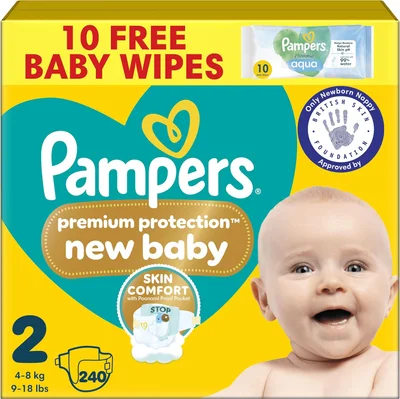
Pampers Premium Protection is the brand's flagship nappy, and it has earned that position. The Dermacomfort layer uses over 1,000 absorbent micropores to pull wetness away from skin almost instantly, while the Stop & Protect pocket at the back catches those explosive newborn moments that other nappies simply cannot contain. It is one of the few nappies at any price point that genuinely delivers on a full overnight claim.
The wetness indicator is a small but brilliant touch, particularly for first-time parents still learning their baby's cues. And the overlapping fastening system means you can get a secure fit even on the wriggliest babies, though some parents note the tabs can tear if you reposition them too many times.
What parents love
- Overnight confidence. Parents consistently say this is the nappy that survives a full night. One parent told us: "It is nice to have a nappy that can last a full night without needing a change."
- Premium softness. The quilted material feels noticeably different from budget options. A parent shared: "They feel very soft and cotton-like, and the quilting gives a luxurious edge."
- Reliable containment. The Stop & Protect pocket catches what other nappies miss. We hear repeatedly from parents that these nappies contain both liquid and solid waste with ease.
- Wetness indicator. The colour-change strip takes the guesswork out of nappy checks, especially useful at night or when you are out and about.
What to know before you buy
- Premium price tag. At roughly 11p per nappy in bulk, Pampers Premium Protection costs more than supermarket alternatives, though less per nappy than most eco brands.
- Tab durability. Some parents find the adhesive tabs tear if repositioned on a wriggling baby, making a secure re-fit tricky.
- Quality consistency. A small number of parents report recent batches feeling thinner than older ones, though this has not been widespread.
Best for
- Parents who need reliable overnight protection without a change
- First-time parents who want the reassurance of a wetness indicator
- Families with twins or multiples who need a nappy that fits different body shapes
- Anyone who values proven, tested performance above all else
2. Kit & Kin Eco Nappies
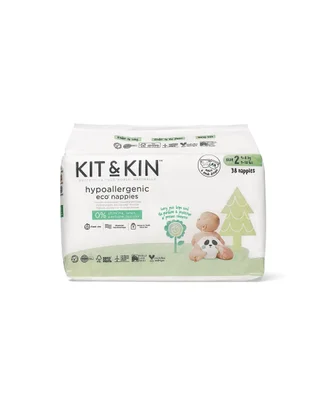
Kit & Kin has quietly become one of the most accredited eco nappy brands in the UK, with over 90 industry awards and endorsements from dermatologists and allergy specialists. The brand uses plant-based materials against baby's skin and manufactures in a certified carbon-neutral factory. Every purchase helps protect acres of threatened rainforest, and the packaging is 100% recyclable paper.
The patented channel technology distributes liquid evenly across the nappy rather than letting it pool, which means less sagging and a more comfortable fit throughout the day. They also score highly for skin-friendliness: zero chlorine, latex, perfume or parabens, with full Allergy Certified status. Parents of babies with eczema regularly highlight these as the nappy that finally stopped the rash cycle.
What parents love
- Gentle on sensitive skin. Parents of eczema-prone babies particularly rate these. One parent told us: "Within three days of switching back, the nappy rash had completely settled."
- No chemical smell. Unlike some mainstream brands, these have no noticeable odour when wet, which parents appreciate during changes.
- Stretchy wings. The elastic side panels make for easy, battle-free nappy changes. A parent shared: "The wings were nice and stretchy, so the nappies were easy to put on and not such a battle."
- Genuine sustainability. Plant-based materials, carbon-neutral production, FSC certification and rainforest protection give parents confidence their choice actually makes a difference.
What to know before you buy
- No wetness indicator. You will need to check manually or rely on your baby's cues, which can be tricky at night or with a newborn.
- Shorter realistic wear time. While Kit & Kin claim 12 hours, parents consistently report 6-8 hours as the realistic limit before leaks, making them less suited to overnight use.
- Higher per-nappy cost. At roughly 21p per nappy, these cost nearly double the per-nappy price of Pampers Premium Protection bought in bulk.
Best for
- Eco-conscious families who want to reduce their nappy footprint
- Babies with eczema, sensitive skin or known allergies
- Parents who prefer plant-based, chemical-free materials against their baby's skin
- Daytime use where regular changes are practical
What about Aldi Mamia?
Aldi's Mamia Ultra-Dry nappies deserve a mention as the UK's most popular budget nappy. At roughly 8p per nappy, they consistently punch above their weight in absorbency tests and have a devoted following among parents. If your priority is pure value and you are happy with standard environmental credentials, Mamia is worth trying alongside either of these two premium picks.
How to choose
Pick Pampers Premium Protection if overnight reliability is your top priority, if you value a wetness indicator for peace of mind, or if you want the lowest per-nappy cost at the premium tier. It is the safe, proven choice that healthcare professionals have recommended for years.
Pick Kit & Kin Eco Nappies if sustainability drives your buying decisions, if your baby has sensitive or eczema-prone skin, or if you prefer plant-based materials with zero harsh chemicals. Budget for slightly more frequent changes, especially overnight.
Some parents find the best approach is both: Kit & Kin during the day when changes are frequent and practical, and Pampers Premium Protection at night when you need maximum absorbency for a full stretch of sleep. There is no rule that says you have to pick just one.
Add it to your Nest
Whichever nappy you choose, you can add it straight to your free BubsNest registry alongside everything else on your list. Family and friends can see exactly which brand and size you prefer, so you never end up with a drawer full of the wrong nappies.
Ready to Create Your Baby Registry?
Start your free baby registry today and share it with friends and family.
Get Started Free