Paternity Leave: How Partners Can Make Two Short Weeks Count
Two weeks goes by in a blink. Here is how to time your paternity leave, plan it without over-planning, and hand back the baton without everyone falling apart.
Fourteen days. That is all statutory paternity leave gives most partners in the UK, and roughly half of those days will be spent wondering what day it is.
Two weeks is short. But here is the good news: it can be brilliant if you go in with a plan, and the rules got a little friendlier recently, so you have more options than you might think. 👶
This one is for dads, co-parents and non-birthing mums. Let's make those weeks count.
When should you actually take it?
Since April 2024, you no longer have to take your leave in one block straight after the birth. You can take one week, two weeks in a row, or two separate weeks, any time in the first year.
That flexibility is a big deal. A few ways families use it:
- Both weeks at the start. The classic. Brilliant if there is a caesarean recovery or a tricky birth, because lifting, driving and stairs can be off the table for a while.
- One week now, one week later. Lots of parents say week three or four is when the visitors vanish and the exhaustion lands. A second week then can feel like a rescue mission.
- One week now, one week at a milestone. Think the first family holiday, a big move, or when your partner has a health appointment and could use backup.
You will need to give your employer notice for each block (usually 28 days before), and eligibility and pay depend on how long you have worked there. Have a quick look at the official government guidance and your company's own policy, as some employers top up pay or offer extra weeks.
Bonus tip: book any annual leave you have spare to sit next to your paternity leave. A third week at home feels like a luxury holiday.
What should you plan before the baby arrives?
Not a schedule. Please do not make a schedule. Babies do not read them.
Instead, plan the boring bits so your brain is free for the baby. A few evenings of prep before the due date can save you hours later:
- Batch-cook and freeze six to eight meals. Future you will weep with gratitude.
- Set up an online food shop with a saved "basics" list.
- Learn where everything lives: nappies, muslins, spare sleepsuits, the thermometer.
- Build the cot, fit the car seat and fold and unfold the pushchair at least three times.
- Agree on a visitor policy together, so you can be the one who politely says "not today".
Packing a grab-and-go bag that you can actually carry is worth doing early too. A backpack-style changing bag keeps both hands free for car seats, doors and coffee, and it is far less fiddly than a shoulder bag that keeps slipping off.

What should you own while you are home?
Here is the secret most partners only learn afterwards: "helping" is not the goal. Owning things is.
If you are waiting to be told what to do, your partner still has to carry the whole mental list. Pick a few jobs that are completely yours and run them start to finish.
Some jobs that work really well for the non-birthing parent:
- Bath time. It becomes your thing with the baby, and it is a lovely way to bond.
- The first nappy change of the morning. So the other parent gets a lie-in, even a short one.
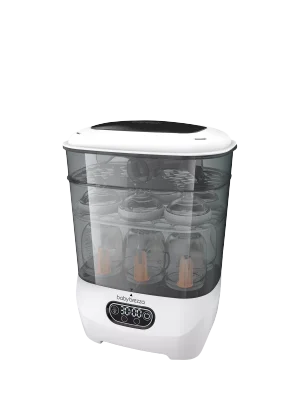
- Feeding kit. If you are bottle feeding, combi feeding or pumping, the washing, sterilising and prepping is yours. If your partner is breastfeeding, you are on water, snacks, cushions and burping duty.
- The house. Laundry, dishwasher, bins, and food. Quietly, without being asked.
- Gatekeeping. Answering messages, managing visitors and sending the baby photos to the family group chat.
Bottles in particular can eat your whole day. If sterilising is on your list, a steriliser that dries too means no more damp bottles lined up on a tea towel.






How do you bond when the baby only seems to want their mum?
This is so common, and it can sting a bit. Newborns often settle best with whoever feeds them, and that can leave partners feeling like a spare part.
But bonding is not a race. It is built in the tiny, repetitive moments: the nappy changes, the bath, the walks, the hours of holding.
Skin-to-skin is not just for the birthing parent. Take your top off, pop the baby on your chest (in just a nappy) and put a blanket over you both. Babies love the warmth and the sound of your heartbeat.
And babywearing is a partner superpower. A carrier lets you take a grumbly baby out for a walk around the block while your partner sleeps, showers or just sits in silence for 40 minutes. Choose one with a wide, supportive waistband if you will be wearing it for long stretches.


Those walks have a nice side effect too. Fresh air does wonders for you as well, and you will quickly become the parent who knows exactly which route sends the baby off to sleep. 🚶
What about your partner's recovery?
Whatever kind of birth it was, your partner's body has been through a lot. Your job is to make rest possible.
That means keeping them fed and watered, protecting naps, and taking the baby away for a proper block of sleep at least once a day. It also means keeping an eye on how they are feeling, not just physically.
Baby blues in the first week or so are very common. But if low mood, anxiety or feeling overwhelmed hangs around or gets heavier, encourage them to talk to their midwife, health visitor or GP. And remember that partners can struggle too. If you are not feeling like yourself, the same goes for you.
How do you hand back the baton when you return to work?
The end of paternity leave is a wobbly moment for the whole house. A little planning in the final few days makes the handover much smoother.
- Do a "what's in my head" brain dump. Write down anything only you know: when the bottles were last sterilised, which nappy size is running low, which visitor is coming on Thursday.
- Keep your jobs. Bath time and the morning change can still be yours after work. Do not quietly hand everything back.
- Agree on a night plan. Maybe you take one late feed or the early-morning shift, so neither of you is running on empty all week.
- Line up support. If family or friends want to help, the first couple of weeks after you go back are the perfect time.
- Talk to your manager. Ask about flexible hours or working from home for a few weeks. Many employers are more open to it than you would expect.
And if you saved that second week? You now have something wonderful to look forward to.
The bit worth remembering
You do not have to be perfect at this. Nobody is in week one. What matters is showing up, picking things up without being asked, and spending lots of time just holding your baby.
Two weeks is not long. But it is long enough to start being the parent you want to be. 💛
Still building your list? Add the things you will actually use in those first weeks to your BubsNest registry, so friends and family know exactly how to help.
Ready to Create Your Baby Registry?
Start your free baby registry today and share it with friends and family.
Get Started Free