Pelvic Girdle Pain in Pregnancy: What It Actually Is and What Helps
PGP affects up to 1 in 5 pregnancies, and nobody talks about it enough. Here is what is actually going on, what makes it worse, and the things that genuinely help.
You roll over in bed and something in your pelvis clicks. Not a gentle, satisfying click like cracking your knuckles. More of a grinding, crunching sensation that makes you freeze mid-turn and think, "That cannot be normal." You lie very still, wondering whether you have somehow broken yourself.
Good news: you have not broken anything. Less good news: what you are probably experiencing is pelvic girdle pain, and it affects roughly one in five pregnancies. It is incredibly common, surprisingly under-discussed, and can range from a mild niggle to something that genuinely takes over your day. Here is what is actually going on, and, more importantly, what helps. 🤰
What PGP Actually Is
Pelvic girdle pain (you might also hear it called SPD, or symphysis pubis dysfunction) is pain around the joints of your pelvis. Your pelvis is not one solid bone. It is made up of three joints: one at the front (the symphysis pubis) and two at the back (the sacroiliac joints). Normally these joints barely move at all.
During pregnancy, your body produces a hormone called relaxin, which does exactly what it sounds like. It loosens the ligaments around your pelvis to make room for your baby and prepare for birth. Brilliant design, honestly. The problem is that sometimes those joints loosen unevenly or too much, and the resulting instability causes pain.
The pain can show up at the front of your pelvis, across your lower back, in your hips, or sometimes radiating down the inside of your thighs. Some women feel it in one spot. Others feel it everywhere. Rolling over in bed, getting out of a car, going up stairs, standing on one leg to put on trousers, basically any movement that involves your pelvis doing something asymmetric can set it off.
When It Tends to Show Up
PGP can appear at any stage of pregnancy, but it most commonly kicks in during the second or third trimester when your bump is getting heavier and those joints are under more pressure. Some women notice it as early as 12 weeks, though. There is no set timetable, and it is not a sign that anything is wrong with your pregnancy.
It also does not necessarily get worse as your pregnancy progresses. Some women find it peaks around 30 weeks and then plateaus. Others find the last few weeks the hardest. The unpredictability is part of what makes it so frustrating.
Sleep: Honestly, the Hardest Part
If you have PGP, sleep is probably where you feel it most. Rolling over becomes an event. You develop a whole strategy: knees together, brace your core, move in one block like a rotisserie chicken. And even then, sometimes the click still gets you.
A good pregnancy pillow makes a genuinely noticeable difference here. Placing a pillow between your knees keeps your hips aligned and stops the top leg from dragging your pelvis forward. A full-length body pillow gives you something to hug in front too, which stops you rolling onto your front in your sleep and waking up in pain.
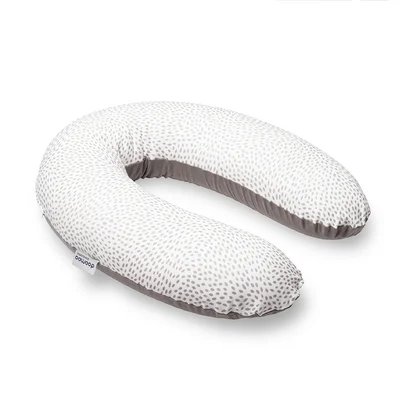

Some women also find that sleeping on a satin or silk pillowcase (for the body pillow, not your head) reduces friction and makes rolling over slightly less like wrestling a duvet. Worth a try if you are waking up multiple times a night.
Getting Through the Day
The daily stuff is where PGP sneaks up on you. Walking feels fine for ten minutes, and then suddenly it does not. Standing in a queue becomes uncomfortable. Getting out of a chair requires a little pep talk. The trick is not to push through. PGP responds really well to pacing, which means doing less for longer rather than lots in one burst.
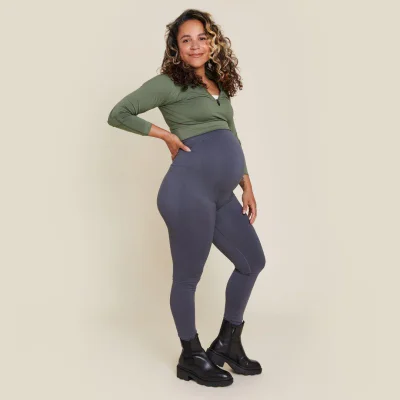
Supportive clothing helps more than you might expect. Maternity leggings with built-in bump support take some of the weight off your pelvis, which reduces the strain on those wobbly joints. Think of it as giving your pelvis a gentle hug all day. 💛
A few small adjustments make a big difference too. Sit down to get dressed (especially for anything involving one leg at a time). Take the stairs one step at a time instead of alternating feet. Get into a car by sitting on the seat first and then swinging both legs in together, rather than stepping in one foot at a time. These feel fiddly at first, but they stop the sharp jabs that come from asymmetric movement.
Support Belts: Do They Actually Work?
Short answer: for a lot of women, yes. A maternity support band sits under your bump and around your hips, applying gentle compression to help stabilise the pelvic joints. It is not a cure, but it can take the edge off, especially during walking, standing, or any activity where gravity is pulling your bump downwards.
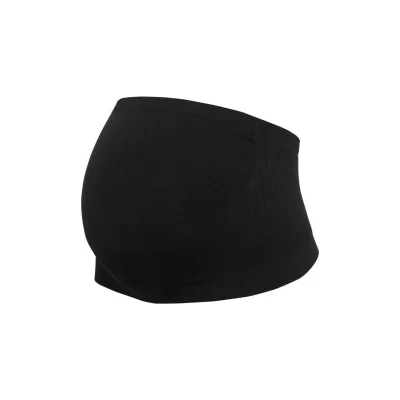
The key is to use a support belt as one tool among many, not the only thing you rely on. Physiotherapists generally recommend wearing one during activity and taking it off when you are resting, so your muscles still do some of the work. Think of it as scaffolding, not a permanent structure.
What Else Genuinely Helps
The single most effective thing for PGP is seeing a physiotherapist who specialises in women's health or pelvic health. Your midwife can refer you, and many areas have self-referral options too. A physio can assess exactly which joints are causing the problem and give you targeted exercises, usually focusing on strengthening the muscles around your pelvis so they can pick up the slack where the ligaments have loosened.
Common exercises include:
- Pelvic floor exercises (yes, those ones, they support the whole pelvic area, not just the bits you think about)
- Gentle core work, like bird-dog or modified dead bugs
- Hip bridges, which strengthen your glutes and take pressure off your pelvis
- Gentle stretching for your inner thighs and hip flexors
Swimming and aqua-natal classes are also brilliant for PGP because the water supports your weight and lets you move without gravity making everything worse. Even just floating for twenty minutes can feel like a holiday from pain.
Heat can help too. A warm (not hot) bath, a wheat bag on your lower back, or a warm compress on the sore spot before bed can ease the aching feeling that builds up over the day.
What Makes It Worse
A few things to avoid if you can. Pushing a heavy trolley, carrying a toddler on one hip, hoovering with big sweeping motions, sitting cross-legged, and standing for long stretches. Basically anything that asks your pelvis to work asymmetrically or bear more weight than it wants to right now.
Also, and this is important, do not just put up with it. PGP is not "just part of pregnancy" in the sense that you have to grin and bear it. It is a real, treatable condition, and the earlier you get support, the better the outcome tends to be. If your midwife seems dismissive, ask specifically for a pelvic health physiotherapy referral. You are entitled to it.
When Does It Get Better?
For most women, PGP improves significantly within a few weeks of giving birth. Once the relaxin levels drop and your ligaments start tightening back up, the instability resolves and the pain goes with it. Some women feel better within days of delivery. Others take a few months.
A small number of women do find it lingers beyond the postnatal period, and if that happens to you, a postnatal physiotherapy referral is the right next step. Do not assume it will just go away on its own if it has been more than three months.
The main takeaway? PGP is common, it is not your fault, and it does not mean anything is wrong with your baby. It just means your pelvis is doing a lot of work right now, and it needs some help. Get the help. You deserve to be comfortable. 💜
And if you are building your pregnancy wishlist, a good pillow and a support belt are two of the most practical things you can add. Your future self, the one trying to roll over at 2am, will thank you.
Start your BubsNest registry here and add the things that will actually make pregnancy more comfortable.
Ready to Create Your Baby Registry?
Start your free baby registry today and share it with friends and family.
Get Started Free