Safety 1st Portable vs Extra Large Bed Rail: The 150cm Guard Needs a Longer Bed Than Most UK Singles
Two Safety 1st bed rails, £10 apart. The 101cm Portable folds for trips and suits standard UK singles; the 150cm Extra Large covers more mattress but really wants a 200cm bed. Here is how to pick the right one.
COMPARISON · NURSERY & SLEEP
The move out of a cot is one of those milestones that sneaks up on you. One week your toddler is happily contained behind bars, the next they are climbing over them, or a new sibling needs the cot bed, or you simply decide it is time for a "big bed". Whatever the trigger, the first night in an open bed tends to end the same way for a lot of families: a soft thud at 2am and a confused little person on the carpet.
A bed rail is the cheap, simple fix, and Safety 1st makes two of the most widely stocked ones in the UK: the Portable Bed Rail at around £25 and the Extra Large Bed Rail at around £35. On paper the choice looks obvious. Longer rail, more protection, only a tenner more. In practice it is not that simple, because the 150cm Extra Large is designed for a longer mattress than many UK children actually sleep on, and the shorter Portable has a trick the bigger one cannot match: it folds down to travel.
We compared both rails on the things that matter at bedtime: which beds they genuinely fit, how the safety end-gap rule plays out on real UK mattress sizes, how easy they are to fit and fold, and what we hear from parents who have used them for the cot-to-bed jump. Both meet the British Standard for bed guards (BS 7972), both are rated from 18 months to 5 years, and both use a steel frame with a mesh panel. The difference is all in the fit.
Lil' Bubba's verdicts
- Best Overall: Safety 1st Portable Bed Rail · 8.0/10 - fits standard UK singles and junior beds with room to spare, and folds into the car for grandparents' house
- Best for Long and Double Beds: Safety 1st Extra Large Bed Rail · 7.5/10 - 150cm of coverage for kings, 200cm singles and wriggly sleepers, if your bed is long enough
Quick comparison
| Safety 1st Portable | Safety 1st Extra Large | |
|---|---|---|
| Rating | ||
| Price | From £24.99 | From £34.99 |
| Rail length | 101cm | 150cm |
| Height above frame | 42cm | 45cm |
| Mattress length | Over 156cm | Over 190cm |
| Mattress depth | 10 to 24cm | 9 to 26cm |
| Weight | 2.67kg | 2.55kg |
| Folds for travel | Yes, to about 71cm | No |
| Age | 18 months to 5 years | 18 months to 5 years |
| Safety standard | BS 7972 | BS 7972 |
How we picked the 2
Bed rails are a small category with a lot of unbranded listings, so we kept this to rails from an established nursery brand that are stocked by mainstream UK baby retailers and carry the BS 7972 bed guard standard. Safety 1st's Portable and Extra Large rails are the two that come up again and again when parents ask what to buy for a first big bed, and they cover the two real questions buyers have: "how much of the bed do I need to guard?" and "do I need to take it with me?" We checked manufacturer and retailer specifications, cross-referenced the mattress size limits against standard UK bed sizes, and pulled together recurring feedback from parents who have used each one.
What to look for in a bed rail
Mattress length, not bed width. Every bed rail comes with a minimum mattress length, and it matters more than most people realise. The safety warning on rails like these asks for a gap of at least 25cm between each end of the rail and each end of the bed, so a child cannot get their head or body trapped at the end of the guard. That means you need the rail length plus 50cm of mattress. A 101cm rail needs about 151cm; a 150cm rail needs about 200cm.
Mattress depth. These rails slide a frame under the mattress, and the child's own weight on the mattress holds it in place. Too thin and the rail can sit loose; too deep and there is not enough rail left above the mattress to stop a roll. Check your mattress is within the stated range before buying.
No gap between mattress and rail. Once fitted, push the mattress firmly against the rail. A gap along the side is a trapping risk, and it is the single most common fitting mistake we hear about.
Fold-down access. Both Safety 1st rails fold down for story time and changing the sheets, then lock upright. Practise the lock a few times so you know it has clicked.
Where not to use one. Bed rails are for children from 18 months. They are not suitable for cots, toddler-sized cot bed mattresses that are too short for the rail, or the top bunk of a bunk bed, which should have its own fixed guard rails.
1. Safety 1st Portable Bed Rail
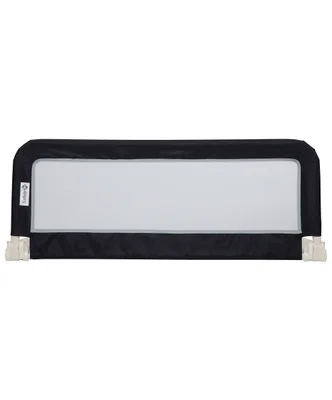
The Portable is the shorter of the two at 101cm long and 42cm high, with a steel frame, a mesh panel and a fold-down hinge so you can sit on the edge of the bed for a story. The name gives away its party trick: the whole thing folds down to roughly 71cm, small enough to slide into a car boot alongside the travel cot you no longer need.
The bigger point, and the reason it takes our top spot, is fit. It wants a mattress at least 156cm long and between 10cm and 24cm deep. That covers a standard UK single (190cm), a small double, a double, most 160cm and 180cm junior beds, and the spare bed at grandma's. On a standard single it leaves a comfortable gap at each end, and it guards the middle of the bed, which is where a sleeping toddler tends to roll out.
What parents love
- It goes on holiday. The fold-down size is the reason many parents buy this one over a fixed rail. One parent told us: 'It lives in the boot for weekends at my mum's. Two minutes to fit, and he sleeps in a proper bed instead of squeezing into a travel cot.'
- Fits the beds people actually have. The 156cm minimum mattress length means it works on almost every UK single, junior and double mattress without fiddling with the end gaps.
- Simple, sturdy fold-down. The rail drops for bedtime stories and nappy or pull-up changes, then locks back upright.
- Low price. At around £25 it is one of the cheapest branded, BS 7972-rated rails you can buy, which matters for a product most families use for a year or two.
What to know before you buy
- 101cm is not the whole bed. Restless sleepers who end up diagonally can still find the unguarded head or foot end. We hear repeatedly from parents that a pillow or rolled blanket at the foot end on the floor is still worth having for the first few weeks.
- The fit depends on the mattress. On very soft or thin mattresses the rail can lean out a little. Push the mattress hard against the rail and recheck the side gap each time you change the sheets.
- Not for short toddler beds. Most 140cm cot bed mattresses are too short for it. If your child is in a converted cot bed, the cot bed's own toddler rail is the better option.
Best for
- Standard 190cm UK single beds
- Families who stay with grandparents or travel often
- 160cm and 180cm junior beds
- Parents on a budget who want a branded, standards-tested rail


2. Safety 1st Extra Large Bed Rail

The Extra Large is 150cm long and 45cm high, one of the longest bed rails on the UK market, with a wide frame that slides under the mattress for stability and an automatic lock when it clicks upright. It handles the widest range of mattress depths of the two (9cm to 26cm), so deeper pocket-sprung and hybrid mattresses are less likely to swallow the rail.
Here is the catch the product name does not tell you. Safety 1st specifies a mattress over 190cm long. Apply the 25cm end-gap rule and a 150cm rail needs about 200cm of mattress to leave the full gap at both ends. Centred on a standard 190cm UK single, it leaves only around 20cm at each end. That makes it a natural fit for king-size beds, 200cm European-length singles and long junior beds, and a less comfortable fit for the standard UK single most children move into. Check your mattress length with a tape measure before you order.
What parents love
- Covers far more of the bed. For children who sleep sideways or end up at the foot of the bed, the extra half metre makes a real difference. A parent shared: 'The short one stopped her rolling out the middle, then she just rolled out the bottom instead. The long one sorted that.'
- Feels solid once in. The wide under-mattress frame and auto-lock give a reassuring, fixed feel, and it is the slightly taller rail at 45cm.
- Deep mattress friendly. The 26cm upper depth limit suits thicker modern mattresses better than many rails.
- Great for co-sleeping on a big bed. Parents who bring a toddler into a king-size bed tell us it guards the child's side properly without leaving a long open run.
What to know before you buy
- Too long for many UK singles. On a 190cm mattress you cannot leave the recommended 25cm gap at both ends. This is the main reason it ranks below the Portable for most families.
- Stays put. It does not fold for travel, so you will need a second rail for trips.
- Costs about £10 more. Worth it only if your bed is long enough to make use of the extra length.
Best for
- King-size beds and 200cm European singles
- Toddlers who sleep diagonally or roll out at the foot end
- Deep pocket-sprung or hybrid mattresses
- Families with a toddler joining them in a large bed
What about foam bed bumpers?
Inflatable and foam bumpers that sit under the fitted sheet are a popular alternative, especially for travel, and some parents prefer them because there is no frame and no gap to check. They are lower, so a determined climber can roll over them, and they are a different kind of product altogether. We have kept this comparison to framed, BS 7972-tested rails, but if your child mostly needs a nudge rather than a barrier, they are worth a look.
How to choose
Choose the Safety 1st Portable Bed Rail if your child is moving into a standard 190cm UK single or a 160cm to 180cm junior bed, if you stay away from home regularly, or if you simply want the cheaper, more flexible option. For most families making the cot-to-bed jump, this is the one.
Choose the Safety 1st Extra Large Bed Rail if you have measured a mattress of 200cm or longer, if your toddler is a diagonal sleeper who escapes past shorter rails, or if they share a king-size bed with you. On the right bed it is the better guard; on a standard single it is the wrong size.
Whichever you choose, fit it with the mattress pushed tight against the rail, leave at least 25cm at each end, and check both every time you change the bedding.
Add it to your Nest
Moving to a big bed usually means a few new bits at once: a rail, a mattress protector, maybe a toddler duvet. Add your pick to your free BubsNest registry so family can help, and we will track prices across retailers for you.
Ready to Create Your Baby Registry?
Start your free baby registry today and share it with friends and family.
Get Started Free