Silver Cross Nia vs Cybex Libelle: Which Compact Travel Pushchair Wins?
Two of the best cabin-approved compact pushchairs go head to head. We compare the feature-packed Silver Cross Nia against the ultra-compact Cybex Libelle to help you pick the right travel buggy.
COMPARISON · TRAVEL & ON THE GO
Choosing a compact travel pushchair used to mean accepting serious trade-offs: tiny baskets, flimsy frames, seats your toddler would outgrow in months. Not any more. The latest generation of cabin-approved buggies packs genuine everyday usability into an overhead-bin-friendly fold, and two of the strongest contenders could not be more different in how they get there.
The Silver Cross Nia arrives as the brand's flagship compact, promising full-sized features, a class-leading basket and the only IATA-approved fold in both seat and carrycot mode. The Cybex Libelle takes the opposite path, stripping everything back to deliver one of the smallest folds on the market at a lower price. Both weigh under 7.5 kg, both fit in an overhead locker, and both have loyal parent followings. So which one actually deserves a spot in your hallway?
We dug into verified specifications, cross-referenced pricing across UK retailers, and gathered feedback from parents who use these pushchairs day in, day out. Here is what we found.
Lil' Bubba's verdicts
- Best Overall: Silver Cross Nia · 8.5/10 - more features, bigger basket, newborn-ready out of the box
- Best for Travel on a Budget: Cybex Libelle · 8.0/10 - lighter, smaller fold, over £100 less
| Silver Cross Nia | Cybex Libelle | |
|---|---|---|
| Weight | 7.3 kg | 6.2 kg |
| Price (from) | £345 | £243 |
| Fold size | 24 × 45 × 55 cm | 32 × 20 × 48 cm |
| Basket capacity | 10 kg | 5 kg |
| Age range | Birth to 22 kg | 6 m to 22 kg (birth with car seat) |
| Recline | Fully flat | Near-flat |
| Suspension | Full (all wheels) | Front wheels only |
| Rating |
How we picked the two
We started with every cabin-approved compact pushchair currently sold in the UK through joined-programme retailers, filtered for in-stock availability and at least two independent parent additions to Nests on our platform. From that shortlist we chose two pushchairs that represent genuinely different approaches to the same brief: one that maximises features and one that minimises size and price. Specifications were verified against manufacturer data sheets, and parent sentiment was gathered from multiple independent sources (none of which are named here to keep our editorial independent).
What to look for in a compact travel pushchair
Weight matters, but context matters more. A kilogram difference sounds small until you are lifting a pushchair into an overhead bin with one arm and holding a baby in the other. Anything under 7.5 kg is genuinely carry-friendly for most parents.
Fold size determines where you can take it. IATA cabin approval means the folded pushchair fits in a standard overhead compartment, but some folds are more compact than others. A smaller fold also means easier storage in the boot, under restaurant tables, or in hallway cupboards.
Basket capacity is the hidden dealbreaker. A travel pushchair that cannot hold a changing bag beneath the seat forces you to hang bags on the handlebars, which can tip a lightweight frame. Look for at least 5 kg basket capacity, and 8-10 kg if you plan to use the pushchair daily.
Recline range decides newborn suitability. A fully flat recline means you can use the seat from birth without a separate carrycot or car seat adapter. A near-flat recline (around 170 degrees) is fine from roughly six months.
Suspension smooths the ride. Full suspension on all four wheels gives a noticeably smoother push on uneven pavements and cobblestones. Front-only suspension is lighter but can feel bumpy on rough surfaces.
1. Silver Cross Nia
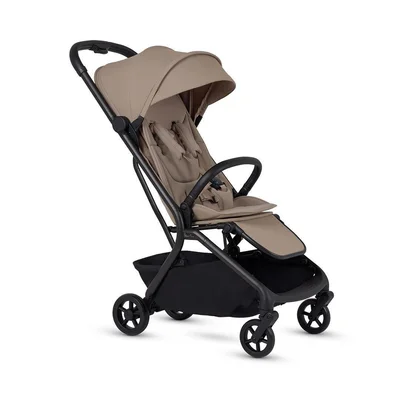
Silver Cross built the Nia to prove that "compact" and "compromise" do not have to be synonyms. At 7.3 kg it is not the lightest pushchair on this page, but it packs in features that most full-sized travel systems struggle to match: a fully flat lie-back seat suitable from birth, full four-wheel suspension, a 10 kg under-seat basket, and the only IATA cabin-approved fold that works with the optional carrycot still attached.
In daily use, the Nia feels remarkably well-engineered. The one-hand fold clicks down in seconds, the integrated carry strap sits comfortably over a shoulder, and the magnetic harness buckle means no more fumbling with fiddly clips while your toddler squirms. The UPF 50+ extendable canopy covers well, and the included rain cover means one less accessory to buy.
What parents love
- One-hand fold and carry strap. One parent told us: 'I can fold the pushchair in seconds with one hand while holding my baby in the other. The shoulder strap makes carrying it across a car park totally manageable.'
- Huge basket for a compact. At 10 kg capacity, the under-seat basket swallows a full changing bag with room to spare. Parents we hear from regularly say the storage is what sets the Nia apart from every other travel buggy they have tried.
- Birth-ready without extras. The lie-flat seat means newborns can ride from day one without buying a separate carrycot or car seat adapter, though both are available if you want them.
- Smooth ride on city streets. A parent shared: 'It handles bumpy pavements and even a bit of gravel really well for something this light. Full suspension makes a noticeable difference.'
What to know before you buy
- Forward-facing only. There is no parent-facing seat option, which some parents miss during the newborn months.
- Premium price. At around £345, the Nia costs significantly more than budget compact pushchairs, and popular accessories like the carrycot and ride-on board are sold separately.
- Not built for rough terrain. The compact wheels handle pavements and hard paths well but are not suited to deep gravel, sand, or muddy trails.
Best for
- Parents who want a single pushchair from birth to toddler without accessories
- Frequent flyers who need cabin-approved portability with no feature sacrifices
- City families who need serious basket capacity for daily errands
- Anyone upgrading from a bulky travel system to something lighter


2. Cybex Libelle
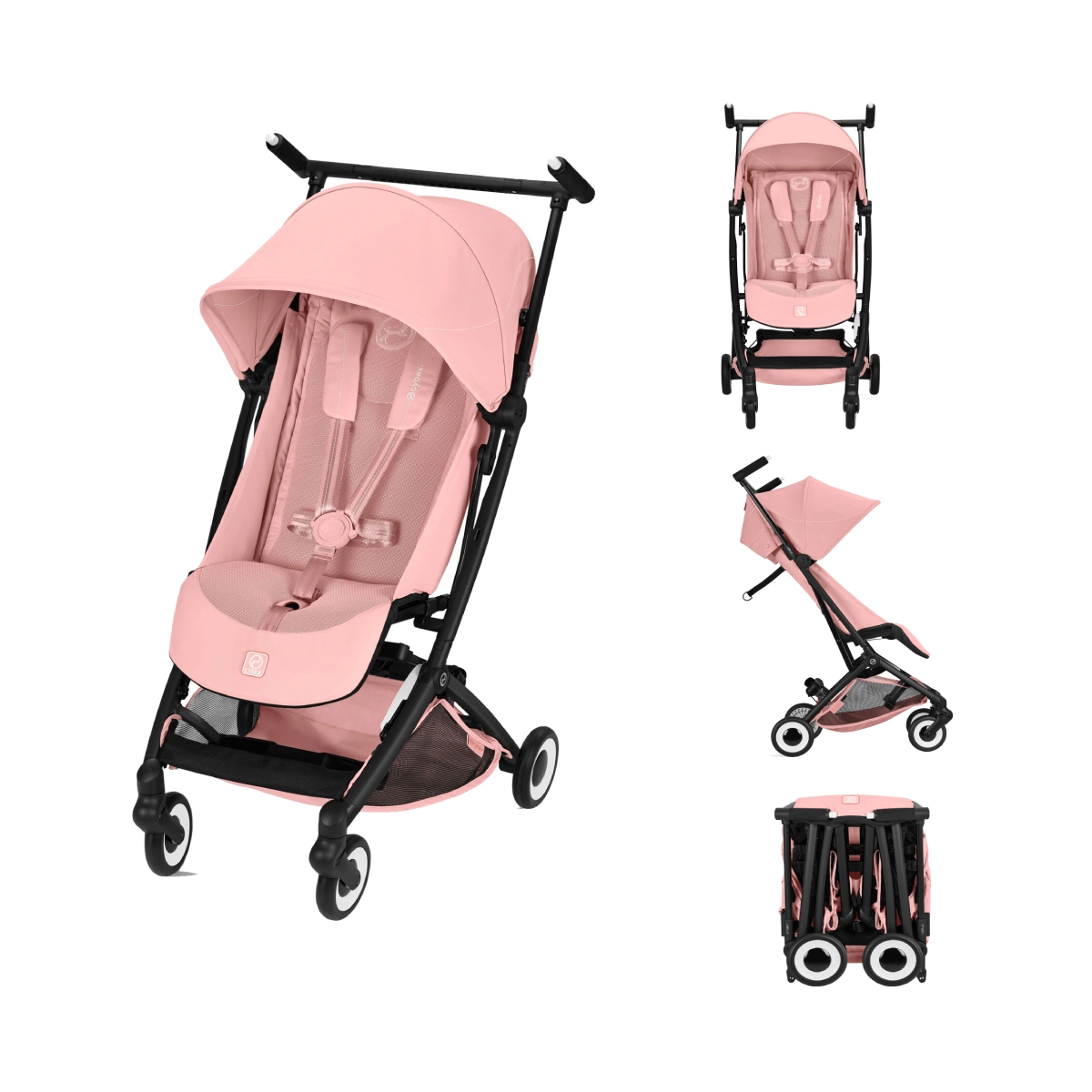
The Cybex Libelle takes a radically different approach to the travel pushchair brief: strip it down, make it tiny, keep the price sensible. At 6.2 kg it is over a kilogram lighter than the Nia, and its folded footprint is genuinely remarkable, smaller than most cabin bags and narrow enough to slot into a front passenger footwell or wedge behind a restaurant chair.
Where the Libelle earns its following is pure portability. The one-pull harness gets your child buckled with a single hand, the near-flat recline handles naps on the move, and the fold is almost instinctive after a couple of attempts. One parent told us: 'When folded, it takes up the space of a small carry-on suitcase, which is fantastic for a family that flies regularly.' It is not trying to replace your main pushchair. It is trying to be the one you grab when weight and size are everything.
What parents love
- Smallest fold in its class. The Libelle folds to just 32 x 20 x 48 cm. We hear repeatedly from parents that no other pushchair they have tried packs down this small.
- Featherweight at 6.2 kg. A parent shared: 'The school run was brilliant. The buggy is so light to get in and out of the car, and I can carry it up the stairs to our flat without breaking a sweat.'
- One-pull harness. The single-action harness tightening makes strapping in a wriggly toddler quick and stress-free, even one-handed.
- Price. At around £243, the Libelle delivers cabin-approved compactness for over £100 less than most premium alternatives, making it an excellent second buggy.
What to know before you buy
- Small basket. The 5 kg under-seat basket is shallow with a central bar that limits what you can fit. Hanging bags on the handles risks tipping the lightweight frame.
- Short canopy. Parents we hear from regularly mention that the sunshade covers the head but leaves legs and feet exposed, which can be frustrating in bright sunshine.
- Fixed handlebars. The handlebar height is not adjustable, which taller parents find uncomfortable on longer walks. The unusual handlebar shape also takes some getting used to.
Best for
- Families who fly regularly and need the absolute smallest fold
- Parents looking for a lightweight second buggy for travel and days out
- City dwellers carrying a pushchair up and down stairs daily
- Budget-conscious parents who want cabin-approved quality without the premium price
How to choose
Pick the Silver Cross Nia if you want one pushchair that genuinely does it all. The lie-flat seat, full suspension, and 10 kg basket mean you can use the Nia as your only pushchair from birth through to toddlerhood without feeling like you are making concessions for the sake of portability. It is the better daily driver of the two, and the cabin approval is a bonus rather than its entire identity. Yes, you pay more, but you are buying a pushchair that replaces two.
Pick the Cybex Libelle if travel compactness and weight are your top priorities and you already have a main pushchair at home. The Libelle is the pushchair you throw in the boot for a weekend away, carry through the airport, or leave folded by the front door for quick trips. It does not try to be everything, and that focus is exactly what makes it so good at what it does. At £243, it is also an easier purchase to justify as a second buggy.
Both pushchairs are excellent at what they set out to do. The right one depends on whether you need a compact pushchair to be your only pushchair (Nia) or a brilliant companion for specific situations (Libelle).
Add it to your Nest
Found your perfect travel pushchair? Add it to your free BubsNest registry so friends and family know exactly which one to buy. You can compare both side by side in your Nest and share the link with anyone who asks what you need.
Ready to Create Your Baby Registry?
Start your free baby registry today and share it with friends and family.
Get Started Free