Weleda Calendula vs Bepanthen Nappy Cream: One Has Zinc and a Scent, the Other Has Neither
Weleda Calendula Nappy Change Cream and Bepanthen Nappy Care Ointment cost about the same per gram, but they are built differently: Weleda pairs zinc oxide with lanolin and a natural essential-oil scent, Bepanthen skips zinc and fragrance for a clear provitamin B5 layer. Here is which suits your baby.
COMPARISON · BATH & CHANGING
Nappy cream is the cheapest thing on most baby lists and one of the most argued about. Ask ten parents and you will hear ten favourites, usually delivered with the conviction of someone who has survived a bad rash at 3am. Two tubes come up more than almost any others: Weleda Calendula Nappy Change Cream and Bepanthen Nappy Care Ointment.
On the shelf they look like rivals at a similar price. The 75ml Weleda tube is around £5.96 and the 100g Bepanthen tube around £7, which works out at roughly 7 to 8p per gram or millilitre for either. What is inside is where they split. Weleda uses zinc oxide plus lanolin, softened with almond and sesame oils and calendula and chamomile extracts, and it carries a natural essential-oil scent. Bepanthen has no zinc and no fragrance; it is a lanolin and paraffin ointment with 5% provitamin B5 (dexpanthenol) that goes on almost clear.
That difference decides more than the brand ever will. A white zinc barrier is what many parents reach for when skin is already pink, while a clear, unscented layer is what many reach for at every single change from day one. Some homes end up keeping both. We read the ingredient lists, checked live prices across our retail partners and pulled together what parents tell us after weeks of real use, so you can decide which job you need doing first.
Lil' Bubba's verdicts
- Best Overall for Every Change: Bepanthen Nappy Care Ointment · 8.5/10 - fragrance-free, goes on clear and thin, gentle enough from the newborn days
- Best Natural Zinc Barrier: Weleda Calendula Nappy Change Cream · 8.0/10 - zinc and lanolin in a plant-oil base for damp, slightly pink skin
Quick comparison
| Bepanthen Nappy Care Ointment | Weleda Calendula Nappy Change Cream | |
|---|---|---|
| Our rating | ||
| Typical price | About £7 for 100g | About £5.96 for 75ml |
| Barrier type | Lanolin, paraffin and petrolatum ointment | Zinc oxide and lanolin cream |
| Key extra | 5% provitamin B5 (dexpanthenol) | Calendula and chamomile extracts, almond and sesame oils |
| Fragrance | None | Natural essential-oil scent |
| Look on skin | Nearly transparent | White, visible layer |
| Contains lanolin | Yes | Yes |
| Contains nut oil | Yes, almond oil | Yes, almond oil |
| Best for | Prevention at every change from birth | Damp, pink or reactive moments, natural-ingredient homes |
How we picked the two
Both creams are among the most added nappy-care products on BubsNest registries, both are stocked by several of our UK retail partners, and both are names parents bring up unprompted when we ask what actually worked. We compared full ingredient lists rather than front-of-pack claims, checked current prices and tube sizes, and read through long-running parent feedback on texture, scent, how easily each wipes off and how they behaved on newborn skin. Our ratings weigh everyday usability more heavily than marketing promises, because a nappy cream you use at every change matters more than one you only reach for in an emergency.
What to look for in a nappy cream
Barrier first. Every nappy cream is really a barrier between skin and wetness. Zinc oxide makes a thick, white, water-resistant film. Lanolin, petrolatum and paraffin make a softer, more breathable seal. Neither is better in every case; they suit different moments.
Fragrance. Newborn skin in a warm, damp nappy is about as sensitive as skin gets. If your baby has eczema-prone or reactive skin, or you simply want to keep things minimal, a fragrance-free formula is the safer start. Natural essential oils are still fragrance, even when they smell lovely.
Allergens. Both of these creams contain lanolin, which is animal-derived and occasionally causes contact reactions, and both contain almond oil. If there is a nut allergy in the family, or you want a vegan option, read the label carefully and ask your pharmacist.
Texture and wipe-off. A thick zinc cream can take a few passes with a wipe to remove at the next change, and scrubbing sore skin is exactly what you want to avoid. Thinner ointments rub in and are easier to layer lightly.
Tube size and price per gram. You will get through more than you expect. Compare price per gram, not price per tube, and buy a smaller tube for the changing bag.
When to stop and ask. Nappy creams are for prevention and mild redness. If a rash is blistering, bleeding, spreading, or not improving after a few days, speak to your pharmacist, GP or health visitor rather than switching tubes again.
1. Bepanthen Nappy Care Ointment
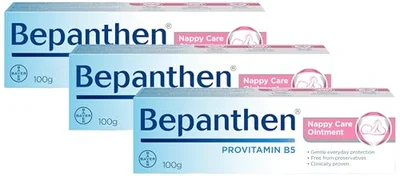
Bepanthen is the tube many parents are handed in the first week, and it has earned that spot. It is a lanolin, paraffin and petrolatum ointment with 5% provitamin B5, and it contains no colours, fragrances, preservatives or antiseptics. It goes on almost transparent, so you can still see the skin underneath, which helps when you are watching for the first hint of pink.
Because it is soft and thin, it suits the little-and-often approach: a light layer at every change, which is how most parents end up using it. It is not the thickest barrier you can buy, and if skin is already very wet and raw some parents prefer something with zinc on top. As an everyday default, though, it is hard to beat.
What parents love
- Fragrance-free and minimal. No perfume, no colour, no preservatives. We hear repeatedly from parents that it is the one they trust on a brand-new newborn.
- Clear on the skin. You can see what is going on under the nappy without wiping a white layer away first.
- Easy to apply and remove. Spreads thinly and does not need scrubbing off at the next change, which is kinder on tender skin.
- Handy beyond the nappy. Parents tell us they also use it on dry patches and on their own sore nipples during early feeding, though check the label for each use.
What to know before you buy
- No zinc. It is a breathable ointment rather than a heavy water-repelling paste, so for a damp, red bottom some parents add a zinc cream on top.
- Contains lanolin and almond oil. Not vegan, and worth checking if there are nut allergies in the family.
- Greasy feel. It is an ointment, so expect it on your fingers; keep wipes or a tissue handy.
Best for
- Newborns and the first weeks of nappy changes
- Parents who want a fragrance-free everyday barrier
- Babies with reactive or eczema-prone skin
- Little-and-often application at every change


2. Weleda Calendula Nappy Change Cream

Weleda takes a different route to the same goal. It combines zinc oxide and lanolin to keep wetness off the skin, then builds the rest of the formula from sweet almond and sesame oils, beeswax, and organic calendula and chamomile extracts. It is free from synthetic preservatives, synthetic fragrance and mineral oils, which is exactly why it appeals to natural-ingredient households.
The zinc gives it a richer, whiter barrier than Bepanthen, and parents often reach for it when skin is looking a little pink or after a long night in one nappy. The trade-off is the scent: the essential oils give it a gentle, herbal smell that many people love and some find too much for a newborn.
What parents love
- Zinc plus lanolin. A thicker barrier for damp skin and long stretches between changes. One parent told us: 'It is the one that actually clears the redness for us.'
- Natural formula. Plant oils and botanical extracts, no synthetic fragrance or mineral oils. A parent shared that they went back to Weleda after trying other creams because the alternatives 'felt too synthetic'.
- Rich but soft texture. Creamier than a typical zinc paste, so it spreads more easily on a wriggling baby.
- Lovely to use. Many parents enjoy the calming herbal smell at change time.
What to know before you buy
- It is scented. The essential-oil fragrance is natural, but it is still fragrance. Parents we hear from regularly describe it as 'nice but heavily fragranced', so it may not suit very sensitive or eczema-prone skin.
- White layer to wipe off. Like any zinc cream, it can take a couple of gentle passes to remove at the next change.
- Contains lanolin and almond oil. Not vegan and not ideal where there is a nut allergy.
Best for
- Families who prefer natural, plant-based ingredients
- Bottoms that are damp or starting to look pink
- Overnight changes and longer stretches in one nappy
- Older babies and toddlers whose skin is less reactive
What about Sudocrem?
Sudocrem is the other name every UK parent knows. It is a thick zinc oxide cream with an antiseptic, and many families keep a tub for when things go wrong rather than for every change. It is a heavier, stickier product than either cream here, and some babies react to it, so it sits in a different slot: the rescue pot, not the everyday tube. If you already own one, a light everyday layer of Bepanthen plus Sudocrem or Weleda on bad days is a common combination.
How to choose
Choose Bepanthen Nappy Care Ointment if you want one tube to use at every change from birth. It has no fragrance, goes on clear, and is the safer first choice for newborns and babies with reactive skin. It is our pick for the changing table.
Choose Weleda Calendula Nappy Change Cream if you prefer natural ingredients, want the extra protection of zinc for damp or slightly pink skin, and do not mind a gentle herbal scent. It is a lovely second tube for nights and for the moments Bepanthen alone does not quite cut it.
At roughly 7 to 8p per gram each, buying both is a perfectly reasonable answer, and it is what plenty of parents end up doing.
Add it to your Nest
Nappy cream is one of those small things friends and family love to pick up for you. Add your favourite, or both, to your free BubsNest registry and your Nest will keep track of who is buying what, so you never end up with six tubes of the same one.
Ready to Create Your Baby Registry?
Start your free baby registry today and share it with friends and family.
Get Started Free