Damp, Dry or Just Right? Keeping Nursery Air Healthy This Winter
Streaming windows, black spots on the sill, or air so dry your lips crack? A friendly guide to keeping your baby's room fresh, comfortable and mould-free through the colder months.
A single load of washing dried on a clothes horse can release around two litres of water into your home. Two litres! That is a big bottle of squash, quietly evaporating into the air and landing on the coldest surface it can find.
Usually that cold surface is a window. And in a lot of UK homes, the window with the most dripping glass on a winter morning is the one in the nursery. 💧
Babies breathe, sweat and get bathed. Nurseries tend to have the door shut and the heating ticking over. Add a few damp muslins drying on the radiator and you have a recipe for streaming windows by November. The good news? A few small habits make a huge difference, and none of them cost much.
Why winter air goes wobbly
Warm air holds more moisture than cold air. When warm, moist air in a cosy nursery hits a cold window or an outside wall, it cools down and drops that moisture as condensation.
Leave it there day after day and it soaks into window frames, sealant, curtains and the corners of walls. That is where mould loves to set up home.
But winter can swing the other way too. Blast the heating with every window sealed and the air can end up feeling dry and stuffy instead. So the goal is not "as dry as possible". It is somewhere comfortably in the middle.
The signs your nursery is too damp
You do not need any gadgets to spot the obvious clues. Have a look and a sniff:
- Windows wet on the inside most mornings, with puddles on the sill
- Black or grey speckles on sealant, frames or the corners of the ceiling
- A musty smell that hangs around even after you have aired the room
- Clothes or bedding in drawers that feel slightly cool and clammy
- Peeling paint or wallpaper lifting near outside walls
One damp window after a chilly night is normal. Condensation every single day, plus any of the other signs, is your cue to change a few habits.
The signs it is too dry
Dry air is less talked about but just as worth noticing. Clues include static crackling off the blankets, your own lips and hands feeling tight, and a room that feels stuffy rather than fresh.
If you are ever worried about your baby's breathing, skin or a cough that will not shift, please do not try to fix it with room tweaks alone. Speak to your GP or health visitor, who can take a proper look. 💛
Measure it, do not guess it
Here is the thing. "Feels a bit damp" and "feels a bit dry" are surprisingly hard to judge, especially when you are running on four hours of sleep.
A small hygrometer takes the guesswork out. It shows the humidity in the room as a percentage, and most also show the temperature, which is handy for checking the nursery against the 16-20°C range commonly recommended for safe sleep. For humidity, roughly 40-60% is the comfortable zone most homes aim for.
Pop it at cot height, away from the radiator and the window, and check it at a few different times of day for a week. You will quickly see your room's pattern.
Easy daily habits for damp rooms
If your readings sit above 60% most of the time, these are the low-effort wins:
- Wipe the windows every morning. A dedicated cloth or a squeegee, then wring it out in the sink, not over the radiator.
- Open the window for 10-15 minutes. Do it while baby is out of the room, ideally after the morning wipe. A short blast of fresh air swaps damp air for drier air without chilling the walls.
- Keep the trickle vents open. Those little slots at the top of modern windows are there for exactly this.
- Dry washing elsewhere. Outside when you can, or in a room with the window cracked and the door closed. Not on the nursery radiator.
- Bath with the door shut and the extractor on. Then keep the steam in the bathroom for a while before opening up.
- Pull the cot and furniture a few centimetres off outside walls. Air needs to move behind them, or damp patches hide there.
- Keep a low, steady heat. Rooms that go icy overnight then warm up fast are condensation magnets. A gentle, consistent temperature helps.
Do not forget the cot mattress. Lift it every week or two and check the underside and the base. If it feels damp, stand it on its side to air during the day.
Easy fixes for dry rooms
If your hygrometer is regularly showing below 40%, try turning the heating down a notch first. Many nurseries are simply warmer than they need to be.
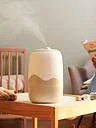
Some parents also like a cool-mist humidifier for the very dry spells. If you go this route, a few ground rules keep it a help and not a hazard:
- Place it well out of reach of the cot, with cables tucked away
- Choose cool mist over warm or steam, so there is nothing hot in the nursery
- Empty, rinse and dry the tank daily, and descale it as the instructions say
- Switch it off once the room is back in the 40-60% range
That last point matters. A humidifier running in an already damp room just makes more condensation. This is exactly why measuring first is so useful.


Mould you can already see
Small patches on silicone or a window frame can usually be tackled with a mould remover or a cloth and diluted cleaner. Do it while baby is in another room, keep the window open, and wear gloves.
Do not brush or dry-wipe it, as that spreads spores into the air. Wet the area, wipe gently, then dry the surface properly afterwards.
Mould on fabric (curtains, a cot bumper you were given, a soft toy) is usually best washed on a hot cycle if the label allows, or replaced. Any mould on the mattress means the mattress needs replacing.
When it is bigger than a few habits
Some damp is not about lifestyle at all. Rising damp, a leaky gutter, a broken extractor fan or a cracked seal around a window will keep coming back however often you wipe.
If you rent, report damp and mould to your landlord in writing, with photos and dates. Keep a copy. If you own your home, a surveyor or damp specialist can work out the cause.
And if the nursery is simply the dampest room in the house, it is completely fine for baby to sleep in your room for a while. The safe sleep basics are what matter most: a firm, flat, clean mattress, a clear cot and a comfortable room temperature.
A quick winter checklist
- Hygrometer at cot height, readings between 40% and 60%
- Windows wiped each morning, room aired for 10-15 minutes
- No washing drying in the nursery
- Furniture a few centimetres off outside walls
- Mattress lifted and checked regularly
Little routines, fresh air, happy baby. And if you are still building your nursery list, you can add the bits that help onto your wishlist at BubsNest so family can chip in. 🏡
Ready to Create Your Baby Registry?
Start your free baby registry today and share it with friends and family.
Get Started Free