From Bottle to Cup: Your No-Fuss Guide to Making the Switch
Four cup types, one confused toddler, and a whole lot of spilt milk. Here is your honest guide to ditching the bottle without the drama.
Four types of cup, three conflicting opinions from your health visitor, your mum, and that mum at playgroup, and one very confused toddler staring at a sippy cup like it personally offended them. Sound familiar?
The bottle-to-cup transition is one of those milestones that sounds simple on paper but feels weirdly emotional in practice. Your baby loves their bottle. It's comfort, routine, and the one guaranteed way to get some milk into them. Why would you mess with that?
Because eventually, you should. And it really doesn't have to be dramatic. Here's how to make the switch without the chaos. 🍼
Why Move Away from the Bottle?
The short version: prolonged bottle use can affect dental development. When babies suck on a teat, milk pools around their teeth, and over time that can lead to decay. It can also influence how their bite develops as their jaw grows.
There's also the practical reality that bottles become a sleep crutch. A toddler who needs a bottle to fall asleep is a toddler whose parents are washing and preparing bottles well past the point where they need to be. No judgement here, just honesty.
The goal isn't to rip the bottle away overnight. It's a gradual shift, at your baby's pace, towards drinking from a cup like the tiny independent human they're becoming.
When to Start (and When to Finish)
Most experts recommend introducing a cup from around six months, alongside weaning. This doesn't mean ditching the bottle straight away. It means letting your baby get familiar with the concept of a cup while they're still doing most of their milk drinking from a bottle or breast.
By 12 months, aim to have cups as the main drinking vessel for water and meals. Bottles can still hang around for the morning and bedtime milk if that works for your family. By 18 months, most children can be fully transitioned. But every child is different, and there's a wide window of normal.
If your toddler is approaching two and still firmly attached to their bottle, don't panic. You haven't ruined anything. You just have a bit more work to do, and that's completely fine.
The Cup Types, Decoded
Walk into any baby aisle and you'll find approximately 400 different cups, all claiming to be the best. Here's what they actually do.
Free Flow Cups
These are the ones most recommended as a first cup. The liquid flows freely when tipped, which means your baby learns to sip properly rather than suck. Yes, there will be spills. Many spills. But the drinking action is closer to an open cup, which is the end goal.
Sippy Cups
The classic. A spout with a valve that stops liquid from pouring out unless your baby actively sucks. They're great for reducing mess, but the sucking action is similar to a bottle, so they're best used as a stepping stone rather than a long-term solution.
360 Cups
These clever things have a sealed lid that releases liquid when your child bites down anywhere around the rim. No spout, no straw, just a cup shape that encourages a more natural drinking action. They're brilliant for the stage between sippy cups and open cups.
Open Cups
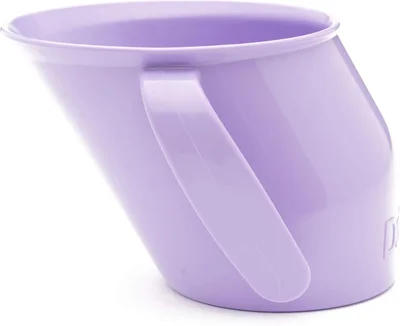
The destination. An open cup is what we're all working towards. Some brands make clever slanted designs specifically for little hands that are learning to control the tipping angle. They're messy at first, obviously, but babies learn surprisingly fast when they're motivated by thirst.

Straw Cups
Great for water on the go, especially once your baby has the hang of sucking through a straw (usually around 9 to 12 months). They build different mouth muscles than bottles do, so they're a solid option alongside free flow or 360 cups.
How to Actually Make the Switch
Here's the bit everyone skips to. The practical, day-by-day stuff that actually works.
Start with water at meals. From six months, offer sips of water in a free flow or open cup at mealtimes. Your baby will mostly dribble it everywhere. That's fine. They're learning.
Drop one bottle at a time. Pick the feed your baby is least bothered about, usually the mid-morning or mid-afternoon one, and swap the bottle for a cup of milk. Keep the morning and bedtime bottles for last. They're the comfort ones and they'll be the hardest to let go of.
Make the cup available. Leave it on the highchair tray, in the pushchair, on the floor during play. The more your baby sees it as a normal part of life, the less novel (and therefore less suspicious) it feels.
Let them choose. If you can, offer two cups and let your toddler pick. Toddlers are much more cooperative when they feel like something was their idea. Sneaky? Absolutely. Effective? Very.
The Bedtime Bottle: The Big One
This is where most parents get stuck. The bedtime bottle isn't really about hunger. It's a signal that says "wind down, feel safe, go to sleep." Taking it away can feel like pulling the rug out from under your child's entire bedtime routine.
The trick is to separate the milk from the sleep. Move the bottle (or cup of milk) earlier in the routine, before the bath or before stories, so it's not the last thing before lights out. Then gradually shift that milk into a cup instead. Your child still gets their warm milk. They just drink it differently and at a different point in the routine.
Some families go cold turkey and power through a tricky few nights. Others take weeks of gentle shifting. Both approaches work. You know your child best.
What If They Flat-Out Refuse?
They will, at some point. A cup will be hurled across the kitchen. Milk will be dramatically spat out. The word "no" will be deployed with impressive force.
This is completely normal. A few things that help:
- Try a different cup style. Some babies hate sippy cups but love straw cups. Some adore 360 cups. It's genuinely trial and error.
- Try different temperatures. Some toddlers prefer room temperature milk from a cup even if they liked it warm from a bottle.
- Model it yourself. Drink from a cup in front of them. Make it look enjoyable. Overact if necessary.
- Don't turn it into a battle. If they're not having it today, try again tomorrow. Consistency matters more than intensity.
You've Got This
The bottle-to-cup switch is one of those parenting transitions that feels enormous while you're in it and completely unremarkable three months later. Your toddler will get there. They always do. 🥤
And if you're building your registry and want to add a first cup or two alongside all the newborn essentials, that's a seriously smart move. Future you will be grateful. Pop one on your BubsNest wishlist and tick it off the list early.
Ready to Create Your Baby Registry?
Start your free baby registry today and share it with friends and family.
Get Started Free