Sleep Regressions: The Real Reason Your Baby Stopped Sleeping
Your baby was sleeping through. Now they are not. Here is what is really going on, why it is a good sign, and how to survive until it passes.
Your baby was sleeping through the night. Five glorious, unbroken hours. You were starting to feel human again, maybe even a tiny bit smug about it. And then, out of nowhere, they stopped. The midnight wake-ups are back, the 4am parties have resumed, and nothing you did last week seems to work anymore.
Welcome to the sleep regression. And before you spiral into "what did I do wrong," here is the most important thing to know: you have not broken anything. Your baby has not forgotten how to sleep. Something much more interesting is happening inside that small, brilliant brain of theirs. 🌙
What Is a Sleep Regression, Really?
The term sounds dramatic, like your baby has taken a backward step. In reality, it is more of a forward leap. Sleep regressions happen when your baby's brain is going through a major developmental shift, learning a new skill, processing new information, rewiring the way they experience the world.
Think of it like a phone updating overnight. The system has to go offline for a bit while it installs something brilliant. The problem is, the installation happens at 2am and involves a lot of crying (from both of you, quite possibly).
Most babies hit a regression somewhere around 4 months, 8 months, 12 months, and 18 months. Not all babies hit all of them, and the timing varies. But the pattern is remarkably consistent.
The 4 Month Regression: The Big One
This is the one that catches everyone off guard because it happens right when you think you have cracked it. Around 4 months, your baby's sleep cycles permanently mature from deep, newborn-style sleep into adult-pattern sleep with distinct light and deep phases.
What this means in practice: your baby now wakes briefly between sleep cycles, the same way you do. The difference is, they have not yet learned to roll over and drift back off. Every cycle transition becomes a potential wake-up call.
The 4 month regression is also unique because it is the only one that represents a permanent change in sleep architecture. The others are temporary disruptions. This one is your baby's sleep growing up, and once they have adjusted, the new pattern sticks.
The 8-10 Month Regression
This one usually coincides with a cascade of new skills: crawling, pulling up to stand, separation anxiety kicking in, and possibly the first teeth making an appearance. Your baby's brain is processing an extraordinary amount of information, and it all seems to bubble up at night.
You might notice your baby practising standing in their cot at 3am. Genuinely standing there, wide awake, looking enormously pleased with themselves. It would be adorable if it were not happening during what used to be your sleep.
The 12 and 18 Month Regressions
At 12 months, walking is usually the culprit. Your baby is so busy trying to get upright during the day that their brain keeps rehearsing the moves at night. At 18 months, it tends to be a language explosion, growing independence, and the dawning realisation that they are a separate person from you, which is both wonderful and slightly terrifying for them.
These later regressions can also involve nap transitions. Dropping from two naps to one throws the whole daily rhythm off until a new pattern settles. It is chaotic, but it is also completely normal.
How to Survive: The Practical Stuff
Keep the routine, even when it feels pointless
The single most useful thing you can do during a regression is keep going with your existing bedtime routine. Bath, sleep bag, feed, story, white noise, cot. Same order, same signals, every single night. Your baby's brain is looking for anchors while everything else is changing, and the routine is the biggest anchor you have.
A consistent sleep bag is part of that signalling. When they feel it go on, their body starts to understand that sleep is coming, even on the nights when their brain has other plans.


Make the room work harder
A room that is too light in the early morning will turn a brief between-cycle wake-up into a full "right, I am up now" situation. A portable blackout blind can be the difference between a 5am start and a 6:30am one, especially during summer when the sun has no respect for your schedule.


White noise helps too. It masks the household sounds that can trigger wake-ups during those lighter sleep phases, the creaky floorboard, the dog, the neighbour's car. Consistent background sound gives your baby one less reason to fully wake.
Introduce a comfort object (from 7 months)
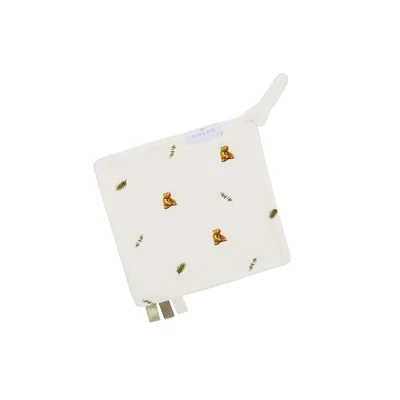
From around 7 months, a small comforter or lovey can become a powerful sleep association. It smells like home, it is always there, and your baby can find it independently when they wake between cycles. Start by keeping it near you during feeds so it picks up your scent, then tuck it into the cot beside them.
Lower the bar for yourself
This is temporary. It does not last forever. During a regression, survival mode is not a failure, it is a strategy. If you need to do whatever gets everyone the most sleep, whether that is an extra feed, a longer cuddle, or going to bed at 8pm yourself, do it without an ounce of guilt.
What NOT to Do
Try not to introduce a completely new sleep habit you do not want to keep long-term. If you start rocking your baby to sleep every time they wake and you have not been doing that before, you might find it harder to stop once the regression passes.
That said, do not feel guilty if you do. Babies are not robots. Rocking your child during a tough week does not "ruin" their sleep forever. You can gently adjust again once the developmental leap settles. The internet is full of fear-mongering about creating bad habits. Most of it is nonsense. You are not going to break your baby by comforting them. 💛
When Does It End?
Most sleep regressions last between 2 and 6 weeks. Some are over in days. The hard truth is that you cannot speed them up. The brain does what the brain does. But they do end. They always end.
And here is the part that makes it worth it: on the other side of every regression is a baby who can do something new. They can roll, or crawl, or stand, or say "mama" at 6am with a grin that makes you forget every single terrible night that came before.
You are doing brilliantly. This is the hard bit. It passes.
Building your baby sleep setup? Pop the essentials onto your BubsNest wishlist so the people who love you can help with the things that genuinely make a difference.
Ready to Create Your Baby Registry?
Start your free baby registry today and share it with friends and family.
Get Started Free