Baby Massage: How to Bond Through Gentle Touch (and Why Your Baby Will Love It)
A simple guide to baby massage, from choosing the right oil to reading your little one's cues. Gentle strokes, big benefits.
Here is a fact that might surprise you: research published in the journal Infant Behavior and Development found that babies who received regular massage gained weight faster, slept more soundly, and cried less than those who did not. Not because of any magic technique, but because of something beautifully simple. Touch.
Your hands already know what to do. You have been stroking, patting and cradling your baby since the moment they arrived. Baby massage just gives that instinct a little structure, and the results, for both of you, are genuinely worth the ten minutes it takes.
Why Baby Massage Is More Than Just a Nice Idea
When you massage your baby, their body releases oxytocin, the same hormone that floods through you during skin-to-skin contact and breastfeeding. It lowers cortisol (the stress hormone) in both of you, which is why so many parents say they feel calmer after a massage session too. It is not just your baby who benefits.
On the practical side, gentle tummy massage can help move trapped wind along, ease constipation, and soothe the kind of digestive discomfort that makes evenings feel endless. It can also support better sleep. Not a miracle cure for four-month sleep regressions, but a warm-up that tells your baby's body it is time to wind down.
For partners who are not breastfeeding, massage is a brilliant way to build that physical closeness. Ten minutes of focused, gentle touch creates a connection that bottles and nappy changes alone cannot replicate.
When Can You Start?
Most guidance suggests waiting until your baby is at least six weeks old, when they have had their first set of vaccinations and you have both found your feet a little. Before that, simple skin-to-skin cuddles do the same job beautifully.
There is no upper age limit. Toddlers who have been massaged since infancy often ask for it by name, and many parents find it becomes one of the loveliest parts of the bedtime routine well into the second year.
What You Will Need
Honestly? Not much. A warm room, a soft surface (a towel on the floor or your bed works perfectly), and something to reduce friction on your baby's skin. That is it.
For the massage medium, you have a few options. A simple, fragrance-free baby oil or lotion is ideal. Avoid anything with strong perfumes, nut oils (in case of allergy), or essential oils, which are too potent for baby skin. Sunflower oil and grapeseed oil are popular choices recommended by many midwives, but a purpose-made baby lotion or oil keeps things simple. 🤍
Nala's Baby Nighttime Oil (included in this bundle) is specifically designed for gentle baby massage before bed. It is allergen-free, dermatologically tested, and has a soft vanilla scent that will not overwhelm sensitive skin.


If you prefer a lotion rather than an oil, Aveeno's baby moisturiser with colloidal oatmeal is a popular choice. It absorbs quickly, so your baby will not feel greasy afterwards, and it doubles as their daily moisturiser between massage sessions.
A Simple Routine: Step by Step
Warm a small amount of oil or lotion between your palms first. Cold hands on warm skin is nobody's idea of relaxing. Choose a time when your baby is calm and alert, not hungry, not overtired, not straight after a feed. Mid-morning or after a bath tends to work well.
Start by making eye contact and talking softly. Tell them what you are about to do. It sounds daft, but babies respond to the predictability of a verbal cue, and over time they will learn to associate those words with something lovely.
Legs and Feet
Begin with the legs because most babies are comfortable with touch here. Wrap your hands around one thigh and gently stroke downwards towards the ankle, like you are milking a very tiny, very wiggly cow. Repeat a few times, then move to the foot. Use your thumbs to make small circles on the sole, from heel to toes. Gently squeeze each toe. Repeat on the other leg.
Tummy
Place your hands flat on your baby's tummy and stroke gently in a clockwise direction (following the path of their digestive system). This is the one that really helps with wind. You can also try the "I Love You" stroke: trace the letter I down the left side of their tummy, then an upside-down L from right to left and down, then an upside-down U from the lower right, up, across, and down the left side.
Chest and Arms
Place both hands flat on the centre of your baby's chest and gently stroke outwards, like you are smoothing the pages of a book. For the arms, use the same milking motion as the legs, from shoulder to wrist. Open their palm and make tiny circles with your thumb, then gently squeeze each finger.
Back
Turn your baby onto their tummy (if they are happy there). Place both hands at the top of their back and stroke gently downwards towards their bottom. You can also use your fingertips to make small circles along either side of the spine. Never press directly on the spine itself.
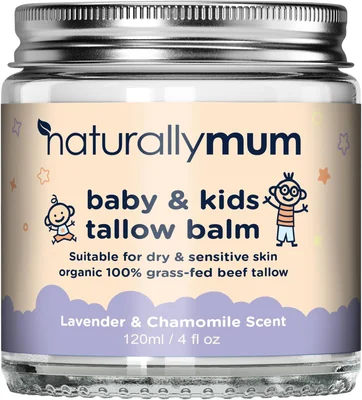
For parents who prefer a completely natural option, a grass-fed tallow balm like this one from Naturally Mum works beautifully as a massage medium. It melts on contact with warm skin and is gentle enough for newborns with eczema-prone skin.
Reading Your Baby's Cues
This is the part that matters more than any technique. Your baby will tell you whether they are enjoying it, and you need to listen.
Good signs: relaxed body, eye contact, cooing, smiling, still and calm limbs. These mean keep going, you are doing brilliantly.
Time to stop signs: turning their head away, arching their back, crying, stiffening their body, pushing your hands away. None of these mean you have done something wrong. They just mean right now is not the right moment. Try again tomorrow. 💛
When to Skip It
Do not massage your baby if they have a fever, a skin infection, a rash you have not had checked, or if they have had vaccinations in the last 48 hours (the injection site may be tender). If your baby was premature or has any medical conditions, check with your GP or health visitor before starting.
Also skip it if you are feeling stressed or rushed. Babies are remarkably good at absorbing the mood of the person holding them. A massage done through gritted teeth benefits nobody. Come back to it when you are both in a better place.
Making It a Habit
You do not need to commit to a full-body massage every single day. Even five minutes of leg and foot strokes before a nappy change counts. The consistency matters more than the duration.
Many parents find it slots naturally into the bedtime routine, between bath and pyjamas. The warm skin, the dim lighting, the gentle touch, it all signals to your baby that sleep is coming. And on the nights when it genuinely helps them drift off faster, you will wonder why nobody told you about this sooner.
If you are building your baby wishlist and want to include some massage-friendly skincare, you can add these to your BubsNest registry so the people who keep asking "what do you need?" finally have an answer.
Because sometimes the simplest things, warm hands, a quiet room, ten minutes of undivided attention, are the ones that make the biggest difference. And your baby already thinks your hands are magic. You are just proving them right.
Ready to Create Your Baby Registry?
Start your free baby registry today and share it with friends and family.
Get Started Free