Baby Naps, Decoded: How Many, How Long, and What to Do When They Won’t
Your honest guide to baby naps by age, from chaotic newborn catnaps to structured toddler routines, plus what actually helps when your little one refuses to sleep.
Every baby book says the same thing: newborns sleep 14 to 17 hours a day. What they conveniently leave out is that those hours arrive in 45-minute fragments, often while you're cradling a tiny human at a very specific angle on the sofa because that is the only position they will tolerate. Welcome to naps.
Naps are the backbone of your baby's day, and yet they are somehow the most unpredictable part of early parenthood. One day your little one sleeps for two blissful hours in the cot. The next, they scream through every attempt and then fall asleep in the car on the way to the supermarket. There is no conspiracy. There is just baby logic, and it does make sense once you crack the code. 😴
This guide covers what naps actually look like at each stage, why babies fight them, and the handful of things that genuinely help. No colour-coded schedules, no guilt trips, just the stuff that works.
How Many Naps Does My Baby Need?
The short answer: it depends on their age. The longer answer: it depends on their age, their temperament, what they had for breakfast, and whether Mercury is in retrograde. But here is a rough map to orient yourself.
0 to 3 months: Newborns nap constantly, sometimes four to six times a day, sometimes more. "Nap" is a generous word for it. They drift in and out of sleep on their own timetable, and the gaps between naps can be as short as 45 minutes. This is normal. You are not doing anything wrong.
3 to 6 months: Three to four naps, with one or two starting to stretch longer. You might notice a pattern forming. You might not. Both are fine.
6 to 9 months: Most babies settle into two or three naps. The morning nap tends to be the most reliable. The late afternoon catnap starts to feel like a hostage negotiation, and that is a sign it might be on its way out.
9 to 15 months: Two naps, usually a morning and an afternoon. This is often called the golden stretch because it is the most predictable nap phase you will get. Enjoy it.
15 to 18 months: The dreaded two-to-one transition. Your toddler drops from two naps to one longer midday nap. This transition can take weeks. Some days they need two naps. Some days one is enough. You will spend a lot of time staring at the clock and guessing.
18 months to 3 years: One nap, usually after lunch. It might last one hour, it might last two and a half. Eventually it will disappear entirely, and you will mourn it more than you expect.
Wake Windows: The Bit That Actually Helps
If you take one thing from this post, let it be this: most nap problems come down to timing, not technique.
A wake window is simply how long your baby can comfortably stay awake between sleeps. Put them down too early and they are not tired enough to settle. Leave it too late and they tip into overtired territory, where their body floods with cortisol and adrenaline, making it harder to fall asleep. It is deeply unfair, but that is how it works.
Rough wake windows by age:
- 0 to 6 weeks: 45 to 60 minutes
- 6 to 12 weeks: 60 to 90 minutes
- 3 to 5 months: 1.5 to 2.5 hours
- 6 to 8 months: 2 to 3 hours
- 9 to 12 months: 2.5 to 3.5 hours
- 12 to 18 months: 3 to 4 hours
- 18 months+: 4.5 to 6 hours
These are ranges, not rules. Your baby is a person, not a spreadsheet. Watch for sleepy cues (yawning, rubbing eyes, staring into the middle distance like a philosopher) and use the windows as a guide, not a stopwatch.
Why Your Baby Fights Naps
If your baby screams the moment you try to put them down, congratulations, you have a completely normal baby. Nap resistance is almost always one of these things:
They are overtired. This is the number one culprit. An overtired baby gets a second wind of stress hormones that makes them wired and cranky. They look awake, but they desperately need sleep. The fix: bring the nap earlier by 15 to 20 minutes tomorrow.
They are undertired. Less common, but it happens. If your baby lies in the cot happily babbling for 20 minutes before fussing, they probably were not ready. The fix: push the wake window out by 15 minutes.
They are going through a developmental leap. Rolling, crawling, pulling up, learning to wave. Every new skill sends sleep temporarily sideways. This resolves on its own. You just have to survive it.
The environment is working against you. Too bright, too quiet (yes, too quiet), too warm. More on this next.
Building a Nap-Friendly Environment
You do not need to turn your house into a sensory deprivation chamber, but a few tweaks make a measurable difference.
Darkness matters. Melatonin production is light-sensitive, even in tiny babies. Blackout blinds or even a dark blanket draped over the curtain rail can transform a bright room into a sleepy one. This is especially useful for morning and late-afternoon naps when sunlight is strongest.
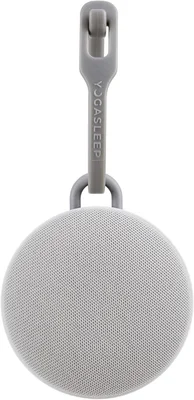
White noise is your friend. Babies spent nine months listening to the constant whoosh of your circulatory system. Total silence is actually strange to them. A portable sound machine that clips to the cot or pram means you can recreate that comforting backdrop wherever you are, whether that is the nursery, the living room, or grandma's spare bedroom.

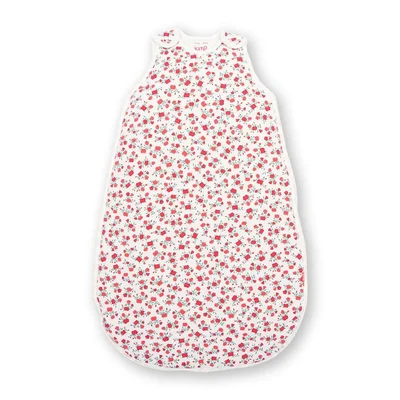
Temperature check. A room between 16 and 20 degrees is ideal. If you are comfortable in a t-shirt, your baby is probably comfortable in a vest and a sleep bag. Speaking of which, a consistent sleep bag becomes a powerful nap cue over time. Your baby starts to associate the feel of the bag with sleep, which is exactly the kind of Pavlovian shortcut you need at this stage.

Settling Techniques That Actually Work
There is no single method that works for every baby. Anyone who tells you otherwise is selling something. But here are approaches that genuinely help, matched to age.
Newborns (0 to 3 months): Swaddling is magic for most babies this age. The startle reflex (where their arms fly out and wake them up) is one of the biggest nap killers, and a good swaddle keeps it contained. Pair a snug swaddle with gentle rocking or shushing and you have covered about 80% of what a newborn needs to drift off. 😌

3 to 6 months: This is the transition zone. Some babies start settling with less hands-on help. Others still need rocking, feeding, or holding. Both are completely fine. If you want to encourage more independent settling, try putting them down drowsy and staying nearby with a hand on their chest. If it does not work today, try again next week.
6 months and beyond: By now most babies can learn to fall asleep with less intervention, if they are in the right conditions (dark room, white noise, right timing). A short wind-down routine helps: nappy change, sleep bag on, a quick cuddle, then into the cot. Keep it boring. Save the fun for after the nap.
Contact Naps: You Are Not Creating a Bad Habit
Let us address the elephant on the sofa. Your baby falls asleep on you. Every single time. And you are worried that you are "making a rod for your own back."
You are not. Contact naps are biologically normal. Your baby is hardwired to sleep close to you because, from an evolutionary standpoint, being alone was dangerous. They are not manipulating you. They are being a baby.
That said, if contact naps are making your life difficult, it is perfectly reasonable to start offering the cot as an alternative. Try for cot naps when your baby seems most settled (usually the first nap of the day) and let the others happen wherever they happen. Progress does not have to be all-or-nothing.
A video monitor can take the edge off this transition. When your baby is napping in the cot while you are in another room, being able to glance at a screen rather than tiptoeing to the door every five minutes makes a real difference to your peace of mind.

When Naps Go Completely Off the Rails
There will be days, sometimes weeks, when naps just do not happen the way you expect. Sleep regressions, illness, teething, travel, clocks changing, a loud delivery driver, an older sibling shouting "MUMMY!" outside the nursery door. Life is not a controlled experiment.
When everything feels chaotic, fall back on the basics:
- Watch wake windows, not the clock
- Keep the room dark and the noise consistent
- Offer the cot first, but do not fight a battle you will not win
- Accept the car nap, the pram nap, the sling nap. A nap is a nap
- If today was a disaster, tomorrow is a blank slate
One bad nap day does not undo weeks of progress. Babies are resilient. You are too, even when it does not feel like it.
The Big Picture
Naps change constantly. Just when you think you have figured out the pattern, your baby will drop a nap, extend a wake window, or decide that the cot is lava. That is not a failure. That is development happening in real time.
The parents who seem to have it all figured out? They are winging it too. They have just got very good at looking calm while internally Googling "9-month-old suddenly hates morning nap" for the third time this week.
You are doing a brilliant job. Even on the days when the only nap that happened was the one in the trolley at Sainsbury's. 💛
If you are building your baby kit and want to keep track of what you still need for the sleep setup, pop everything on your BubsNest wishlist so family and friends can help out with the essentials.
Ready to Create Your Baby Registry?
Start your free baby registry today and share it with friends and family.
Get Started Free