Baby-Proofing Your Home: The Room-by-Room Guide That Skips the Paranoia
Your baby just figured out how to move. Here is your practical, room-by-room guide to making your home safe without bubble-wrapping everything.
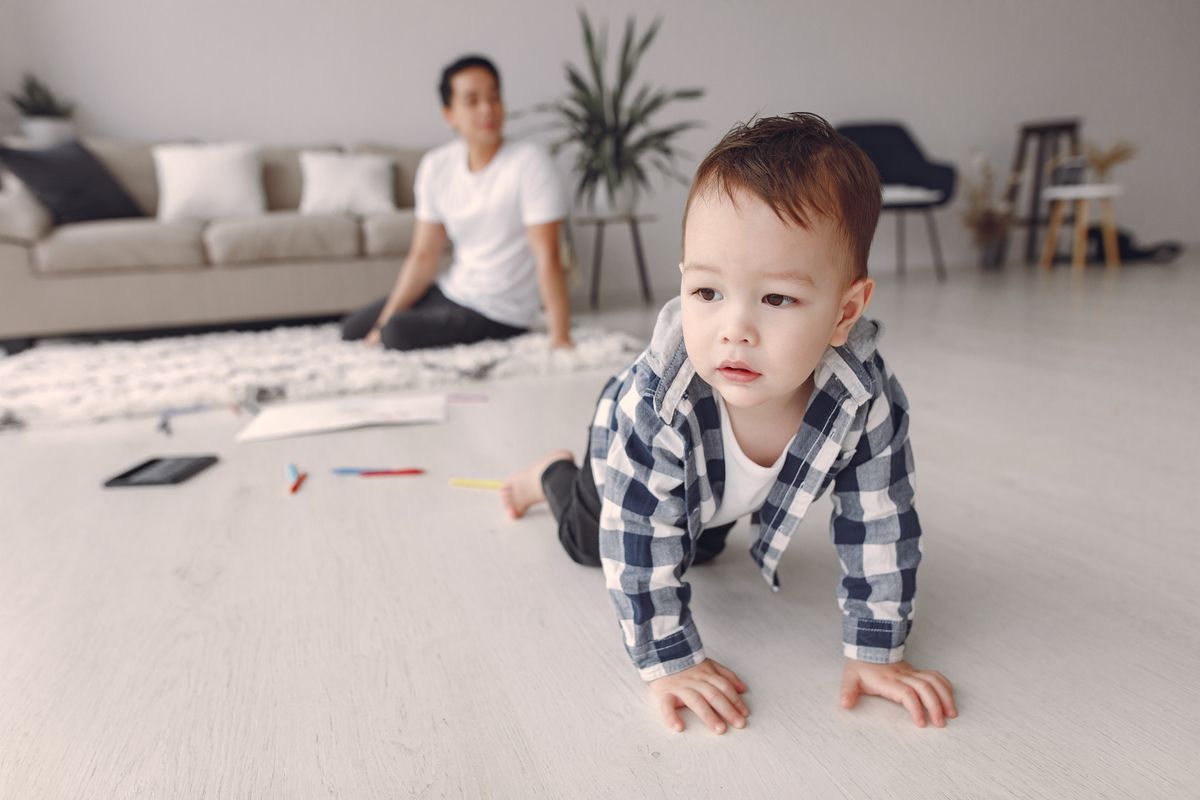
One minute they are lying on a play mat, staring at their own hands like they have just discovered the meaning of life. The next, they are commando-crawling across the living room at alarming speed, one determined fist reaching for the cable you swore was tucked away behind the TV unit.
If this scene feels familiar, congratulations: you have entered the baby-proofing era. And before you spiral into buying every gadget on the internet, take a breath. Most homes need about ten sensible changes, not a full security overhaul. 🛡️
Here is your room-by-room guide to making your space safe for a mobile baby, without turning your house into a padded cell.
When Should You Start Baby-Proofing?
The short answer: before you think you need to. Babies go from stationary to mobile shockingly fast, sometimes within a single week. Most parents start thinking about it around five to six months, but crawling can begin anywhere from six to ten months, and some babies skip straight to pulling themselves up on furniture.
A good rule of thumb is to get the essentials in place by the time your baby can roll consistently. That gives you a buffer before the full-speed commando crawl kicks in. Trying to install stair gates while simultaneously sprinting after a nine-month-old is an experience best avoided.
The Living Room
This is where most babies spend their waking hours, so it is usually the first room that needs attention. Get down on your hands and knees (yes, literally) and look at the room from your baby's eye level. You will be amazed at what suddenly looks dangerous, interesting, or both.
The essentials:
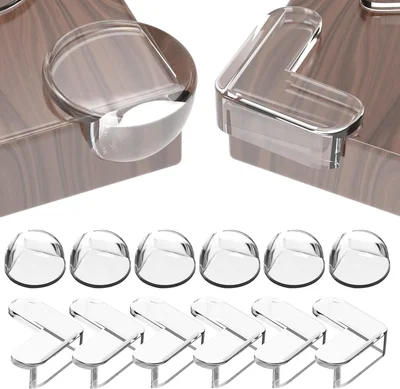
- Cover sharp furniture edges, especially coffee tables and TV units. Those corners are exactly at baby-head height.
- Secure your TV to the wall or the stand with an anti-tip strap. Flat-screens are top-heavy and can topple.
- Tuck cables behind furniture or use cable tidies. Trailing wires are irresistible to grabby hands.
- Move breakables and small objects off low shelves. Anything that fits through a toilet roll tube is a choking hazard.

If your living room doubles as the main play space (and whose does not?), consider setting up a dedicated safe zone. A playpen gives you somewhere to put baby down for two minutes while you answer the door or deal with a delivery, without worrying about what they are getting into.
The Kitchen
The kitchen is genuinely the highest-risk room in the house for a mobile baby. Hot surfaces, sharp utensils, heavy pans, cleaning products under the sink. It is basically a hazard museum.
Start here:
- Fit locks on any low cupboards or drawers that contain cleaning products, sharp knives, or anything breakable. Magnetic locks are brilliant because they are invisible from the outside and you can unlock them one-handed.
- Move cleaning products up high, not just behind a locked door. Determined toddlers can be surprisingly good at defeating child locks.
- Use the back burners when cooking and turn pan handles inward.
- Keep the dishwasher closed when you are not loading it. Open dishwashers are full of knives and hot steam.
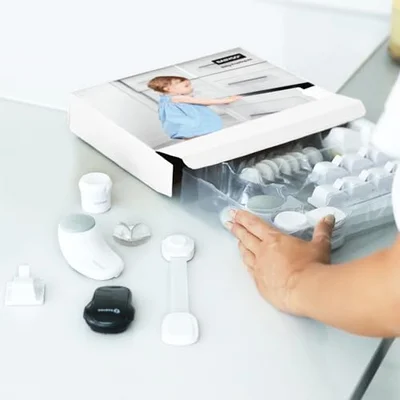
One thing parents often forget: the kitchen bin. Babies love bins. It is like a treasure chest of disgusting things they should not touch. A bin with a proper lid or one that can be put inside a locked cupboard saves a lot of gagging.
The Bathroom
Bathrooms are small, but they pack in a lot of risk. The combination of water, hard surfaces, and medicines makes them worth taking seriously.
Key changes:
- Keep the bathroom door closed or fit a handle cover your baby cannot open.
- Store medicines, razors, and toiletries in a high cabinet, not on the side of the bath.
- Use a non-slip bath mat every single time. Wet babies are slippery babies.
- Never leave water standing in the bath. Even a few centimetres of water is dangerous for a small child.
- Consider a toilet lock if your baby can pull themselves up. Toilet water is endlessly fascinating to toddlers, and the drowning risk is real.
The bathroom is the one room where you really do not need to overthink products. A closed door and some common-sense storage go a long way.
Stairs and Hallways
If you have stairs, a stair gate is not optional. It is the single most important piece of baby-proofing kit you will buy. You need one at the top and one at the bottom.
Top of the stairs: Use a wall-mounted (screw-fixed) gate here. Pressure-fit gates can be pushed out of place by a determined toddler leaning against them, and at the top of the stairs that is not a risk worth taking.
Bottom of the stairs: A pressure-fit gate works well here. It is easy to install, does not damage your walls, and can be moved when you no longer need it.
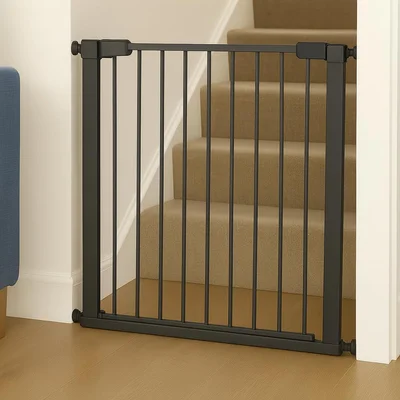
A common mistake: buying a gate with a step-over bar at the bottom. You will trip on it at 2am carrying a sleeping baby. Look for one you can step through cleanly.
The Nursery and Bedrooms
The nursery feels like it should be safe already, but once your baby can stand in the cot and reach the shelf above, things change.
Quick checklist:
- Anchor any freestanding furniture (bookshelves, wardrobes, chest of drawers) to the wall. Tip-overs are one of the most serious furniture-related injuries in young children.
- Keep the cot clear of soft toys, pillows, and bumpers. Safe sleep guidance has not changed on this.
- Move the cot away from windows, blinds, and anything with cords or strings.
- Fit window restrictors on any window your baby could reach. Standard handles are easy for toddlers to turn.
Blind cords deserve a special mention. They are a strangulation risk that is easy to overlook, especially in older houses with original fittings. Either replace pull-cord blinds with cordless versions or fit a cord cleat high on the wall.
What You Can Actually Skip
Baby-proofing has become a bit of an industry, and not everything on those "100-point safety checklists" is necessary. Here is what you probably do not need: 🙊
- Socket covers. Controversial, but hear us out. UK sockets are already designed with built-in shutters that prevent anything being pushed into the live pins. Some safety experts, including the Royal Institution of Chartered Surveyors, argue that socket covers can actually override this safety feature. If your sockets are modern and BS-compliant, they are already safe.
- Foam edge bumpers on every surface. Focus on the low, sharp corners your baby is likely to fall against. You do not need to cover every edge in the house.
- Oven door locks (unless your baby is regularly unsupervised in the kitchen, which is a bigger issue).
- Doorstop finger guards on every door. One or two on the doors your baby uses most? Useful. On every door in the house? Overkill.
The Crawl-Around Test
Once you have done your room-by-room sweep, here is the best test: get down on your hands and knees again and crawl through each room your baby has access to. Look up. Look under. Pull on things. Put your face next to the low shelves.
If you find yourself thinking "I would definitely grab that," your baby will too. Move it, lock it, or secure it.
Baby-proofing does not have to be expensive or exhausting. A few well-chosen products, some furniture rearranging, and a healthy dose of "what would a tiny chaos agent do with this?" will get you most of the way there. Your home can still look like a home. It just needs to be a home where the sharpest, heaviest, and most poisonous things are out of reach.
And if you are building your baby registry and want to add safety essentials to the list, you can set one up at BubsNest and share it with family who are asking what to buy. Because stair gates and cupboard locks might not be the most exciting gifts, but they are the ones you will use every single day. ❤️
Ready to Create Your Baby Registry?
Start your free baby registry today and share it with friends and family.
Get Started Free