Your Baby's Sleep Environment: What Actually Helps Them (and You) Sleep Better
Blackout blinds, white noise machines, night lights, room thermometers - here is what genuinely makes a difference to your baby's sleep, and what is just expensive clutter.
You walk into a friend's nursery and it looks like mission control. A star projector spinning constellations across the ceiling. A white noise machine shaped like an owl. A night light that cycles through seven colours. A separate sound machine playing whale songs. A humidity monitor with an app that sends push notifications to their phone. And their baby? Screaming.
Here is the thing about baby sleep environments: less is almost always more. Your newborn does not need a light show. They do not need an app telling you the humidity is 0.3% below optimal. What they need is darkness, a consistent temperature, and maybe some gentle background noise. That is genuinely it. The rest is marketing dressed up as parenting advice. 🌙
Darkness: Your Secret Weapon
Babies are not born knowing the difference between day and night. Their circadian rhythm, the internal clock that tells their body when to sleep and when to wake, takes roughly 12 weeks to develop. Until then, light is one of the biggest signals you can use to help that clock along.
During the day, let the light flood in. Open the curtains, go for walks, let your baby nap in natural light for the first few weeks. This helps their brain start to figure out the pattern.
At night (and for longer naps once they hit about 8 weeks), you want the room as dark as possible. Not "dim fairy lights" dark. Proper, can't-see-your-hand-in-front-of-your-face dark. The hormone melatonin, which drives sleepiness, is suppressed by light. Even a sliver of streetlight through a gap in the curtains can make a difference.
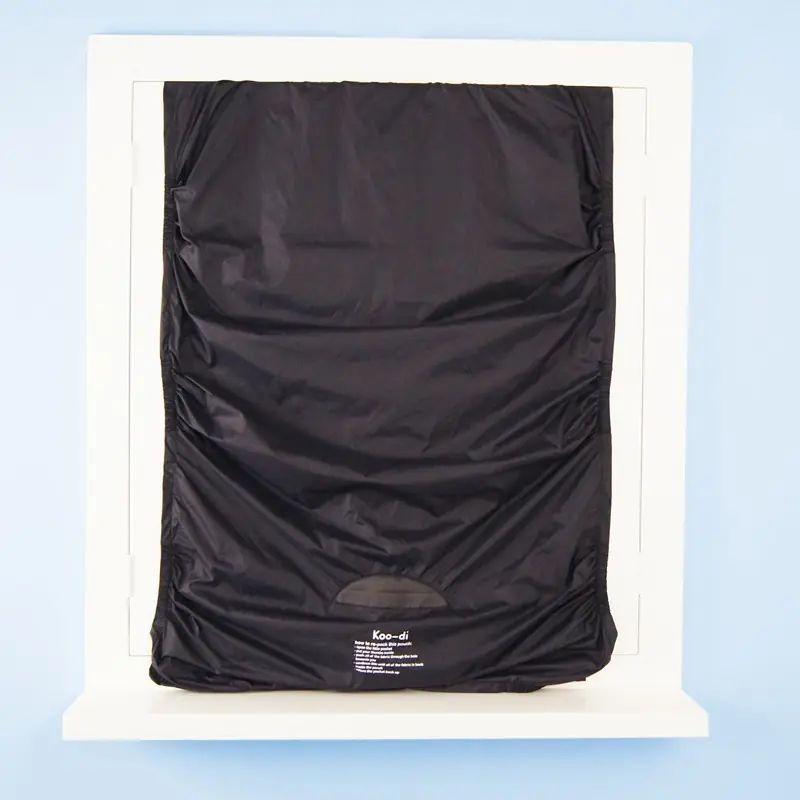
If your nursery curtains are not cutting it, a portable blackout blind is one of the most useful purchases you will make. They stick to the window with suction cups, block out virtually all light, and you can take them with you when you travel. Game changer for summer evenings when the sun does not set until half nine.

Sound: Why White Noise Actually Works
Think about what your baby has been listening to for the past nine months. Not silence. The womb is surprisingly loud, roughly 80 to 90 decibels of constant whooshing, which is about as loud as a vacuum cleaner. So when you tiptoe around the house and shush anyone who dares breathe too loudly, you are actually creating an environment that feels weirdly quiet to your newborn.
White noise works because it mimics that constant, predictable sound. It also masks the sudden noises that startle babies awake, the dog barking, a door closing, your partner's truly impressive sneeze from the next room.
A few things worth knowing:
- Keep the volume at about 50 to 65 decibels (roughly the level of a running shower). Louder than that and you risk affecting their hearing over time.
- Place the machine at least a metre from the cot, never right next to their head.
- Continuous white noise is better than loops that have a noticeable restart point. Babies notice the gap.
- You do not need to use it forever. Most families naturally phase it out between 6 and 12 months.
A good sound machine with a built-in night light kills two birds with one stone. You get the white noise for settling and a soft glow for those bleary-eyed night feeds without having to fumble for a lamp. 💤
Night Lights: Less Is More
Here is where most people go wrong. They buy a night light that is too bright, too colourful, or too stimulating, and then wonder why their baby treats 2am like party time.
The ideal night light for a nursery has three qualities. It should be dim enough that it does not suppress melatonin production. It should be warm-toned (amber or soft orange, never blue or white, which mimic daylight). And it should be simple, no moving patterns, no colour cycling, no disco mode.
You need just enough light to see what you are doing during a night feed or nappy change without fully waking yourself or your baby. That is the entire job description of a nursery night light. If it does more than that, it is probably doing too much.
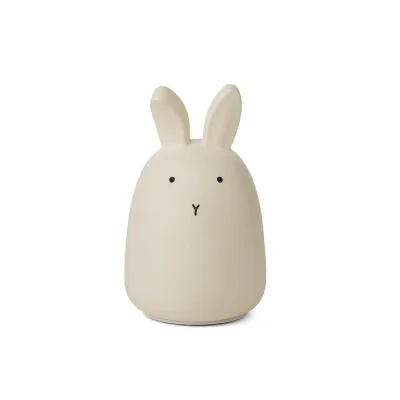
A standalone night light with a gentle glow can sit on a shelf or bedside table and do its one job beautifully. Some of the nicest ones double as a cute nursery accessory during the day.
Temperature: The 16 to 20 Degree Sweet Spot
Room temperature is one of those things that sounds boring until you realise how much it affects sleep quality, yours included. The recommended range for a baby's room is 16 to 20 degrees Celsius. Most sleep experts suggest aiming for about 18 degrees as the sweet spot.
Too warm is a bigger concern than too cold. Overheating is a risk factor for SIDS, and babies are not great at regulating their own temperature in the early months. If you are sweating in the nursery, it is too warm for them too.
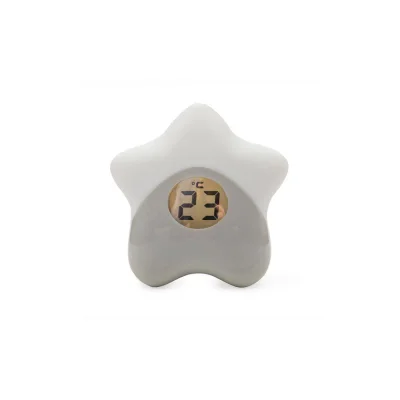
A room thermometer takes the guesswork out of it. You do not need anything connected to an app or linked to your smart home system. A simple one that shows you the current temperature at a glance is perfect. Some change colour to let you know if the room is too warm or too cool, which is genuinely helpful at 3am when your brain is running on about four hours of broken sleep.
Quick temperature dressing guide:
- 24+ degrees: Just a vest or nappy
- 22 to 24 degrees: A vest and a 0.5 TOG sleep bag
- 20 to 22 degrees: A vest and a 1.0 TOG sleep bag
- 18 to 20 degrees: A sleepsuit and a 1.0 to 2.5 TOG sleep bag
- 16 to 18 degrees: A vest, sleepsuit, and a 2.5 TOG sleep bag
What You Can Skip
Because someone is going to ask: no, you do not need a star projector. Or a sleep trainer clock for a newborn (those are brilliant for toddlers, completely pointless for babies under 18 months). Or a smart monitor that tracks breathing patterns and sends your anxiety levels through the roof every time your baby rolls over.
You also do not need to play classical music, buy a special "sleep spray" for the cot sheets, or invest in a crib vibrator that promises to mimic the motion of a car journey. Some of these things work for some babies. None of them are essential. And the more gadgets you add, the more things there are to malfunction at the worst possible moment.
The Minimalist Sleep Setup
If you are starting from scratch and want to know exactly what to put in the room, here is the short list:
- A safe sleep space (cot, cot bed, or bedside crib with a firm, flat mattress)
- A blackout blind or curtains that actually block light
- A room thermometer
- A dim, warm-toned night light
- A white noise machine (optional, but most parents swear by it)
- Sleep bags in appropriate TOGs for the season
That is it. Six things. Everything else is a bonus, not a necessity. Your baby does not need the nursery to be a sensory experience. They need it to be boring, dark, and a comfortable temperature. Boring is the goal. Boring means sleep. And sleep, for everyone in the house, is the actual goal. 🌟
Want to build your nursery wishlist with the essentials that actually matter? Start your BubsNest registry and share it with friends and family who want to gift you something you will genuinely use every single night.
Ready to Create Your Baby Registry?
Start your free baby registry today and share it with friends and family.
Get Started Free