Babywearing for Beginners: How to Choose Your First Carrier (Without Overthinking It)
Stretchy wraps, structured carriers, ring slings - the options are overwhelming. Here is a no-nonsense guide to picking the right one for you and your baby.
Every parent you know who babywears will tell you the same thing: "I wish I'd started sooner." Every parent who tried and gave up will say: "I could never get the hang of it." The difference between those two groups almost always comes down to one thing, and it is not skill, strength, or some magical baby-whispering gene. It is whether they picked the right carrier for their stage.
The babywearing world can feel impossibly complicated from the outside. Stretchy wraps, woven wraps, structured carriers, ring slings, half-buckles, meh dais - the terminology alone is enough to make you close the browser tab and stick with the pushchair. But here is the good news: you do not need to learn all of it. You just need to find the one that works for you right now. And that is genuinely not as hard as the internet makes it look.
Why Bother With Babywearing at All?
Before we get into the how, a quick word on the why, because it matters more than most gear decisions you will make.
Babywearing is not just a convenience hack (although having two free hands while your baby naps on your chest is genuinely life-changing). There is solid evidence that carried babies cry less. One study found that babies who were carried for an extra two hours a day cried 43% less overall and 51% less in the evening fussy period. That alone should make every sleep-deprived parent sit up and pay attention. 🧸
It also helps with bonding, especially in those early weeks when everything feels a bit surreal. Your baby can hear your heartbeat, feel your warmth, and smell you, all of which regulate their nervous system and help them feel safe. For parents recovering from a difficult birth, or for partners who want to build that physical closeness early on, a carrier can be transformative.
And practically? You can actually eat a meal. Walk the dog. Hang the washing. Navigate a crowded shop without wrestling a pushchair through narrow aisles. Summer walks, country paths, cobbled streets, flights of stairs - a carrier handles them all without breaking a sweat.
The Three Types You Actually Need to Know About
Forget the 47 sub-categories. For a beginner, there are really only three options worth considering.
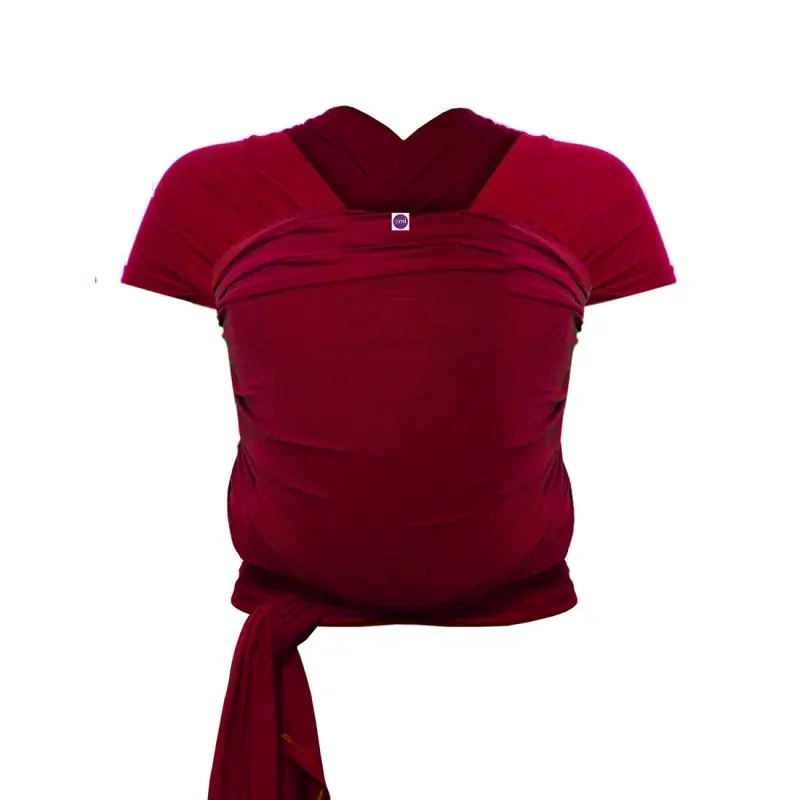
Stretchy wraps
These are long lengths of stretchy jersey fabric that you tie around yourself, then tuck baby into the front. They sound intimidating but most people nail the basic carry after two or three goes (YouTube is your friend here). Stretchy wraps are brilliant for newborns because the fabric moulds around tiny bodies and distributes weight beautifully across your shoulders and back.
The trade-off? They get too stretchy once your baby hits about 7-8kg, so they are really a newborn-to-four-months solution. But those are exactly the months when you need hands-free carrying the most, so they earn their keep.

Structured carriers (buckle carriers)
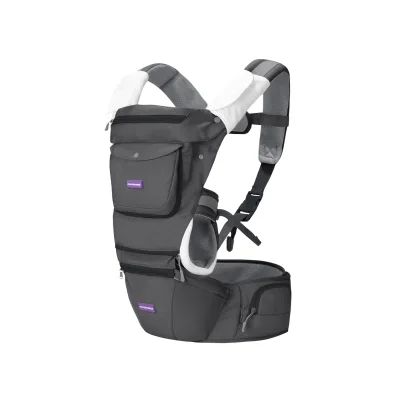
These are the ones with padded shoulder straps, a waistband, and buckle clips - think mini hiking backpack for your front. They are the easiest to get on and off quickly, which matters a lot when you are doing the school run with a toddler in tow and a baby who has just fallen asleep in the car seat.
Most structured carriers work from around 3.5kg (some with a newborn insert, some without) all the way up to toddlerhood. They are the Swiss army knife of carriers - not the most snuggly for a tiny newborn, but the most versatile across the whole first year and beyond.
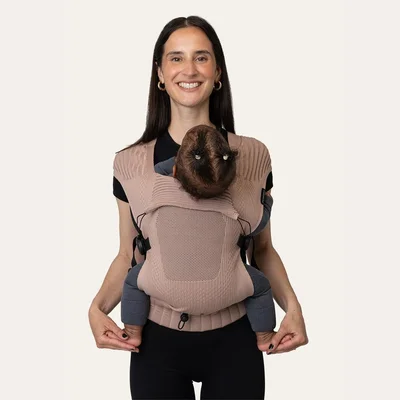

If you are after something at the premium end with seriously luxe fabrics, the Nuna CUDL LUXE is worth a look. Magnetic buckles, cashmere blend panel, and a newborn-ready design that skips the fiddly insert entirely.

Ring slings
A length of woven fabric threaded through two metal rings. Quick to put on, easy to adjust, and surprisingly supportive once you get the tension right. Ring slings are fantastic for quick ups and downs - popping into the shops, carrying baby on your hip when they are older, or calming a fussy baby when you just need them close for ten minutes.
They carry weight on one shoulder, so they are not ideal for long walks or heavy toddlers, but as a complement to a structured carrier they are hard to beat.
What to Look For (The Non-Negotiables)
Whatever type you choose, there are a few things that actually matter and a lot of things that do not.
Hip-healthy design. This is the big one. Your baby's legs should be in an M-position: knees higher than bum, thighs supported to the knee. This keeps the hip joints in their natural position while the sockets are still developing. Look for carriers acknowledged by the International Hip Dysplasia Institute. It is not a gimmick, it is genuinely important for your baby's skeletal development. 💚
Weight range. Check the minimum and maximum. Some structured carriers need a separate newborn insert under 3.5kg, others are newborn-ready from day one. If you are buying before baby arrives, a carrier that works from birth without extras will save you faffing later.
Climate. If you are buying in summer (or you run warm), look for mesh panels or breathable fabrics like bamboo. Babies overheat faster than adults, and a thick padded carrier in July will make both of you miserable. Stretchy wraps in bamboo blends tend to be cooler than cotton ones.
Adjustability. If two parents will be sharing the carrier, check how easy it is to swap between different body sizes. Some structured carriers adjust in seconds. Others require you to re-thread straps every time, which means in practice only one person uses it.
Things That Do Not Matter (Nearly as Much as You Think)
Colour and pattern - buy what you like, obviously, but do not agonise. You are going to be covered in dribble regardless.
Brand prestige - a mid-range carrier that fits your body well will outperform an expensive one that does not. Every body is different. If possible, try before you buy. Many local sling libraries offer try-on sessions for a few pounds, and they are staffed by trained babywearing consultants who can help you get the fit right.
Extra features like pockets, hoods, and storage pouches are nice but rarely the deciding factor. The hood is actually useful for sun and sleep support, so do not dismiss it entirely, but a missing pocket is not a dealbreaker.
Getting Started: Five Tips From Parents Who Have Been There
- Practice with a teddy first. Seriously. Tie that wrap around a stuffed bear before attempting it with a wriggly newborn. It takes the pressure off.
- Watch one tutorial, not twelve. Pick a single YouTube video for your specific carrier and follow it step by step. Watching multiple videos from different instructors will confuse you.
- Start at home. Your first carry should be in your living room, not in the queue at the supermarket. Give yourself space to adjust and re-tie without an audience.
- The "tight enough" test. Once baby is in, bend forward slightly. If baby slumps or shifts, tighten up. You should be able to kiss the top of their head without straining your neck. That is the sweet spot.
- Give it three tries. Almost nobody loves their carrier the first time. The fabric feels weird, the buckles are unfamiliar, and you are convinced you are doing it wrong. By the third attempt, most parents wonder how they ever managed without it.
When to Level Up
Most parents start with either a stretchy wrap or a structured carrier and find that one type covers 80% of their carrying needs. As your baby grows, you might find yourself wanting a second option for different situations - a ring sling for quick carries around the house, or a toddler carrier with extra seat width for older babies who want to face outward and watch the world go by.
There is no rush, though. Babywearing is not a hobby that requires a collection (even if Instagram makes it look that way). One good carrier that fits your body, suits your baby's age, and feels comfortable for both of you is genuinely all you need.
And if your first choice does not work out? That is completely normal. Sell it, swap it at a sling library, or pass it on. The right carrier is out there, and when you find it, you will wonder why you waited so long to strap that baby on and just go. 🌿
Ready to start building your baby kit? Pop your favourites onto your BubsNest registry and let friends and family help tick them off.
Ready to Create Your Baby Registry?
Start your free baby registry today and share it with friends and family.
Get Started Free