Eco-Friendly Baby: 7 Small Swaps That Save Money and the Planet
Going green with a baby does not mean cloth nappies or nothing. These seven small, realistic swaps cut waste and save money without adding to your workload.
There is a myth that going green with a baby means cloth nappies, homemade purees, and a level of organisation that nobody with a newborn actually possesses. If that is putting you off, let me quietly close that particular door.
The truth is, most eco-friendly baby swaps are not about perfection. They are about picking a handful of easy wins that reduce waste, save you money over the first year, and don't require you to hand-wash anything at 3am. Some of the biggest ones cost less than the disposable version they replace.
Here are seven swaps that genuinely work, ranked by effort level from "barely noticeable" to "mildly ambitious." Pick one or pick all seven. No judgment either way. 🌿
1. Reusable Wipes Instead of Disposables
This is the single easiest eco swap you can make, and possibly the one that saves the most money. A pack of 25 bamboo washcloths costs around the same as three packs of disposable wipes, and they last for years.
The routine is simpler than it sounds: keep a stack by the changing station, use them with water (or a squirt of a gentle cleanser), toss them in a small wet bag when they're dirty, then throw the whole lot in the washing machine with your regular laundry. That's it.
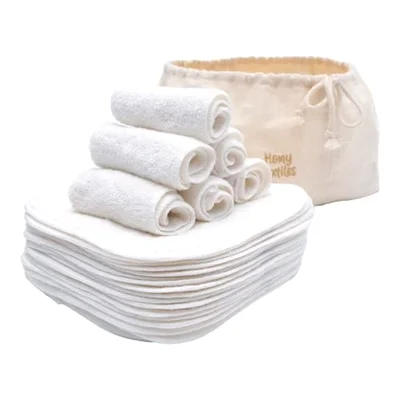

The average family uses around 11,000 baby wipes before their child is potty trained. Even if you only switch for home use and keep disposables in your changing bag, you will halve that number without any extra effort.
2. Organic Muslins and Blankets
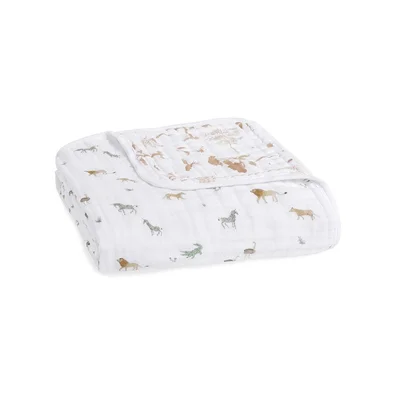
Muslins are the one baby item you will use for absolutely everything: burping, dribbling, impromptu shade covers, emergency bibs, peekaboo props, and occasionally their actual intended purpose. Because they get used so heavily, choosing organic cotton means less pesticide exposure against your baby's skin over hundreds of washes.
Organic muslins cost a few pounds more per pack than conventional ones, but they tend to be thicker and softer, and they hold up better in the wash. The per-use cost is genuinely tiny when you consider how many times you'll reach for them.
3. Second-Hand Clothes (Yes, Really)
Babies grow out of clothes at a speed that borders on offensive. A newborn outfit might get worn three times before it is too small. Buying second-hand for the first year is one of the greenest things you can do, and it is also spectacularly good for your bank balance.
Charity shops, NCT sales, Facebook Marketplace, and apps like Vinted are full of barely-worn baby clothes in excellent condition. Many still have the tags on. Your baby genuinely does not care whether their sleepsuit was purchased from a shop or a church hall.
The exception: always buy car seats, mattresses, and safety-critical items new. Everything else is fair game.
4. An Organic Cotton Bath Towel
Bath time happens every day (or every other day, depending on your school of thought and the state of the banana situation). A hooded towel made from organic cotton or bamboo is softer on newborn skin, dries faster between uses, and avoids the chemical finishes sometimes used in conventional towels.

Two or three good-quality organic towels will see you through the entire baby stage. They also make genuinely lovely gifts if anyone asks what to buy.
5. Fewer (but Better) Toys
Here is a liberating fact: babies under six months are more interested in your face, your voice, and a crinkly bit of paper than any toy you could buy them. When they do start wanting toys, wooden and natural-material options tend to last longer, feel nicer, and don't end up in a landfill when your child moves on.
The toy mountain builds up faster than you expect, especially once grandparents and well-meaning friends get involved. A gentle "we're keeping things simple" early on saves a lot of plastic coming through the door. You can also add specific toys to your BubsNest registry so people buy things you've actually chosen.
6. A Smarter Nappy Bin
If you're using disposable nappies (and most parents do, at least some of the time), the bin they go in matters more than you might think. Standard nappy bins use plastic cassettes that add to your ongoing costs and your plastic footprint.
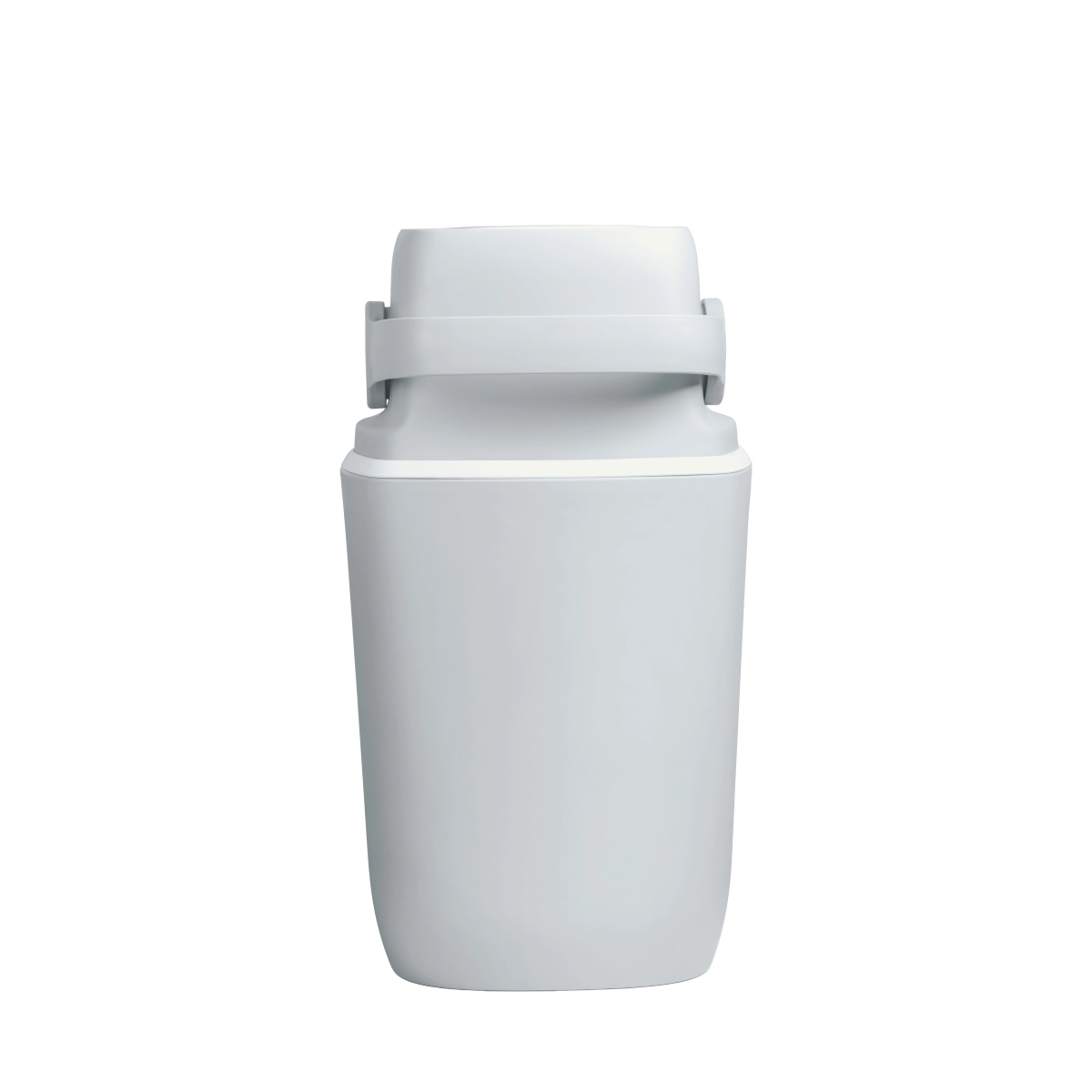

Eco-designed nappy bins use fewer (or no) proprietary refills and focus on odour control through the bin design itself rather than wrapping each nappy in a tube of scented plastic. The running costs are lower and there is less plastic going to landfill on top of the nappies themselves.
7. Refillable Toiletries
Baby wash, shampoo, nappy cream, laundry detergent: the number of plastic bottles a baby generates in their first year is startling. Switching to refillable or concentrated versions of your most-used products is a quiet but effective swap.
Several brands now offer refill pouches that use up to 80% less plastic than buying a new bottle each time. Some zero-waste shops also sell baby-safe products by weight, so you can bring your own container.
Start with the product you get through fastest (usually baby wash or laundry liquid) and see how it feels. One swap at a time is absolutely fine.
The Guilt-Free Part
Let me say this clearly: using disposable nappies does not make you a bad parent. Using formula does not make you a bad parent. Buying a plastic toy because it was the only thing that kept your baby quiet in the supermarket does not make you a bad parent. 🌱
Eco-friendly parenting is not about doing everything perfectly. It is about picking the swaps that fit into your actual life, not the life you see on Instagram, and doing them consistently enough that they add up. Three small changes that stick beat twenty ambitious ones that last a week.
If every family in the UK switched to reusable wipes at home, we would keep over 8 billion single-use wipes out of landfill every year. That is a lot of impact from a very small change.
Where to Start
If you are feeling overwhelmed, just pick one swap from this list and try it for a month. Reusable wipes are the easiest entry point because the cost saving is immediate and the effort is minimal.
Add your favourite eco-friendly baby products to your registry on BubsNest and let friends and family support the greener choices. Sometimes the best gift is a set of bamboo washcloths and a pack of organic muslins, and now you know why.
Ready to Create Your Baby Registry?
Start your free baby registry today and share it with friends and family.
Get Started Free