Flying with a Baby: The Complete Survival Guide for Your First Flight
Everything you need to know about flying with a baby, from booking the right seats to surviving the descent. Practical tips from parents who have done it (and lived to tell the tale).
Picture this: you are standing in the departure lounge, baby strapped to your chest, nappy bag over one shoulder, boarding pass clenched between your teeth, and a stranger is giving you That Look. The one that says "please don't sit near me."
Deep breath. You are going to be absolutely fine. Thousands of parents fly with babies every single day, and most of them land at the other end with their sanity intact. The secret is not some magical baby-whispering technique. It is just a bit of planning, the right kit, and lowering your expectations to somewhere around "we all survived." ✈️
Before You Book: The Stuff Nobody Mentions
Most airlines let babies fly from two weeks old, though some require a letter from your GP if your little one is under 14 days. Worth checking before you get excited about that deal to Malaga.
Here is the booking tip that changes everything: phone the airline directly after booking and request a bassinet seat. These are bulkhead rows with a fold-down cot that attaches to the wall, and they are free on most long-haul flights. There is usually a weight limit of around 11kg, so they work brilliantly for babies under about eight months.
For short-haul flights where bassinets are not an option, book a window seat. You get a wall to lean against during feeds, slightly more privacy, and your baby can stare at the clouds instead of the person across the aisle.
One more thing: if you are flying with a partner, do not sit in the same row with another passenger between you. Book the window and aisle seats. On a flight that is not full, the middle seat often stays empty, giving you a whole row to yourselves. If someone does book it, they will happily swap for the aisle.
What to Pack in Your Carry-On
Forget everything you have read about packing light. Your carry-on bag for a flight with a baby needs to be a carefully curated survival kit. Here is what actually earns its space:
- Nappies: Pack double what you think you will need. Delays happen, and running out of nappies at 35,000 feet is nobody's idea of fun.
- A portable changing mat: Airplane changing tables are tiny and not exactly luxurious. Having your own mat makes the whole experience marginally less grim.
- Nappy bags: Sealable ones. The person behind you will thank you.
- A change of clothes for baby AND you. A nappy blowout at altitude is a rite of passage. Wearing someone else's lunch for three hours is optional.
- Muslins: At least three. They are a blanket, a bib, a breastfeeding cover, a sunshade, a burp cloth, and an emergency puppet show all in one.
- Milk or a dummy for take-off and landing: Sucking helps equalise ear pressure. More on this below.
- A familiar toy or comforter: Now is not the time to introduce a brand new toy. Bring the one they already love.


The Pushchair Question
Most airlines let you take a pushchair to the gate, where it gets tagged and put in the hold. You collect it at the other end, either at the gate or at oversized baggage. This is genuinely useful because airports involve a lot of walking, and carrying a baby through security, duty free, and a 20-minute trek to gate 47B is no joke.
If you have a compact, lightweight pushchair that folds small, even better. Some fold down to cabin baggage size, meaning you can stow them in the overhead locker and have them waiting when you land. Check your airline's specific size limits before you travel, though, because they do vary.
No pushchair? A baby carrier works brilliantly in airports. Both hands free, baby is happy being close to you, and you can walk at a normal pace instead of steering around crowds. You will need to take baby out of the carrier to go through security, but that takes about 30 seconds.
Getting Through Security Without Losing It
Airport security with a baby is manageable once you know the rules. Here is the short version:
- Baby milk and food: You can take as much as you need in your carry-on, even over 100ml. It may need to be screened separately, so keep it somewhere accessible.
- Pushchairs and car seats: They go through the X-ray machine or get a manual check. Either way, you will need to fold and lift.
- Baby wearing: You will usually need to remove baby from the carrier so you can both go through the body scanner. Some airports let you walk through together, but assume you will need to take them out.
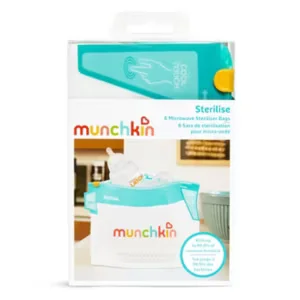
- Sterilised water: You can bring pre-boiled water for formula. Keep it in a clear container and expect it to be tested.
The golden rule: give yourself more time than you think. An extra hour sounds excessive until you are queuing with a screaming baby and a half-collapsed pushchair.
Ears, Tears, and Take-Off
The single biggest worry most parents have about flying with a baby is ear pressure. Babies cannot pop their ears the way adults can, and the pressure changes during ascent and descent can be genuinely uncomfortable for them.
The fix is surprisingly simple: get them sucking or swallowing during take-off and landing. A breastfeed, a bottle, or a dummy all work. If your baby is over six months and on solids, a snack works too. The key is timing. Start feeding a few minutes before the plane begins its descent, not when baby is already crying from the pressure.
How do you know when descent starts? Listen for the pilot's announcement, or watch for the seatbelt sign. On most flights, the descent begins about 20 to 30 minutes before landing. Your ears will usually tell you first.
If your baby does cry, try not to panic. Most passengers are far more understanding than you expect. And the ones who are not? They were probably going to be grumpy regardless.
Keeping Baby Entertained Mid-Flight
Newborns are the easiest flyers. They sleep, they feed, they sleep some more. If your baby is under three months, you might genuinely wonder what all the fuss was about.
Older babies, the ones who want to grab everything and have strong opinions about sitting still, are where it gets creative. A few things that work:
- Sticker books: Cheap, lightweight, surprisingly absorbing for a six-month-plus baby who has discovered the joy of peeling.
- A portable white noise machine: Absolute lifesaver for naps on a noisy flight. Clip it to the car seat or tuck it into the bassinet.
- Snacks: For babies on solids, a slow-release snack like a rice cake can buy you a solid 15 minutes of peace.
- Window shade: Up, down, up, down. Babies find this endlessly fascinating and it costs nothing.
- Your phone: No judgement. If 10 minutes of Hey Bear buys you enough calm to eat your sad aeroplane pasta, that is a win.


Feeding on a Flight
Breastfeeding on a plane is completely fine, and the window seat gives you as much privacy as you want. The cabin pressure can sometimes make letdown a bit faster, so have a muslin handy. If you are self-conscious, a nursing cover or a big scarf works, but honestly, nobody is paying as much attention as you think.
Bottle feeding takes a bit more planning. If you are using formula, pre-measured powder in a dispenser and a bottle of pre-boiled water is the simplest approach. Ask the cabin crew for warm water to heat the bottle. They are used to this and will usually sort you out in minutes.
Pre-made formula cartons are even easier. No measuring, no mixing, no temperature worries. They are slightly more expensive but worth every penny for travel days. Just bring a few more than you think you will need in case of delays.
For expressed breastmilk, a small cool bag with ice packs will keep it safe for the journey. You can bring these through security as they count as baby food.
The Nappy Situation at 35,000 Feet
Airplane toilets are small. Airplane changing tables are smaller. The whole experience is an exercise in creative space management, but it is completely doable.
A slim, foldable changing mat makes a real difference here. The built-in table is hard plastic and not particularly generous, so having something padded underneath keeps baby more comfortable and gives you a bit more grip.
Timing helps too. Try to do a pre-emptive change before boarding and again before descent. The fewer mid-flight changes you need, the better. And if you do end up changing a particularly impressive nappy in a space the size of a phone box, know that you are not alone. Every parent who has ever flown has been there. 💦
Sleep (Yours and Theirs)
If you are on a long-haul flight with a bassinet, your baby might actually sleep reasonably well. The constant hum of the engines works like a giant white noise machine, and the gentle vibration can be genuinely soothing.
A lightweight travel blanket that your baby already knows the smell and feel of can help signal "sleep time" even in an unfamiliar environment. Familiar scents are powerful cues for little ones.
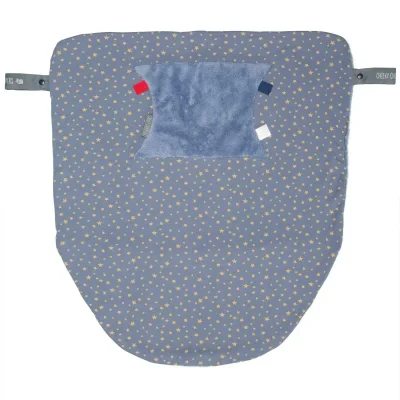

For short-haul flights, do not stress about naps. If baby sleeps, brilliant. If they do not, you will survive. Adjust your expectations and focus on keeping everyone calm rather than sticking to a routine that simply does not work at altitude.
As for your own sleep? On a long flight, take it in shifts if you are travelling with a partner. One of you stays awake with baby, the other sleeps. Swap halfway. It is not glamorous, but it works.
When Things Go Wrong (Because Sometimes They Do)
Delays happen. Nappy explosions happen. Full-volume crying during the quiet bit of the in-flight movie happens. None of these things are the end of the world, even though they might feel like it in the moment.
A few backup plans that help:
- Pack a full extra outfit in a ziplock bag. If the worst happens, you have clean clothes instantly accessible without rummaging through your entire bag.
- Bring snacks for yourself. A hungry, stressed parent makes everything harder. Eat something.
- Accept help. If a flight attendant offers to hold baby while you sort yourself out, say yes. If the grandmother in the next seat wants to play peekaboo, let her.
- Remember that flights end. Even the worst flight you have ever had still landed eventually. This one will too.

Landing and Beyond
Start that feed or dummy about 20 minutes before landing. The descent is usually when ears hurt most, and a baby who is happily sucking through it will have a much easier time than one who starts crying after the pressure builds.
Once you land, there is no rush. Let the plane empty a bit before you try to stand up, collect your bags, reassemble the pushchair, and carry a baby all at once. The gate is not going anywhere.
Most airports have family-friendly facilities near arrivals, including baby changing, feeding rooms, and sometimes play areas. If you need to do a full change, feed, and regroup before heading to baggage claim, take the time.
You Have Got This
Flying with a baby is one of those things that feels enormous before you do it and surprisingly manageable once you have. The first flight is always the most nerve-wracking, but by the time you land, you will wonder why you spent so many nights worrying about it.
Pack well, lower your expectations, and be kind to yourself. You are not trying to win Parent of the Year at altitude. You are just getting from A to B with a small human. And that, in itself, is pretty impressive. ✨
Planning ahead? Add your travel essentials to your BubsNest wishlist so everything is in one place when your trip comes around.
Ready to Create Your Baby Registry?
Start your free baby registry today and share it with friends and family.
Get Started Free