Long Car Journeys with a Baby: How to Get There Without Losing Your Mind
Practical tips for surviving long car journeys with a baby, from timing your departure to keeping everyone fed, changed, and entertained on the road.
Everyone says "just time the drive for their nap." As if your baby has read the itinerary, agreed to the terms, and will kindly fall asleep the moment you hit the motorway. In reality, you will set off at the perfect window, your baby will be wide awake by junction three, and you will spend the next forty minutes wondering whether it is too late to turn around.
Here is the thing, though. Long car journeys with a baby are absolutely doable. They are just a different kind of doable than they used to be. The days of jumping in the car with a coffee and driving four hours straight are behind you for now. But with some planning, the right gear, and a very flexible attitude to your ETA, you can get from A to B with your sanity mostly intact. 🚗
Timing: When to Set Off (and Why 4am Is Not as Mad as It Sounds)
The single biggest thing you can do to improve a long car journey with a baby is pick your departure time carefully. Most parents who have cracked this will tell you the same thing: leave early. Really early.
A 4am or 5am start sounds brutal, but here is why it works. Your baby wakes for an early feed, you pop them into the car seat still sleepy, and they drift off again within minutes. You get two or three hours of quiet driving before anyone needs anything. By the time they wake up properly, you have covered serious ground and can stop for a proper break.
The alternative, leaving mid-morning after a leisurely breakfast, means you hit the road with a wide-awake baby who has already used up their morning nap window. You will be stopping within an hour. If the journey is under two hours, timing barely matters. But anything over three hours? The early start pays for itself.
The Two-Hour Rule (and Why Stops Are Not Setbacks)
Babies should not be in a car seat for more than two hours at a time. That is not just general advice, it is the guidance from most car seat manufacturers and safety organisations. Prolonged time in a semi-upright position can affect a young baby's breathing, especially in the first few months.
So plan your stops. A four-hour journey becomes a five-hour one with a proper break in the middle, and that is fine. Build it into your expectations rather than treating it as a delay. Stop, get the baby out of the seat, let them have a stretch and a kick on a blanket, do a feed and a nappy change, and get back on the road refreshed.
Motorway services are not glamorous, but most have baby changing facilities and a bit of space to spread out. Some even have small play areas. A flask of hot water, a couple of bottles prepped, and a portable changing mat will make these stops feel manageable rather than chaotic.


The Rear-Facing Reality: What You Cannot See
If your baby is rear-facing (which they should be for as long as possible), you cannot see them from the driver's seat. That is surprisingly stressful on a long journey. Are they asleep? Awake? Have they dropped the dummy for the fourteenth time? You just do not know.
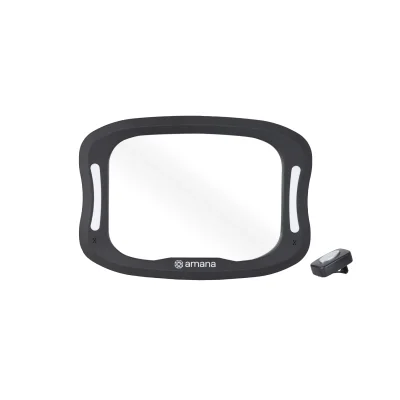
A baby car mirror fixes this completely. It attaches to the rear headrest and angles so you can glance at your baby in your rear-view mirror. The light-up versions are especially good for evening drives, because you can check on them without switching on the interior light and waking them up.

If you are travelling with a partner, the temptation is for one of you to sit in the back. That works brilliantly for the baby, less so for the driver who now feels like a taxi service. Take it in turns if the journey is long enough for multiple stops.
Entertainment: What Actually Works in a Car Seat
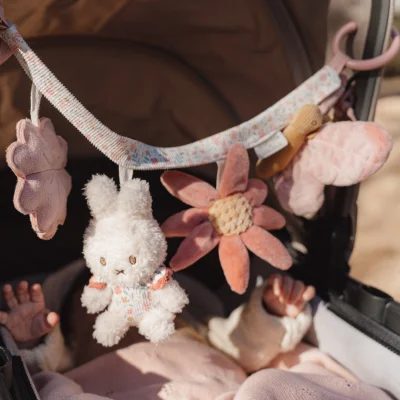
Babies under six months are relatively easy to entertain in a car. They mostly want to look at things, chew things, and listen to things. A car seat toy that dangles within reach gives them something to bat at and grab. Crinkly textures and high-contrast patterns work best for younger babies.
For older babies (six months plus), the challenge gets bigger. They want to move, they want variety, and they get bored faster. Here is what actually works:
- Rotate toys every 20 minutes. Pack a bag of four or five small toys and hand them out one at a time. The novelty keeps them interested far longer than dumping everything in their lap at once.
- Snacks are entertainment. If your baby is weaning, a rice cake or some puffs can buy you a solid fifteen minutes of quiet concentration.
- Music and audiobooks. Nursery rhymes on repeat might drive you slightly mad, but they genuinely soothe most babies. White noise playlists also work well, especially if your baby associates them with sleep.
- Screens, if you need them. There is no shame in a tablet showing Hey Bear Sensory on a long journey. It is a tool, not a failure.
Sun, Heat, and the Temperature Puzzle
A car can heat up shockingly fast, even on a mild day. The side your baby is sitting on might be in full sun for an hour while you are blissfully unaware in the front with the air conditioning on.
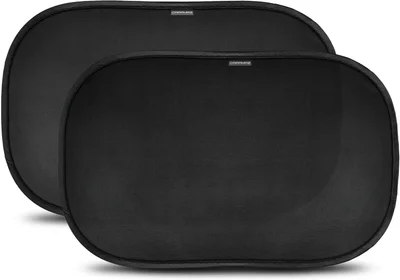
Window shades are not optional for summer driving. They block UV rays and keep the back seat noticeably cooler. The suction cup type are easy to move from window to window depending on which side the sun is hitting.

Dress your baby in light layers you can adjust at stops. A vest and a lightweight romper is usually enough. Avoid thick coats in the car seat anyway, as bulky clothing compromises the harness fit. If it is cold outside, drape a blanket over the top of the straps once they are buckled in snugly, rather than putting them in a padded jacket under the straps.
Feeding on the Road
This depends entirely on how you feed your baby, but the key principle is the same: do not try to feed them in a moving car. Always stop.
For breastfed babies, you will need somewhere comfortable to sit. The back seat of the car with the door open works perfectly well in warm weather. In winter, many service stations have family rooms or quiet corners.
For bottle-fed babies, prep is everything. If you use formula, a flask of hot water and pre-measured powder is the simplest system. Ready-made cartons are even easier, though pricier. If you are using expressed milk, a cool bag with ice packs will keep it safe for several hours.
For weaning-age babies, pouches are your best friend on the road. No bowls, no spoons, no mess. Just squeeze and go. Pack a couple of bibs and some wet wipes, and you are sorted.
The Packing List That Actually Fits in Your Boot
It is very easy to overpack for a car journey with a baby. You will not need the bouncer, the play gym, or three changes of outfit for yourself. Here is what genuinely earns its spot:
- Changing bag stocked and ready: nappies, wipes, bags, cream, a change of clothes for the baby
- Portable changing mat (service station surfaces are grim)
- Muslins, at least three, for mopping up everything
- Spare dummy if your baby uses one (they will drop it at the worst moment)
- Car seat toy and a small bag of rotating entertainment
- Window shades
- Blanket for warmth and for laying on grass at a rest stop
- Feeds: bottles, formula/expressed milk, cool bag, snacks if weaning
- White noise queued up on your phone
- Carrier or sling for the stop where you want to stretch your legs properly
Everything else can go in the main luggage. Keep the essentials within arm's reach of whoever is sitting nearest the baby.
When It All Goes Wrong (Because Sometimes It Will)
There will be a journey where the baby screams for forty minutes straight and nothing you do helps. The nappy blows out at the only service station without a changing room. The traffic adds an hour and your carefully timed schedule falls apart completely.
When that happens, remember: you will get there. It will end. Your baby will not remember this journey, and in six months you will tell the story as a funny anecdote rather than the ordeal it felt like in the moment.
Pull over if you need to. There is no prize for pushing through when everyone is miserable. A ten-minute stop in a lay-by to regroup, have a cup of tea from your flask, and let the baby have a cuddle can reset the whole mood.
Long car journeys with a baby are not the carefree road trips they used to be. But they are a skill you get better at every time. By the third or fourth big drive, you will have your system dialled in, your packing list memorised, and your playlist perfected. And you will wonder why you ever worried about it. 🌟
Planning a trip and want to make sure you have got everything you need? Add your car journey essentials to your BubsNest wishlist so nothing gets forgotten in the pre-holiday chaos.
Ready to Create Your Baby Registry?
Start your free baby registry today and share it with friends and family.
Get Started Free